
 By Atlantic Endo Medical Review Board
Nearly one in three adults over the age of 50 experiences forefoot pain at some point in their lives, and metatarsalgia is one of the most common culprits. If you have ever felt a sharp, burning, or aching sensation in the ball of your foot, you already know how disruptive it can be. So what is the fastest way to cure metatarsalgia? The short answer is that a targeted combination of footwear changes, forefoot offloading, and conservative home care can bring meaningful relief within days to weeks for most people. This guide breaks down every proven strategy, explains why some approaches work faster than others, and clarifies when it is time to see a specialist.
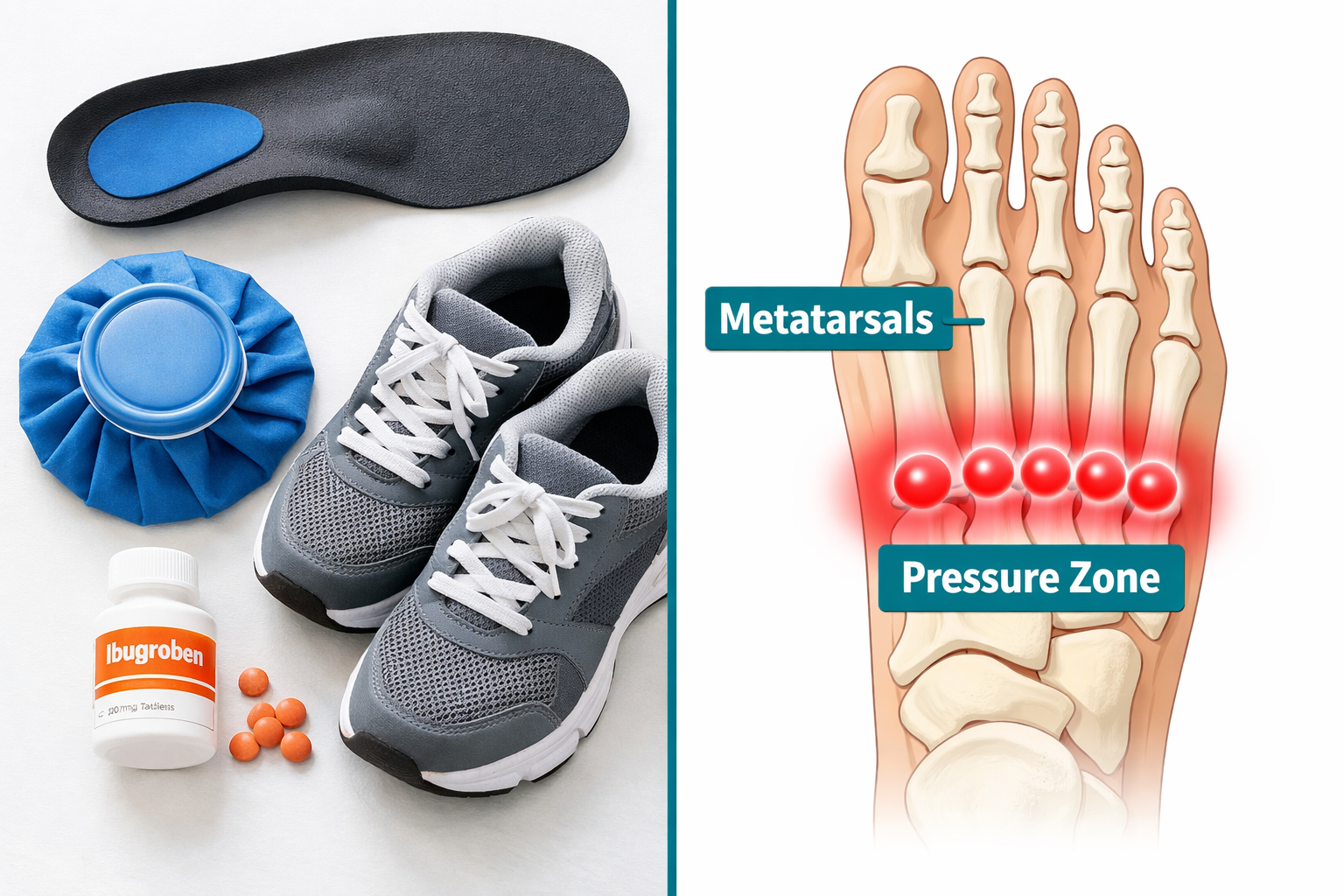
Table of Contents
Key Takeaways
- Metatarsalgia is forefoot pain caused by excess pressure on the metatarsal heads, and it is almost always treatable without surgery.
- The fastest relief typically comes from switching to cushioned, wide-toe-box footwear combined with metatarsal pads to redistribute pressure.
- Rest, ice, and short-term anti-inflammatory medication can reduce acute pain within 48 to 72 hours.
- Stretching the calf, arch, and toe joints helps correct the biomechanical imbalances that cause the condition to return.
- Patients with diabetes, peripheral neuropathy, or bone disease require a specialized evaluation because standard self-care may not be sufficient.
Comprehending Metatarsalgia Before You Treat It
Metatarsalgia is not a single diagnosis, it is a descriptive term for pain and inflammation centered on the metatarsal heads, the rounded ends of the five long bones that form the ball of your foot. When these bones absorb more pressure than they are designed to handle, the surrounding tissue becomes irritated and inflamed.
Common causes include:
- High-impact activities such as running, jumping, or prolonged standing
- Wearing high heels or shoes with a narrow toe box
- Excess body weight that increases forefoot load
- Foot deformities such as bunions, hammertoes, or high arches
- Stress fractures or Morton’s neuroma mimicking the same symptoms
- Underlying conditions such as rheumatoid arthritis or diabetes-related nerve changes
Comprehending the root cause matters because it directly shapes which treatment will work fastest for you. A runner with tight calf muscles needs a different first step than a person with diabetes whose forefoot pain may signal peripheral neuropathy. If you are unsure whether your foot pain is linked to a broader metabolic condition, reading about what symptoms would prompt a visit to an endocrinologist can help you decide whether additional testing is warranted.
What is the Fastest Way to Cure Metatarsalgia? The Evidence-Based Approach
Speed of recovery depends on how quickly you address the two core problems: excess pressure on the metatarsal heads and the inflammation that results from it. The fastest outcomes consistently come from combining several strategies simultaneously rather than trying one at a time.
Step 1: Modify Footwear Immediately
This is the single most impactful change you can make today. Shoes with a stiff, gently curved sole (called a rocker-bottom sole) reduce the load on the forefoot during the push-off phase of walking. Look for shoes that also offer:
- A wide, deep toe box that does not compress the toes
- Adequate arch support
- Cushioned midsoles that absorb shock
Avoid high heels entirely. Even a modest 2-inch heel shifts approximately 75% of body weight onto the forefoot, dramatically worsening symptoms. If you are unsure how to evaluate footwear for your specific foot shape, a podiatrist can guide you through the process. For tips on finding the right specialist, see our guide on how to choose a podiatrist for foot health.
Step 2: Use Metatarsal Pads and Orthotic Insoles
Metatarsal pads are small, inexpensive cushions placed just behind the metatarsal heads inside your shoe. They redistribute pressure away from the inflamed area and are widely considered the most effective non-surgical intervention for forefoot offloading. Over-the-counter insoles with forefoot cushioning provide similar benefits. Custom orthotics prescribed by a podiatrist offer the most precise correction, especially for patients with structural foot deformities.
Placement tip: The pad should sit just proximal (behind) the ball of the foot, not directly under the painful area. Placing it too far forward can actually increase pressure on the metatarsal heads.
Step 3: Rest and Ice the Affected Area
During the acute phase, typically the first 48 to 72 hours, rest is essential. This does not mean complete immobility, but it does mean avoiding the activities that aggravate your symptoms.
Apply an ice pack wrapped in a thin cloth to the ball of the foot for 15 to 20 minutes, three to four times per day. Ice reduces local inflammation and provides meaningful pain relief without the side effects associated with medication.
Step 4: Short-Term Anti-Inflammatory Medication
Over-the-counter NSAIDs such as ibuprofen or naproxen sodium can reduce both pain and inflammation when used as directed for a short period (typically 5 to 7 days). They are most effective when combined with the physical measures above rather than used as a standalone treatment.
Important note for patients with diabetes or kidney disease
NSAIDs carry additional risks in these populations. Always consult your physician before starting any anti-inflammatory regimen. Patients managing diabetes should also be aware that foot complications can have systemic roots, our overview of what vitamin deficiency causes heel spurs illustrates how nutritional gaps can affect foot health in ways that require medical evaluation.
Step 5: Targeted Stretching and Strengthening
Once acute pain begins to subside, stretching exercises address the biomechanical factors that caused the problem in the first place. Tight calf muscles (gastrocnemius and soleus) increase forefoot loading during walking. Stretching them consistently can reduce metatarsal pressure over time.
Recommended exercises:
- Calf stretch against a wall: Hold 30 seconds, repeat 3 times per side, twice daily
- Plantar fascia stretch: Pull toes back gently toward the shin before taking the first steps in the morning
- Toe curls with a towel: Strengthen the intrinsic foot muscles that support the metatarsal arch
- Marble pickups: Use your toes to pick up small objects, improving toe dexterity and arch control
Physical therapy can accelerate this process significantly. Atlantic Endocrinology’s physical therapy services in Queens provide individualized rehabilitation programs for patients dealing with foot and lower extremity pain.
When Conservative Care is Not Enough
Most cases of metatarsalgia resolve within six to eight weeks with the steps described above. Nevertheless, certain situations call for a more thorough clinical evaluation.
See a specialist promptly if:
- Pain is severe, constant, or worsening despite two weeks of conservative care
- You notice numbness, tingling, or burning that radiates into the toes (possible Morton’s neuroma or nerve involvement)
- You have diabetes, peripheral neuropathy, or poor circulation
- The pain followed a specific injury and you suspect a stress fracture
- You have a history of bone disease or osteoporosis

The Diabetes-Foot Connection
For patients with diabetes, metatarsalgia deserves particular attention. Peripheral neuropathy, nerve damage caused by chronically elevated blood sugar, can mask pain signals, meaning a patient may not feel how serious a foot problem has become until significant tissue damage has occurred. Simultaneously, poor circulation reduces the foot’s ability to heal.
At Atlantic Endocrinology & Diabetes Center, our board-certified podiatrist, works closely with our endocrinology team to ensure that foot problems in diabetic patients are not treated in isolation. Knowing what are the first signs of reversing insulin resistance can be an important parallel goal for patients whose foot pain is linked to metabolic dysfunction.
Bone Health and Metatarsalgia
Stress fractures of the metatarsal bones are a recognized complication of osteoporosis and low bone density. If you have been diagnosed with a bone disease or have risk factors for osteoporosis, a forefoot pain evaluation should include bone density assessment. Our article on what to expect during your first appointment with a bone disease specialist outlines how this type of evaluation works.
Surgical Options
Surgery for metatarsalgia is rarely necessary and is considered only after conservative measures have failed for at least three to six months. Procedures may involve realigning the metatarsal bones (osteotomy) or addressing an underlying deformity such as a bunion. For context on related surgical decisions, our guide on at what age is it too late to have bunion surgery provides useful perspective.
Lifestyle Factors That Speed Recovery
Beyond the direct treatments, several lifestyle adjustments meaningfully accelerate healing:
- Weight management: Reducing body weight by even 5 to 10% can substantially decrease forefoot loading. Our team offers comprehensive weight management and nutrition wellness programs tailored to each patient’s metabolic profile.
- Activity modification: Switch from high-impact activities (running on hard surfaces) to low-impact alternatives (swimming, cycling) during recovery.
- Footwear at home: Many people go barefoot or wear thin slippers at home, unknowingly stressing the forefoot for hours each day. Supportive sandals worn indoors can make a significant difference.
- Gradual return to activity: Once symptoms resolve, increase activity levels gradually, no more than a 10% increase in weekly mileage or time on your feet per week.
FAQs
How long does metatarsalgia typically take to heal with conservative treatment?
Most people experience significant improvement within two to six weeks when they consistently apply footwear changes, metatarsal pads, rest, and stretching. Mild cases can improve in as little as one to two weeks, while more severe or long-standing cases may take up to three months. The essential variable is how quickly you remove the source of excess pressure. Continuing to wear unsupportive shoes or returning to high-impact activity too soon are the most common reasons recovery stalls.
Can metatarsalgia come back after it heals?
Yes, recurrence is common if the underlying biomechanical factors are not corrected. Patients who return to the same footwear, activity patterns, or body weight that caused the original episode are at high risk of relapse. Ongoing use of orthotic insoles, maintaining a healthy weight, and performing regular calf and foot stretches are the most effective long-term prevention strategies. Patients with structural foot deformities such as bunions or hammertoes may benefit from a periodic podiatry review to monitor changes over time.
Is metatarsalgia the same as Morton’s neuroma?
No, though they share similar symptoms. Metatarsalgia refers broadly to pain at the metatarsal heads caused by pressure and inflammation. Morton’s neuroma is a specific condition involving thickening of the tissue around a nerve between the toes, most often between the third and fourth metatarsals, producing a burning, shooting, or “pebble in the shoe” sensation. A podiatrist can distinguish between the two through physical examination and, if needed, imaging. Treatment overlaps significantly in the early stages, but Morton’s neuroma may require corticosteroid injections or, in persistent cases, surgical intervention.
When should a person with diabetes see a doctor for metatarsalgia rather than treating it at home?
Patients with diabetes should seek professional evaluation at the first sign of foot pain rather than waiting to see if it resolves on its own. Peripheral neuropathy can reduce pain sensation, making it easy to underestimate the severity of a problem. A podiatrist working alongside an endocrinologist can assess circulation, nerve function, and wound risk simultaneously.
References
- American Academy of Orthopaedic Surgeons. (2022). Metatarsalgia. OrthoInfo. https://orthoinfo.aaos.org/en/diseases–conditions/metatarsalgia
- Mayo Clinic Staff. (2023). Metatarsalgia: Symptoms and causes. Mayo Clinic. https://www.mayoclinic.org/diseases-conditions/metatarsalgia/symptoms-causes/syc-20354790
- Cleveland Clinic. (2023). Metatarsalgia: Causes, symptoms, diagnosis & treatment. https://my.clevelandclinic.org/health/diseases/17696-metatarsalgia
- University of Colorado Anschutz Medical Campus. (2022). Metatarsalgia patient guide. CU Department of Orthopedics. https://medschool.cuanschutz.edu
- National Institute of Arthritis and Musculoskeletal and Skin Diseases. (2023). Foot problems: Overview. U.S. Department of Health and Human Services. https://www.niams.nih.gov
- American Diabetes Association. (2024). Standards of care in diabetes, Section 12: Retinopathy, neuropathy, and foot care. Diabetes Care, 47(Suppl. 1), S231, S243. https://doi.org/10.2337/dc24-S012
Medical and Editorial Commitment
The content of this article is strictly for educational and informational purposes. It does not replace in-person professional medical diagnosis, advice, or treatment..
Read Privacy PolicyRelated Posts

Adult Flat Foot: 7 Effective Exercises to Strengthen Your Arches — What a Foot Doctor in Queens Wants You to Know
Last updated: June 2, 2026 Quick Answer: Adult flat foot (also called fallen arches or pes planus) occurs when the arch of [...]

At What Age Is It Too Late to Have Bunion Surgery?
If you are dealing with chronic bunion pain, you may have wondered, At What Age Is It Too Late to Have Bunion [...]