
 By Atlantic Endo Medical Review Board
Nearly one in three adults over the age of 60 develops at least one lesser-toe deformity, and hammertoes account for the majority of those cases. Yet most people wait years before seeking care, often dismissing the discomfort as a normal part of aging or simply blaming their shoes. That delay matters, because hammertoes that start out flexible and easy to manage can become rigid, painful, and ultimately require surgery if left untreated.
Whether you are living with a persistent corn on the top of your toe, struggling to find shoes that fit comfortably, or managing diabetes and worried about foot complications, comprehending hammertoes is the first step toward protecting your mobility and quality of life.
Table of Contents
Key Takeaways
- Hammertoes are a flexion deformity at the middle toe joint caused by muscle imbalance, tight footwear, and underlying conditions such as diabetes or nerve damage.
- The condition progresses from flexible to rigid over time, making early intervention far more effective than waiting.
- Conservative treatments including shoe modification, orthotics, padding, and physical therapy can relieve symptoms in many cases without surgery.
- People with diabetes face a higher risk of serious complications from hammertoes, including ulcers and infection, making early podiatric evaluation essential.
- Advanced surgical and minimally invasive options are available for cases that do not respond to conservative care.
What Are Hammertoes and Why Do They Develop
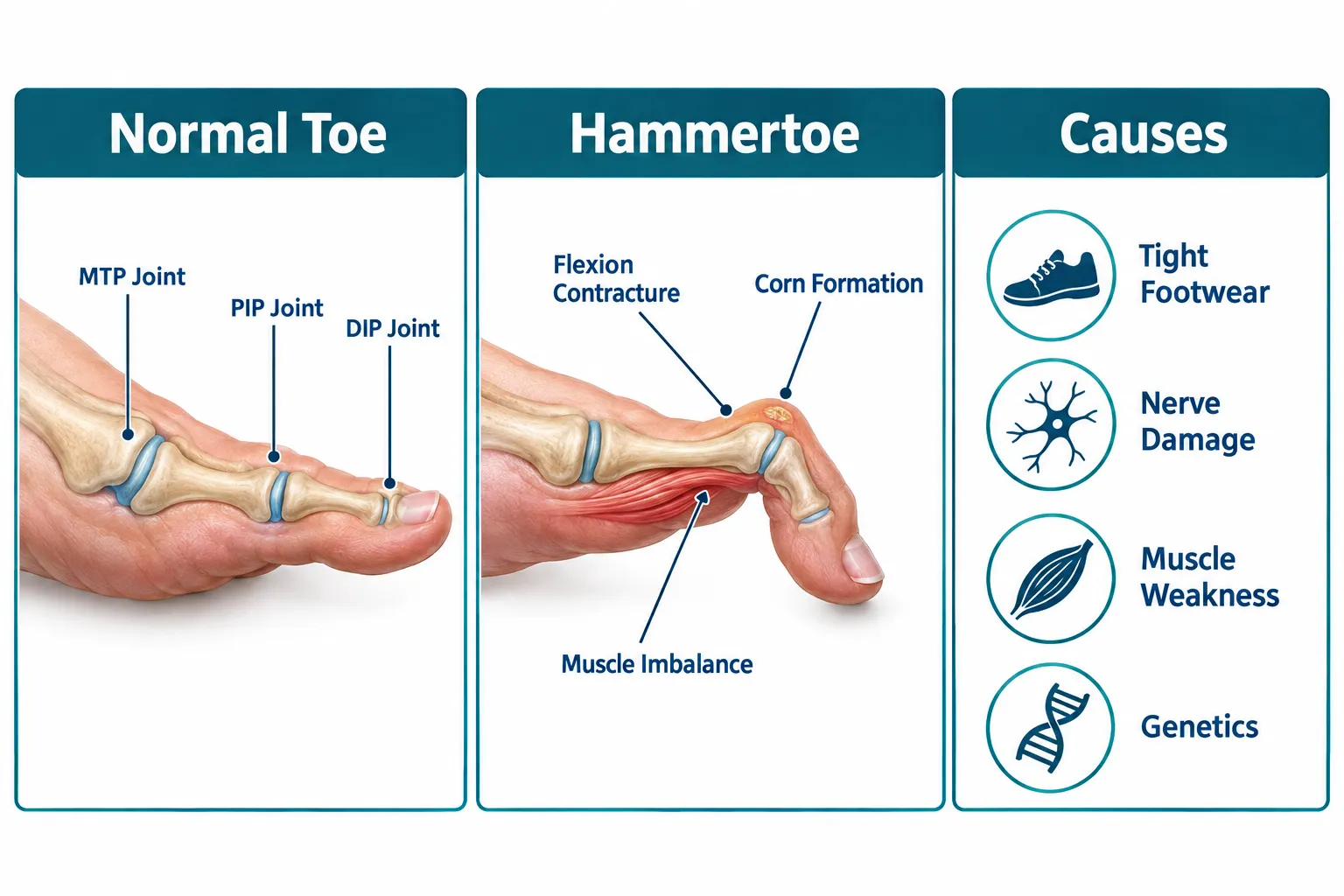
A hammertoe is a deformity in which one of the lesser toes, most commonly the second, third, or fourth, bends abnormally downward at the proximal interphalangeal (PIP) joint, which is the middle knuckle of the toe. Unlike a normal toe that lies flat, a toe affected by this condition takes on a claw-like or hammer-like shape, hence the name.
The root cause is a muscular imbalance. Every toe is controlled by a coordinated system of intrinsic muscles (the small muscles inside the foot) and extrinsic muscles (the longer muscles running from the leg into the foot). When these two groups fall out of balance, the tendons on top and bottom of the toe pull unevenly, forcing the PIP joint into a flexed position. Over time, the joint stiffens in that bent position.
Several factors can trigger or worsen this imbalance:
- Footwear: Narrow, pointed, or high-heeled shoes force the toes into cramped positions for hours at a time.
- Toe length: A second toe longer than the big toe is more prone to buckling inside a shoe.
- Nerve damage (neuropathy): Conditions that affect nerve function, particularly diabetic peripheral neuropathy, weaken the intrinsic muscles and accelerate deformity.
- Metatarsophalangeal (MTP) joint instability: Looseness at the base of the toe allows the toe to drift and buckle.
- Genetics: Some people inherit a foot structure that predisposes them to lesser-toe deformities.
- Inflammatory arthritis: Rheumatoid arthritis can destroy the joint capsule and supporting ligaments, leading to rapid deformity.
- Trauma: A previous toe fracture or ligament injury can alter alignment permanently.
Flexible Versus Rigid Hammertoes
Clinicians classify hammertoes in two stages, and the distinction determines treatment.
| Stage | Description | Manual Correction | Typical Treatment |
|---|---|---|---|
| Flexible | Joint can be straightened by hand | Yes | Conservative care |
| Rigid (Fixed) | Joint locked in bent position | No | Usually surgical |
Early-stage, flexible hammertoes respond well to non-surgical care. Rigid hammertoes, where the joint has contracted permanently, typically require a procedure to restore alignment. This is why timing matters so much.
Recognizing Hammertoe Symptoms
The most obvious sign of a hammertoe is the visible bend in the toe. But the physical appearance is often just one part of the picture. Patients commonly report:
- Pain and pressure on the top of the bent joint, especially in closed shoes
- Corns and calluses forming on the top of the PIP joint or on the tip of the toe, where abnormal pressure concentrates
- Redness and swelling around the affected joint
- Difficulty wearing shoes or finding footwear that does not rub
- Pain at the ball of the foot (metatarsalgia) when the bent toe transfers weight unevenly to the metatarsal heads
- Open sores or ulcers in people with diabetes or poor circulation, where even minor friction can break down skin
It is worth noting that not all hammertoes are painful in the early stages. Some people notice the deformity only because the toe looks different or because a corn keeps returning. Do not wait for severe pain before seeking an evaluation.
The Diabetes and Hammertoe Connection
For individuals managing diabetes, hammertoes carry risks that go well beyond cosmetic concern or shoe discomfort. Diabetic peripheral neuropathy reduces sensation in the feet, meaning a person may not feel the friction and pressure that a hammertoe creates against the shoe. That undetected pressure can cause skin breakdown, leading to diabetic foot ulcers, which are among the most serious complications of the disease.
Research supports the use of needle flexor tendon tenotomy, a simple percutaneous (through-the-skin) procedure, as an effective and safe intervention for hammertoe deformity associated with ulcers or pre-ulcer lesions in diabetic patients. This approach prioritizes soft-tissue release over bony reconstruction, making it appropriate for patients whose primary concern is ulcer prevention rather than cosmetic alignment.
If you are managing diabetes and notice any toe deformity, corn, callus, or skin change on your feet, a podiatric evaluation is not optional. It is a critical part of your diabetes care plan. Our article on how to treat diabetic leg sores offers additional guidance on managing lower-extremity complications, and our diabetes specialist team can coordinate comprehensive care across specialties.
Comprehending how blood sugar control affects nerve and vascular health is equally important. Uncontrolled hyperglycemia accelerates neuropathy and poor circulation, both of which worsen hammertoe outcomes. Learn more about the differences between hypoglycemia and hyperglycemia and how each affects your body.
How Hammertoes Are Diagnosed
Diagnosis begins with a thorough physical examination. A podiatrist will assess:
- Toe alignment and the degree of deformity at the PIP and MTP joints
- Flexibility of the deformity, determining whether the toe can be manually straightened
- Skin integrity, checking for corns, calluses, ulcers, or signs of infection
- Neurovascular status, evaluating circulation and sensation, particularly in diabetic patients
- Gait and footwear, since walking patterns and shoe wear patterns reveal mechanical contributors
Weight-bearing X-rays are the standard imaging tool, confirming the degree of joint deformity, ruling out arthritis, and guiding surgical planning when needed.
For patients with diabetes or suspected neuropathy, additional diagnostic testing may be recommended. A nerve conduction study can quantify the degree of peripheral nerve damage, while a Sudoscan can detect early autonomic nerve dysfunction before symptoms become severe. These tests help the care team understand the full picture before recommending treatment.
Conservative Treatment for Hammertoes
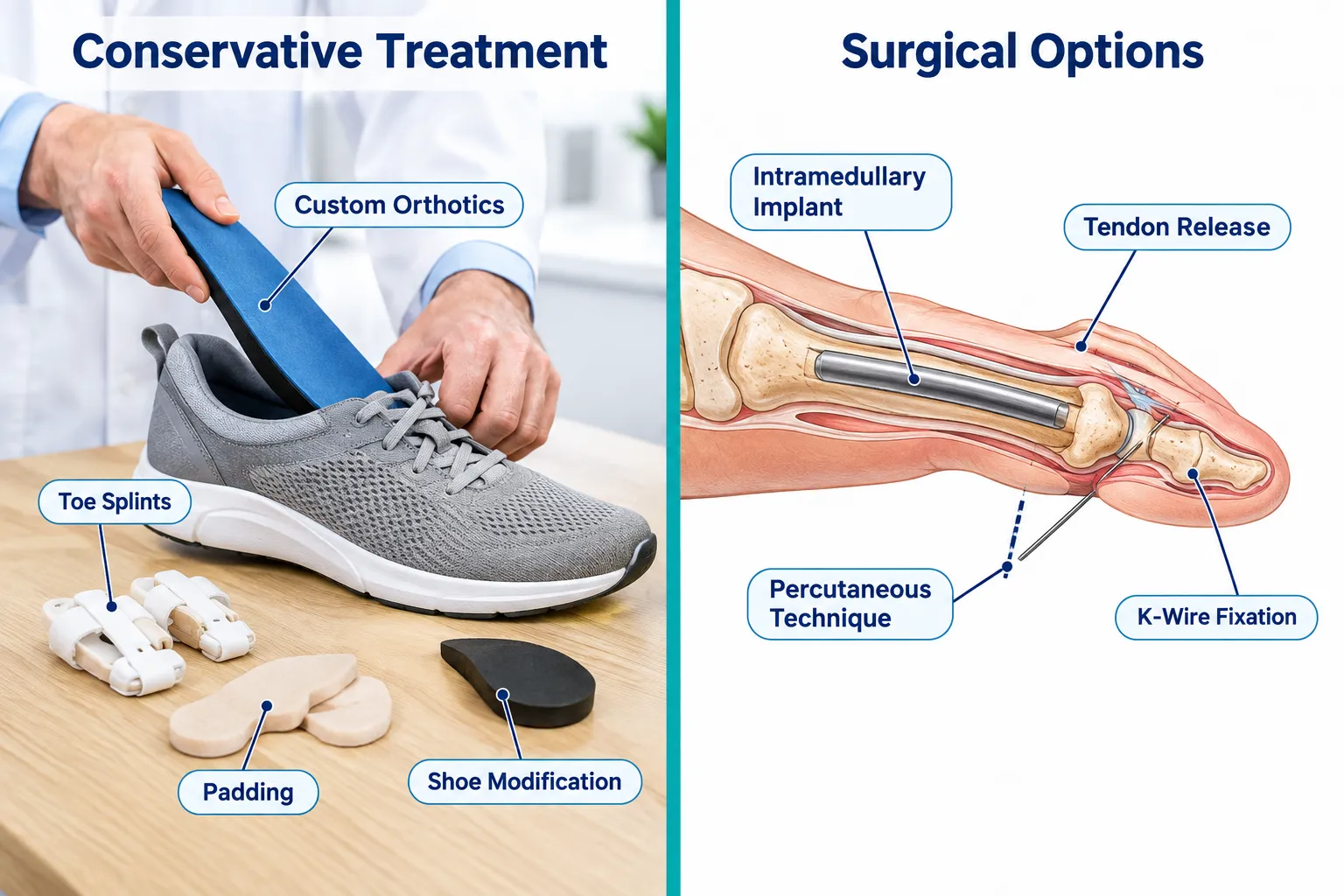
The first line of treatment for flexible hammertoes is always conservative. The goal is to relieve pain, reduce pressure on the deformed joint, and slow or halt progression.
Footwear Modification This is the single most impactful non-surgical step. Shoes with a wide, deep toe box allow the bent toe to sit without compression. Avoiding high heels reduces the forward pressure that pushes toes into cramped positions. Our podiatry team’s guidance on shoes podiatrists advise against for foot pain provides practical footwear guidance.
Custom Orthotics and Toe Splints Custom orthotic insoles redistribute pressure away from the metatarsal heads and can help rebalance the forces acting on the toe. Toe splints or straightening devices worn inside the shoe can hold a flexible hammertoe in a corrected position during daily activity.
Padding and Corn Management Gel pads or moleskin placed over the top of the PIP joint reduce friction and protect the skin. Corns should be managed by a podiatrist rather than self-treated with over-the-counter chemicals, which can cause chemical burns, especially in patients with reduced sensation.
Physical Therapy and Stretching Exercises that stretch the toe flexors and strengthen the intrinsic muscles can improve flexibility and delay progression. Physical therapy is particularly useful in the early flexible stage.
Anti-Inflammatory Measures Oral non-steroidal anti-inflammatory drugs (NSAIDs) or corticosteroid injections into the MTP joint can reduce pain and swelling when joint inflammation is a significant component.
Most insurance plans, including Medicare, Medicaid, and many commercial plans accepted at Atlantic Endocrinology, cover conservative podiatric care when it is medically indicated. Payer guidelines generally require documented failure of conservative management before approving surgical intervention.
Surgical and Minimally Invasive Treatment Options
When conservative care fails to provide adequate relief, or when the hammertoe has progressed to a rigid, fixed deformity, surgical correction becomes appropriate. Modern surgical options are more refined than ever, with a clear trend toward minimally invasive techniques.
PIP Joint Arthrodesis
The most common surgical procedure fuses the PIP joint in a straightened position, eliminating the painful flexion contracture. Research comparing fixation methods shows that modern dual-component intramedullary implants achieve higher union rates than traditional Kirschner (K-) wire fixation, though both methods produce comparable patient-reported outcomes at one year. The choice of implant is individualized based on bone quality, deformity severity, and patient factors.
Percutaneous Extra-Articular Osteotomy
A newer minimally invasive approach uses small percutaneous incisions to perform bone cuts that correct the deformity without opening the joint. Published outcomes show significant improvement in Foot Function Index scores following this technique, with low complication rates and high patient satisfaction. This approach is particularly appealing for patients who want a faster recovery and smaller incisions.
Flexor and Extensor Tendon Procedures
Tendon lengthening, transfer, or release procedures address the muscular imbalance driving the deformity. In diabetic patients at risk for ulcers, a percutaneous flexor tendon tenotomy can be performed as a standalone procedure to relieve pressure without the recovery demands of bony surgery.
Metatarsal Osteotomy
When hammertoe deformity is accompanied by metatarsalgia or plantar lesions caused by abnormal pressure under the metatarsal heads, a metatarsal osteotomy may be performed alongside toe correction to restore normal forefoot mechanics.
Emerging Option: Injectable Biologic Therapy
A Phase 3 clinical trial is currently evaluating collagenase clostridium histolyticum (XIAFLEX) as a nonsurgical injectable treatment for hammertoe. The trial enrolls approximately 550 participants and measures improvement in PIP flexion contracture as its primary endpoint. If results are positive, this could represent a meaningful shift in treatment, offering an office-based pharmacologic option for select patients who are not surgical candidates or who prefer to avoid surgery.
Choosing the Right Podiatric Care
Selecting the right provider is as important as choosing the right treatment. A board-certified podiatrist with experience in both conservative and surgical foot care can guide you through every stage of hammertoe management. Our article on how to choose a podiatrist outlines the criteria to consider.
At Atlantic Endocrinology & Diabetes Center, Dr. David Tetrokalashvili, DPM, is a board-certified podiatrist specializing in advanced foot and ankle care, including diabetic foot management. He works within a fully integrated multidisciplinary team that includes endocrinologists, cardiologists, neurologists, and nurse practitioners, ensuring that your foot health is addressed within the context of your complete medical picture.
For patients who also need to address the underlying conditions that contribute to hammertoe, such as diabetes, neuropathy, or vascular disease, our team offers on-site diagnostic testing including nerve conduction studies, ANS testing in New York, and the TM Flow Test to assess vascular and autonomic function comprehensively.
For patients who want to explore whether podiatrists who accept Medicaid are available in their area, our team can help navigate insurance coverage and access to care.
FAQs
Can hammertoes go away on their own without treatment?
No. Hammertoes do not resolve without intervention. In the early flexible stage, conservative measures such as shoe modification, orthotics, and stretching exercises can prevent the deformity from worsening and relieve symptoms effectively. Nevertheless, without addressing the underlying muscle imbalance and mechanical factors, the condition will gradually progress from flexible to rigid. Once the joint becomes fixed in the bent position, non-surgical options can only manage symptoms, not correct the alignment. Early evaluation by a podiatrist is the most effective way to preserve your options.
How do I know if my hammertoe needs surgery?
Surgery is generally considered when conservative care has been tried for at least three months and has not provided adequate relief, when the deformity is rigid and cannot be manually straightened, or when there is a non-healing ulcer or significant skin breakdown associated with the deformity. Payer guidelines and clinical practice standards both require documented failure of conservative management before approving surgical repair. Your podiatrist will assess the flexibility of the deformity, your level of pain, your activity limitations, and your overall health, including vascular status and comorbidities like diabetes, before recommending surgery.
Are hammertoes related to diabetes?
Yes, there is a well-established connection. Diabetic peripheral neuropathy weakens the intrinsic muscles of the foot and reduces sensation, both of which accelerate the development and progression of hammertoe deformity. More critically, the combination of a hammertoe and reduced sensation means that pressure and friction from the deformity can cause skin breakdown and diabetic foot ulcers without the patient feeling pain. This makes hammertoes a potential limb-threatening complication in people with poorly controlled diabetes. Regular foot examinations and proactive podiatric care are essential components of diabetes management.
What is the recovery time after hammertoe surgery?
Recovery depends on the type of procedure performed. For percutaneous minimally invasive corrections, many patients are walking in a surgical shoe within days and return to regular footwear within four to six weeks. Traditional open PIP arthrodesis typically requires four to six weeks in a surgical shoe, with full recovery and return to athletic footwear taking three to four months. K-wire fixation, when used, requires the wire to be removed in the office at approximately four to six weeks. Your surgeon will provide a personalized recovery timeline based on the specific procedure, the number of toes corrected, and your overall health status.
References
- Boffeli, T. J., & Collier, R. C. (2021). Hammertoe correction with flexor tendon transfer: Surgical technique and outcomes. Journal of Foot and Ankle Surgery, 60(3), 512-518. https://doi.org/10.1053/j.jfas.2020.10.009
- Coughlin, M. J., & Saltzman, C. L. (2022). Lesser-toe deformities. In Mann’s Surgery of the Foot and Ankle (9th ed.). Elsevier.
- American College of Foot and Ankle Surgeons. (2023). Hammertoe. https://www.acfas.org/footankleinfo/hammertoe.htm
- National Institute of Diabetes and Digestive and Kidney Diseases. (2023). Diabetic neuropathy. U.S. Department of Health and Human Services. https://www.niddk.nih.gov/health-information/diabetes/overview/preventing-problems/nerve-damage-diabetic-neuropathies
- American Podiatric Medical Association. (2024). Hammertoes. https://www.apma.org/Patients/FootHealth.cfm?ItemNumber=980
- StatPearls Publishing. (2026). Hammertoe. In StatPearls [Internet]. National Center for Biotechnology Information. https://www.ncbi.nlm.nih.gov/books/NBK430685/
Medical and Editorial Commitment
The content of this article is strictly for educational and informational purposes. It does not replace in-person professional medical diagnosis, advice, or treatment..
Read Privacy PolicyRelated Posts
What is the Fastest Way to Cure Metatarsalgia? A Complete Guide to Fast Relief
Nearly one in three adults over the age of 50 experiences forefoot pain at some point in their lives, and metatarsalgia is [...]

Adult Flat Foot: 7 Effective Exercises to Strengthen Your Arches — What a Foot Doctor in Queens Wants You to Know
Last updated: June 2, 2026 Quick Answer: Adult flat foot (also called fallen arches or pes planus) occurs when the arch of [...]