
 By Atlantic Endo Medical Review Board
Last updated: June 2, 2026
Quick Answer: Adult flat foot (also called fallen arches or pes planus) occurs when the arch of the foot collapses and the entire sole contacts the ground. While not always painful, untreated flat feet can cause significant knee, hip, and back problems over time. A combination of targeted strengthening exercises and professional evaluation from a foot doctor in Queens can meaningfully reduce symptoms and improve your quality of life.
Book Time with a foot doctor in Queens
Table of Contents
Key Takeaways
- Flat foot in adults is common and often develops gradually due to tendon wear, weight changes, or injury
- The posterior tibial tendon is the primary structure responsible for maintaining your arch — and it’s the first to weaken
- Seven evidence-based exercises can strengthen intrinsic foot muscles and slow or reverse arch collapse in many patients
- Untreated flat feet can lead to plantar fasciitis, shin splints, knee pain, and lower back strain
- Children can develop flat feet too, but most outgrow flexible flat foot by age six
- Custom orthotics, physical therapy, and in some cases surgery are treatment options beyond exercise
- Patients with diabetes should have flat feet evaluated promptly, as foot complications carry higher risk
- Seeing a board-certified podiatrist is the most reliable way to determine whether your flat foot requires treatment
What Exactly Is Flat Foot Syndrome?
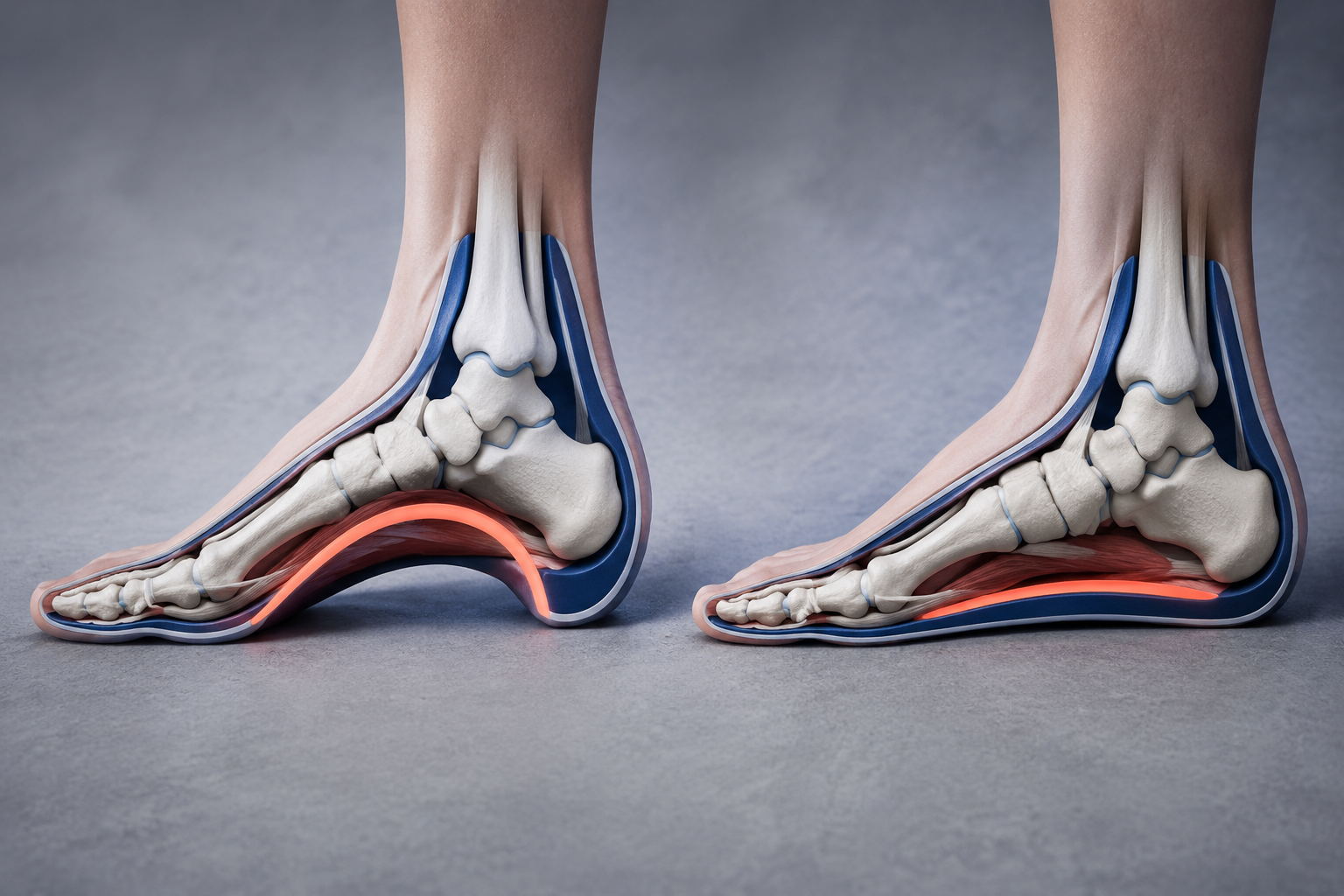
Flat foot syndrome means the arch of the foot has partially or fully collapsed, causing the entire sole to rest flat against the ground when standing. In adults, this is most often caused by progressive weakening of the posterior tibial tendon, the main tendon that supports the arch from the inside of the ankle.
There are two main types:
- Flexible flat foot: The arch appears when you lift the foot off the ground but disappears when you stand. This is the most common type and is often manageable with exercise.
- Rigid flat foot: The arch is absent whether the foot is weight-bearing or not. This type is more structurally complex and typically requires professional intervention.
Adult-acquired flat foot is different from the flat feet seen in young children. In adults, it usually develops after years of stress on the tendon, often accelerated by excess body weight, prolonged standing, or a prior ankle injury.
How Do Flat Feet Affect Walking and Posture?
Flat feet change the biomechanics of your entire lower body, not just your feet. When the arch collapses, the ankle tends to roll inward (a motion called overpronation), which shifts the alignment of the knees, hips, and spine.
Common effects include:
- Altered gait: Steps become less efficient, increasing energy expenditure during walking
- Ankle instability: Reduced arch support makes the ankle more prone to rolling
- Postural changes: The pelvis may tilt forward, increasing lumbar (lower back) curve
- Muscle fatigue: Compensating muscles in the calf, shin, and hip work harder than they should
Many people with flat feet notice that their shoes wear unevenly on the inner edge, which is a visible sign of overpronation. If you also experience foot fatigue after short walks, that’s another signal worth discussing with a podiatrist.
Can Flat Feet Cause Knee or Back Pain?
Yes, and this connection is more direct than most people realize. Because flat feet cause overpronation, the knee rotates inward with every step. Over thousands of daily steps, this creates abnormal stress on the knee joint and can contribute to patellofemoral pain syndrome (runner’s knee) even in people who don’t run.
The chain continues upward:
- Knee pain: Inward rotation strains the medial knee structures
- Hip pain: The hip compensates for altered knee alignment, increasing strain on the IT band and hip flexors
- Lower back pain: Pelvic tilt caused by overpronation can compress lumbar discs and strain paraspinal muscles
A study published by the Cleveland Clinic notes that flat feet are a recognized contributor to musculoskeletal pain throughout the lower extremity. If you’re managing chronic knee or back pain and haven’t had your foot mechanics evaluated, that’s a gap worth closing. Our guide to preventing plantar fasciitis covers additional biomechanical risk factors that overlap with flat foot syndrome.
Are Flat Feet Genetic or Can They Be Corrected?
Flat feet can be both genetic and acquired — and in many cases, both factors are at play. A family history of flat feet does increase your likelihood of developing the condition, but lifestyle factors often determine whether and when symptoms appear.
Genetic contributors:
- Inherited ligament laxity (loose joints)
- Naturally lower arch height
- Connective tissue disorders such as Ehlers-Danlos syndrome
Acquired contributors:
- Posterior tibial tendon dysfunction (PTTD)
- Obesity or significant weight gain
- Pregnancy (hormonal relaxation of ligaments)
- Rheumatoid arthritis
- Diabetes-related nerve and tendon changes
Can flat feet be corrected? For flexible flat foot, targeted exercise can genuinely improve arch height and reduce symptoms over time. Rigid flat foot typically cannot be “corrected” through exercise alone, but symptoms can be managed effectively. The key distinction is whether your flat foot is flexible or rigid — something a board-certified foot doctor in Queens can determine during a physical examination.
7 Exercises to Strengthen Your Arches at Home
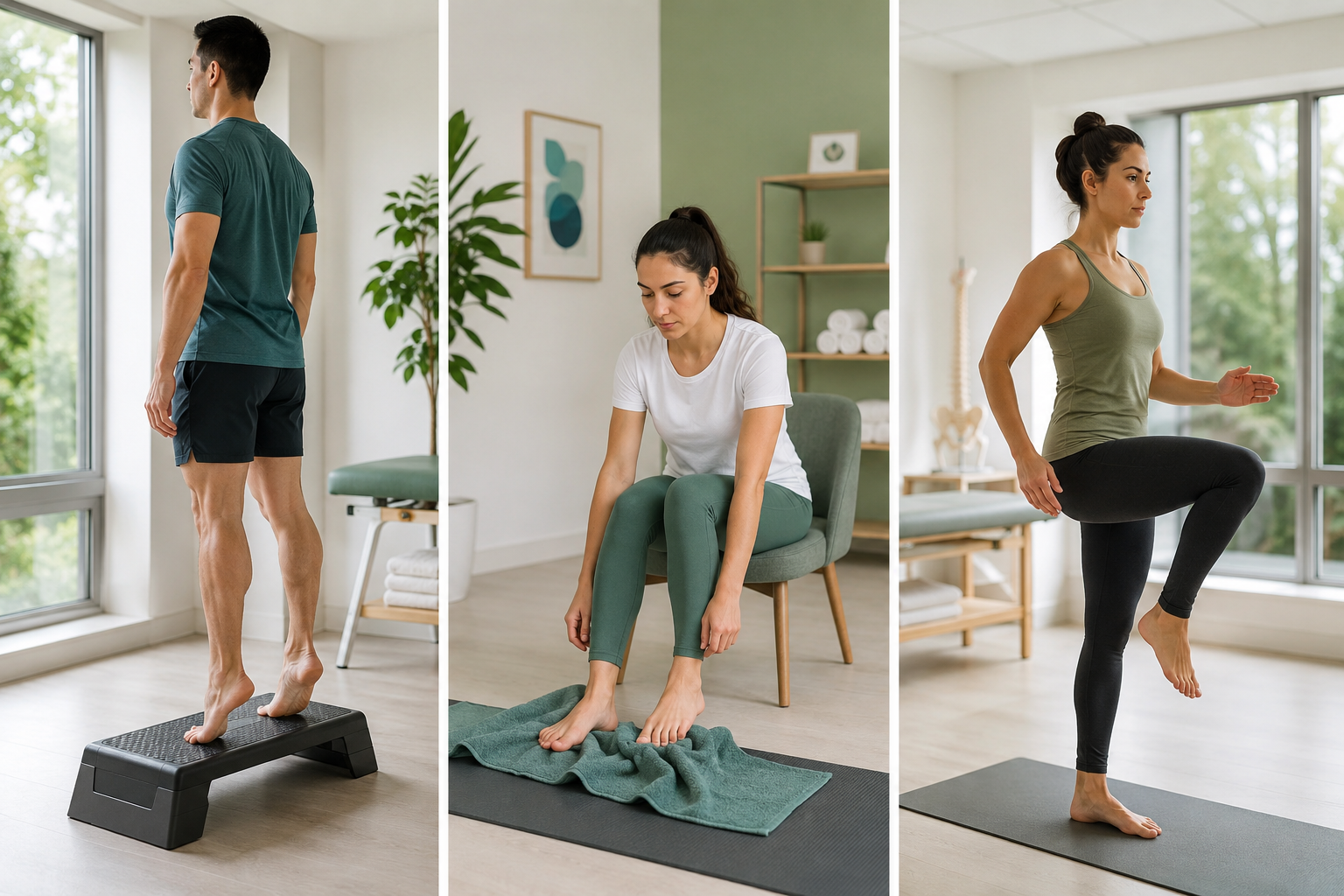
These seven exercises target the intrinsic foot muscles and the posterior tibial tendon — the two systems most responsible for arch support. Perform them on a firm, flat surface. If you experience sharp pain during any exercise, stop and consult a podiatrist before continuing.
How often: Aim for once daily, 5–6 days per week. Most people notice measurable improvement in arch strength and foot fatigue within 6–8 weeks of consistent practice.
1. Short Foot Exercise (Arch Doming)
Sit or stand with your foot flat on the floor. Without curling your toes, try to shorten the foot by pulling the ball of the foot toward the heel. You should feel the arch lift slightly. Hold for 5 seconds, relax, and repeat 10–15 times per foot.
This is the single most targeted exercise for intrinsic foot muscle activation. It directly trains the small muscles that support the arch from below, without relying on the larger calf muscles.
2. Calf Raises
Stand near a wall for balance. Rise onto the toes of one foot, hold for 2–3 seconds, then slowly lower. Complete 10–15 repetitions per side.
Calf raises strengthen the posterior tibial tendon and the gastrocnemius-soleus complex, both of which play a direct role in dynamic arch support during walking and running.
3. Towel Scrunches
Sit in a chair with a small towel flat on the floor under your foot. Use your toes to scrunch the towel toward you, then spread it back out. Do this for 30–60 seconds per foot.
This exercise targets the lumbricals and flexor digitorum brevis — the small muscles on the underside of the foot that help maintain the arch during the push-off phase of walking.
4. Marble Pick-Ups
Place 10–15 marbles on the floor. Using only your toes, pick them up one at a time and drop them into a bowl. Switch feet and repeat.
Beyond strengthening intrinsic muscles, this exercise improves toe dexterity and neuromuscular coordination, which is particularly useful for patients whose flat feet are partly driven by poor proprioception.
5. Heel and Toe Walking
Walk across the room for 20–30 steps on your heels only (toes lifted off the floor), then walk back on your toes only (heels lifted). Repeat 2–3 times.
Heel walking activates the tibialis anterior (the muscle along the shin), while toe walking strengthens the calf and plantar flexors. Together, they build the balanced muscle strength that supports a healthy gait pattern.
6. Resistance Band Inversion
Loop a resistance band around a stable table leg at floor level and around the top of your foot. Sit with your leg extended and slowly rotate your foot inward against the band’s resistance. Hold 2–3 seconds, return slowly. Do 12–15 reps per foot.
This directly targets the tibialis posterior muscle — the primary dynamic stabilizer of the arch. Weakness in this muscle is the leading cause of adult-acquired flat foot, so this exercise is especially important for people with progressive arch collapse.
7. Single-Leg Balance
Stand on one foot for 20–30 seconds. Progress to closing your eyes or standing on a folded towel to add challenge. Switch feet and repeat 3 times per side.
Balance training improves proprioception (your body’s sense of foot position) and ankle stability. For people with flat feet, poor proprioception is a major contributor to ankle rolling and falls.
Who Should See a Foot Doctor About Flat Feet?
Most adults with painless flat feet don’t need urgent treatment, but certain situations call for a professional evaluation with a foot doctor in Queens rather than a wait-and-see approach.
See a podiatrist if you experience:
- Foot, ankle, or arch pain that persists beyond a few days
- Swelling along the inner ankle
- Difficulty standing on tiptoe on one foot
- Shoes that wear down rapidly on the inner edge
- Knee, hip, or lower back pain without a clear cause
- Flat feet that have developed recently or worsened quickly
- Any foot symptoms combined with a diabetes diagnosis
Patients with diabetes deserve a special note here. Diabetes can impair nerve function and blood circulation in the feet, making flat foot complications more serious and slower to heal. If you’re managing diabetes and notice any foot changes, prompt evaluation is essential. Our article on how exercise helps with diabetes management explains how physical activity — including foot-strengthening exercises — supports overall metabolic health.
At Atlantic Endocrinology & Diabetes Center, Dr. David Tetrokalashvili, DPM, is a board-certified podiatrist fluent in Russian, Spanish, and English who specializes in advanced foot and ankle care, including diabetic foot care. He works alongside our endocrinology team to provide coordinated care for patients whose foot health intersects with metabolic conditions.
Warning Signs That You Need Professional Foot Treatment
Some symptoms go beyond what exercise alone can address. These are the red flags that indicate you need a clinical evaluation rather than a home exercise program.
| Warning Sign | What It May Indicate |
|---|---|
| Sudden arch collapse in one foot | Posterior tibial tendon rupture |
| Severe swelling along the inner ankle | Acute tendon injury or inflammatory arthritis |
| Pain that worsens with rest | Inflammatory condition (e.g., rheumatoid arthritis) |
| Numbness or tingling in the foot | Nerve involvement, possible diabetic neuropathy |
| Skin breakdown or ulceration | Requires urgent care, especially in diabetic patients |
| Flat foot with fever or redness | Possible infection — seek care immediately |
If any of these apply to you, don’t rely on exercises. Schedule an appointment with a qualified foot doctor in Queens for a proper diagnosis.
Can Children Develop Flat Feet Too?
Yes, but the context is different from adult flat foot. Nearly all infants and toddlers have flat feet because the arch hasn’t fully developed yet. Most children develop a normal arch by age five or six as the foot’s muscles and ligaments mature.
Flexible flat foot in children is usually not a cause for concern unless it causes pain, limits activity, or persists beyond age six. Rigid flat foot in children, however, warrants evaluation because it can indicate a structural abnormality such as tarsal coalition (bones that are fused when they shouldn’t be).
Parents should consult a podiatrist if their child:
- Complains of foot or leg pain after activity
- Avoids physical activity or tires unusually quickly
- Has flat feet that remain flat even when standing on tiptoe
- Walks with an unusual gait or trips frequently
How Much Do Flat Foot Exercises and Treatments Cost?
The exercises described in this article cost nothing beyond a resistance band (typically under $15) and a few marbles or a towel. The real cost consideration comes when professional treatment is needed.
Typical treatment cost ranges (estimates; actual costs vary by provider and insurance):
- Podiatry consultation: $150–$350 without insurance; often covered by major insurance plans
- Custom orthotics: $300–$800 per pair; partially covered by many insurance plans
- Physical therapy: $100–$250 per session; typically covered with a referral
- Surgical intervention (severe cases): $5,000–$20,000+; usually covered when medically necessary
Atlantic Endocrinology & Diabetes Center accepts a wide range of insurance plans including Medicaid, Medicare, EmblemHealth, Healthfirst, Aetna, United Healthcare, Cigna, Fidelis Care, and many others. For a full list or to verify your coverage, call (718) 275-2900.
For guidance on choosing the right podiatric provider, our tips for choosing a podiatrist walk through the key questions to ask before your first appointment.
Difference Between a Normal and Flat Foot Arch
A normal adult foot has a visible arch on the inner side when standing — a curved space between the heel and the ball of the foot that doesn’t touch the ground. A flat foot has little or no such space; the entire inner sole contacts the floor.
The wet footprint test is a simple self-check: wet the bottom of your foot and step onto a piece of cardboard or paper bag. A normal arch leaves a print with a distinct curve missing from the inner side. A flat foot leaves a nearly complete footprint with minimal or no curve.
This test distinguishes flexible from rigid flat foot only partially. For a definitive assessment, a podiatrist may use gait analysis, X-rays, or pressure mapping to understand the degree and type of arch collapse. Our resource on how often you should see a podiatrist outlines general screening timelines for adults at different risk levels.
Risks of Not Treating Flat Foot Condition
Leaving symptomatic flat feet untreated doesn’t just mean tolerating discomfort — it sets off a chain of compensatory problems throughout the musculoskeletal system.
Progressive risks include:
- Plantar fasciitis: Chronic inflammation of the connective tissue along the sole
- Achilles tendinopathy: Increased load on the Achilles tendon from altered gait
- Shin splints: Overpronation stresses the muscles along the tibia
- Stress fractures: Abnormal force distribution increases fracture risk in the foot and lower leg
- Posterior tibial tendon rupture: Advanced PTTD can cause complete tendon failure, often requiring surgery
- Osteoarthritis: Long-term joint misalignment accelerates cartilage wear in the ankle, knee, and hip
For patients with underlying bone health concerns, the connection between foot mechanics and skeletal integrity is worth exploring with a specialist. Our bone disease specialist guide explains how structural issues throughout the body can intersect with bone health conditions.
Adult flat foot is a manageable condition — but it responds best to early, consistent action. The seven exercises outlined here (arch doming, calf raises, towel scrunches, marble pick-ups, heel and toe walking, resistance band inversion, and single-leg balance) form a solid foundation for strengthening the muscles and tendons that support your arch. Most adults who commit to daily practice see meaningful improvement in foot fatigue and pain within six to eight weeks.
That said, exercises are one part of the picture. If you’re experiencing pain, noticing rapid arch collapse, or managing a condition like diabetes that raises your foot health stakes, a professional evaluation is the right next step.
Your next steps:
- Try the short foot exercise and single-leg balance today — no equipment needed
- Note any pain, swelling, or asymmetry between your two feet
- Schedule an evaluation with a board-certified foot doctor in Queens at Atlantic Endocrinology & Diabetes Center
Call (718) 275-2900 or visit atlanticendomd.com/contact to book your appointment. Our Queens and Brooklyn locations offer convenient hours, multilingual staff, and comprehensive foot care that integrates with our broader multidisciplinary team — so your foot health is never treated in isolation from the rest of your wellbeing.
Frequently Asked Questions
Can flat feet be permanently corrected in adults?
Flexible flat feet in adults can often be significantly improved through consistent strengthening exercises and orthotics, though full structural correction is not always possible. Rigid flat feet typically require more intensive treatment, sometimes including surgery.
How long does it take for flat foot exercises to work?
Most adults notice reduced foot fatigue and mild improvement in arch tone within 6–8 weeks of daily exercise. Significant structural improvement may take 3–6 months of consistent effort.
Are custom orthotics better than store-bought insoles for flat feet?
Custom orthotics are prescribed based on your specific foot shape and gait pattern, making them more effective for moderate to severe flat feet. Store-bought insoles can provide temporary relief for mild cases but are not a substitute for a professional evaluation.
Is it safe to exercise with flat feet if I have pain?
Mild discomfort during exercise is common at first, but sharp or worsening pain is a signal to stop. Always get a professional assessment before starting an exercise program if you have significant foot pain.
Sources
- Polichetti, C., Borruto, M. I., Lauriero, F., Caravelli, S., Mosca, M., Maccauro, G., … & Perisano, C. (2023). Adult acquired flatfoot deformity: a narrative review about imaging findings. Diagnostics, 13(2), 225.
https://www.mdpi.com/2075-4418/13/2/225
- Jia, Y., Sai, X., & Zhang, E. (2024). Comparing the efficacy of exercise therapy on adult flexible flatfoot individuals through a network meta-analysis of randomized controlled trials. Scientific reports, 14(1), 21186.
https://www.nature.com/articles/s41598-024-72149-w
Medical and Editorial Commitment
The content of this article is strictly for educational and informational purposes. It does not replace in-person professional medical diagnosis, advice, or treatment..
Read Privacy PolicyRelated Posts
What is the Fastest Way to Cure Metatarsalgia? A Complete Guide to Fast Relief
Nearly one in three adults over the age of 50 experiences forefoot pain at some point in their lives, and metatarsalgia is [...]

At What Age Is It Too Late to Have Bunion Surgery?
If you are dealing with chronic bunion pain, you may have wondered, At What Age Is It Too Late to Have Bunion [...]