
 By Atlantic Endo Medical Review Board
Last updated: May 28, 2026
Quick Answer: Shaky hands are most commonly linked to deficiencies in vitamin B12, vitamin D, and magnesium — all of which are essential for healthy nerve and muscle function. However, thyroid disorders, blood sugar imbalances, and neurological conditions can cause identical symptoms, which is why a proper diagnostic workup matters far more than guessing. If you’re in the New York City area, consulting a specialist thyroid doctor in Queens, New York is one of the most direct ways to identify whether your tremors have a nutritional, hormonal, or neurological root cause.
Speak with Specialist Thyroid Doctor in Queens, New York
Table of Contents
Key Takeaways
- Vitamin B12 deficiency is the most well-documented nutritional cause of hand tremors, because B12 is critical for myelin — the protective sheath around nerve fibers.
- Low vitamin D and magnesium deficiency can also trigger muscle twitching, weakness, and tremors, especially when both are depleted simultaneously.
- Thyroid dysfunction (both hyperthyroidism and hypothyroidism) frequently causes hand tremors and is often mistaken for a purely neurological problem.
- Blood sugar instability — including hypoglycemia — can cause sudden, intense hand shaking that resolves once glucose levels normalize.
- Not all hand tremors are serious. Some are benign and nutrition-related; others signal conditions that need prompt medical evaluation.
- A simple blood panel can identify most nutritional deficiencies causing tremors within days.
- Recovery time after correcting a deficiency varies: mild B12 deficiency may improve in weeks; severe or long-standing nerve damage takes longer.
- Self-diagnosing and self-supplementing without testing can mask serious underlying conditions — always get tested first.
- Atlantic Endocrinology & Diabetes Center offers comprehensive laboratory services, thyroid ultrasound, and nerve conduction testing to pinpoint the cause of your tremors.
What Vitamin Deficiency Causes Tremors in Hands?
The three nutritional deficiencies most directly linked to hand tremors are vitamin B12, vitamin D, and magnesium. Among these, B12 deficiency is the most clinically significant because it damages the peripheral nervous system over time.
Here’s how each one contributes:
| Nutrient | Why It Matters for Tremors | Who’s Most at Risk |
|---|---|---|
| Vitamin B12 | Maintains myelin sheaths on nerves; deficiency causes neuropathy and tremor | Vegans, older adults, people on metformin or PPIs |
| Vitamin D | Supports neuromuscular function; low levels linked to muscle weakness and spasms | People with limited sun exposure, darker skin tones, obesity |
| Magnesium | Regulates nerve signal transmission and muscle contraction | People with poor diet, alcohol use, GI disorders |
| Thiamine (B1) | Essential for nerve energy metabolism; severe deficiency causes neurological damage | Alcohol use disorder, malnutrition |
| Vitamin E | Antioxidant that protects nerve cells; rare deficiency linked to ataxia | Fat malabsorption conditions |
Common mistake: Many people assume shaky hands are always caused by anxiety or aging. In reality, a correctable nutritional deficiency is frequently the culprit — and it’s missed because no one orders the right blood tests.
Can Low Vitamin B12 Cause Hand Tremors?
Yes — and it’s one of the most underdiagnosed causes of tremors in adults. Vitamin B12 is required to produce and maintain myelin, the fatty coating that insulates nerve fibers and allows electrical signals to travel efficiently. When B12 falls below optimal levels, nerve signal transmission becomes erratic, which can manifest as tingling, numbness, weakness, and tremors — particularly in the hands.
Who’s most at risk for B12-related tremors:
- Strict vegans and vegetarians (B12 is found almost exclusively in animal products)
- Adults over 60 (stomach acid production declines with age, reducing B12 absorption)
- People taking metformin for diabetes — metformin is known to reduce B12 absorption over time (learn more about what causes insulin reactions and blood sugar triggers)
- People on long-term proton pump inhibitors (PPIs) for acid reflux
- Anyone with Crohn’s disease, celiac disease, or prior gastric surgery
Edge case: Serum B12 levels in the “normal” range don’t always rule out functional deficiency. Some patients have adequate serum B12 but cannot convert it to its active form. Testing methylmalonic acid (MMA) and homocysteine levels gives a more complete picture.
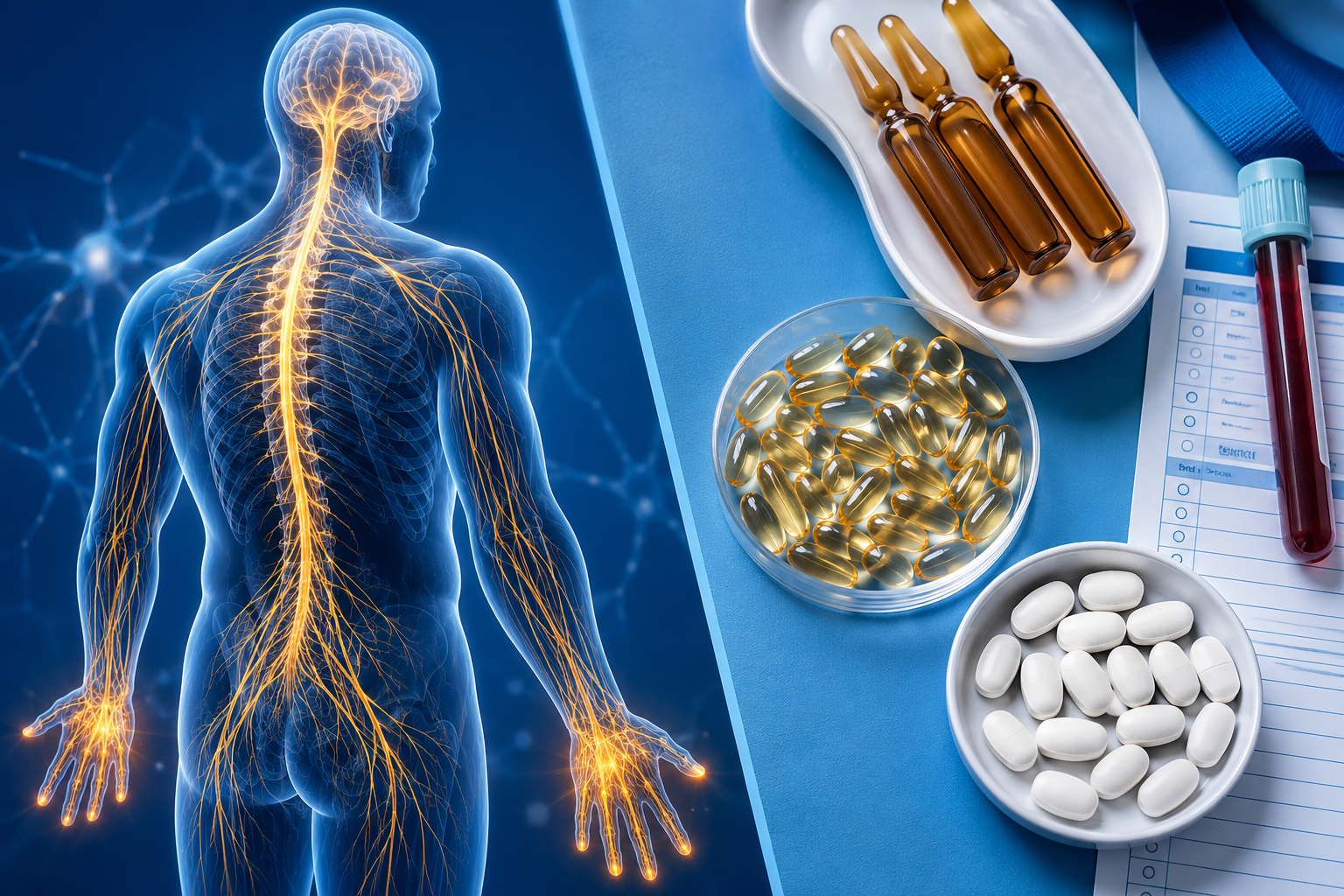
Symptoms of Vitamin D Deficiency and Hand Shaking
Vitamin D deficiency doesn’t cause hand tremors as directly as B12 does, but it contributes through a different mechanism: neuromuscular dysfunction. Low vitamin D impairs calcium regulation in muscle cells, which can lead to muscle spasms, cramps, and tremor-like movements.
Signs that vitamin D may be involved in your hand shaking:
- Tremors accompanied by muscle weakness or fatigue
- Bone pain or achiness (see symptoms of osteomalacia, a condition directly caused by severe vitamin D deficiency)
- Frequent illness or slow wound healing
- Depression or low mood alongside the tremors
- Worsening symptoms in winter months
Vitamin D deficiency is extremely common in New York City, where limited sunlight exposure during fall and winter months affects a large portion of the population year-round.
How Do I Know If My Shaky Hands Are From a Vitamin Problem?
The most reliable way to know is through a blood test. There’s no symptom pattern unique enough to confirm a vitamin deficiency without lab results — because thyroid disorders, neurological conditions, and anxiety can produce nearly identical tremors.
Signs that point toward a nutritional cause rather than a neurological one:
- Tremors are accompanied by fatigue, brain fog, tingling, or numbness
- You follow a restrictive diet (vegan, very low calorie, or highly processed food-based)
- You take medications known to deplete nutrients (metformin, PPIs, certain diuretics)
- Tremors are mild and constant rather than sudden and intense
- You’ve had recent GI surgery or have a malabsorption condition
Signs that suggest a non-nutritional cause:
- Tremors that worsen with intentional movement (action tremor) — more consistent with essential tremor or cerebellar issues
- Tremors that occur only at rest — more consistent with Parkinson’s disease
- Sudden onset with rapid heart rate, weight loss, or heat intolerance — points toward hyperthyroidism
- Tremors that appear after starting a new medication
Decision rule: If your tremors are new, worsening, or accompanied by other symptoms (weight change, heart palpitations, numbness, vision changes), don’t wait — get evaluated. If they’re mild and you have clear dietary risk factors, a blood panel is a reasonable first step.
What Medical Conditions Besides Vitamin Issues Cause Hand Shaking?
Several medical conditions — many of them treatable — cause hand tremors that look identical to nutritional deficiency. Thyroid disorders are among the most common and most frequently overlooked.
Key conditions to rule out:
- Hyperthyroidism: An overactive thyroid floods the body with thyroid hormones, accelerating metabolism and causing fine hand tremors, rapid heartbeat, weight loss, and anxiety. This is one of the most important conditions a specialist thyroid doctor in Queens, New York will screen for.
- Hypothyroidism: Less commonly associated with tremors, but can cause muscle weakness and coordination problems.
- Essential tremor: The most common movement disorder in adults — a benign but progressive tremor that typically affects the hands during intentional movement.
- Parkinson’s disease: Characterized by a resting tremor, stiffness, and slowed movement.
- Hypoglycemia: Low blood sugar causes sudden, intense shakiness that resolves with eating. People with diabetes are particularly vulnerable — see what to do if blood sugar reaches 400 for context on blood sugar extremes.
- Anxiety and panic disorder: Adrenaline surges cause temporary tremors. Read more about how anxiety can cause physical symptoms like chest pain — the same mechanism applies to hand shaking.
- Alcohol withdrawal: Can cause severe tremors within 24–72 hours of stopping heavy drinking.
- Medication side effects: Beta-agonists (asthma inhalers), lithium, certain antidepressants, and stimulants are common culprits.
Are Hand Tremors Always Serious, or Sometimes Just a Nutrition Issue?
Hand tremors are not always serious — but they should always be evaluated, because the only way to know for certain is through proper testing. Many cases of mild, chronic hand tremors in otherwise healthy adults turn out to be benign essential tremor or a correctable nutritional deficiency.
When tremors are likely NOT an emergency:
- They’ve been present for years without worsening
- They run in your family (essential tremor has a strong genetic component)
- They’re clearly linked to caffeine, stress, or fatigue and resolve with rest
- They’re mild and don’t interfere with daily tasks
When to seek prompt evaluation:
- Sudden onset or rapid worsening
- Tremors accompanied by weight loss, heart palpitations, or vision changes
- Difficulty walking, speaking, or swallowing alongside the tremors
- Tremors that occur at rest (not during movement)
- Any tremor in a child or young adult
Who Should Get Tested for Vitamin Deficiencies Causing Tremors?
Anyone experiencing persistent hand tremors should consider testing, but certain groups have a significantly higher likelihood of a nutritional cause.
Testing is especially recommended if you:
- Are over 50 (B12 absorption declines with age)
- Follow a vegan or vegetarian diet
- Take metformin, PPIs, or diuretics long-term
- Have a history of bariatric surgery or GI conditions
- Have been diagnosed with diabetes or prediabetes
- Spend most of your time indoors (vitamin D risk)
- Drink alcohol regularly
- Have a family history of thyroid disease
A standard screening panel for tremor-related deficiencies typically includes: serum B12, methylmalonic acid, homocysteine, 25-OH vitamin D, magnesium, complete metabolic panel, thyroid function tests (TSH, free T4, free T3), and a complete blood count.
For patients who also need thyroid evaluation, understanding what a thyroid specialist does can help you prepare for your appointment.
Best Thyroid Doctors Near Queens Who Test for Vitamin Deficiencies
Atlantic Endocrinology & Diabetes Center is one of the most comprehensive endocrinology practices in the New York City area, with multiple Queens locations that offer both thyroid evaluation and full nutritional deficiency testing under one roof.
Why patients choose Atlantic Endocrinology for tremor evaluation:
- Dr. Stella Ilyayeva, M.D. — Endocrinology specialist with over 20 years of experience in thyroid disease, diabetes, and hormonal disorders. She leads the clinical team and provides thorough, evidence-based evaluations.
- On-site diagnostics — including thyroid ultrasound, nerve conduction testing, laboratory services, and the TM Flow Test for autonomic nervous system assessment
- Multidisciplinary team — neurologists, cardiologists, and podiatrists available at the same practice, so if your tremors point toward a non-endocrine cause, you don’t need to start over elsewhere
Queens locations:
- Rego Park: 97-25 63 Dr 1 FL, Rego Park, NY 11374 | Mon–Thu: 9 AM–7 PM | Sun: 8 AM–6 PM
- Forest Hills: 99-45 67th Rd Suite 103, Forest Hills, NY 11375 | Mon, Tue, Thu: 9 AM–5 PM
Call (718) 275-2900 or visit atlanticendomd.com/contact to schedule an evaluation.
As a specialist thyroid doctor in Queens, New York, the team at Atlantic Endocrinology regularly sees patients whose tremors were initially attributed to anxiety or aging — only to find an undiagnosed thyroid condition or B12 deficiency driving the symptoms. For more on what to expect, see what an endocrinologist does on the first visit.

Cost of Thyroid and Vitamin Deficiency Testing in New York
The cost of testing in New York varies depending on your insurance coverage, the specific tests ordered, and the facility. Most standard blood panels for vitamin deficiencies and thyroid function are covered by major insurance plans when ordered for a documented clinical reason (such as tremors).
Atlantic Endocrinology accepts a wide range of insurance plans, including: Medicare, Medicaid, UHC Medicare, UHC Medicaid, Aetna, Cigna, Empire Blue Cross Blue Shield, Healthfirst, Fidelis Care, EmblemHealth, Humana, Wellcare, 1199 SEIU, and many others.
For patients without insurance or with high deductibles, the practice offers transparent pricing. You can also learn more about how much it costs to see a thyroid specialist to plan ahead.
Practical tip: Bring a list of all current medications and supplements to your appointment. Some supplements — particularly high-dose B vitamins — can artificially alter lab results and make deficiencies harder to detect.
Common Mistakes People Make When Diagnosing Hand Shaking
These are the errors that most often delay proper treatment for tremor patients.
- Self-supplementing without testing. Taking high-dose B12 or vitamin D before a blood test can normalize lab values and hide a real deficiency — or mask a more serious condition.
- Assuming it’s just anxiety. Anxiety does cause tremors, but it’s also a symptom of hyperthyroidism. Treating anxiety without checking thyroid function means the underlying cause goes unaddressed.
- Ignoring medication side effects. Many common medications cause tremors. Patients often don’t connect a new medication to new tremors without a doctor’s guidance.
- Waiting too long. Nutritional deficiencies that affect nerves — especially B12 — can cause permanent nerve damage if left untreated for years. Early intervention matters.
- Relying on a single test. Serum B12 alone misses functional deficiency in a significant number of patients. A complete panel is more informative.
Alternative and Complementary Approaches for Vitamin-Related Hand Tremors
Once a deficiency is confirmed and corrected medically, several supportive strategies can help maintain nerve and muscle health.
- Dietary optimization: Prioritize B12-rich foods (eggs, dairy, meat, fish) or fortified plant-based alternatives. For vitamin D, fatty fish, egg yolks, and fortified foods help alongside appropriate supplementation.
- Stress reduction: Chronic stress depletes magnesium and worsens tremors. Mindfulness, yoga, and regular sleep are practical supports.
- Limiting caffeine and alcohol: Both can worsen tremors and deplete key nutrients.
- IV vitamin therapy: For patients with severe deficiencies or malabsorption issues, Atlantic Endocrinology offers IV vitamin therapy as a direct delivery method that bypasses GI absorption problems.
- Nutritional counseling: The practice’s nutrition wellness program can help build a sustainable eating plan that prevents future deficiencies.
For a broader look at how integrative approaches support endocrine and neurological health, see why integrative medicine can benefit your well-being.
How Long Does It Take to Stop Hand Tremors After Fixing Vitamin Levels?
Recovery time depends on how severe the deficiency is, how long it has been present, and which nutrient is involved. Mild deficiencies caught early often improve within 4–8 weeks of treatment. Long-standing nerve damage from B12 deficiency can take 6–12 months to partially recover — and in some cases, full recovery may not be possible.
General timeline estimates:
- Magnesium deficiency: Tremors may improve within days to a few weeks of supplementation
- Vitamin D deficiency: Muscle-related symptoms typically improve within 4–6 weeks; full normalization of levels takes 3–6 months
- Mild B12 deficiency: Neurological symptoms may begin improving within 4–8 weeks of B12 injections or high-dose oral supplementation
- Severe or long-standing B12 deficiency: Partial improvement over 6–12 months; some nerve damage may be permanent
Important: If tremors don’t improve after correcting a confirmed deficiency, further evaluation is needed. A non-nutritional cause — such as essential tremor or a thyroid disorder — may be contributing.
Endocrinologists in Queens Who Specialize in Tremor Diagnosis
A specialist thyroid doctor in Queens, New York who also understands endocrine-related tremors is the most efficient first stop for patients experiencing unexplained hand shaking. Endocrinologists are uniquely positioned to evaluate the hormonal, metabolic, and nutritional factors that neurologists or primary care physicians may not test for routinely.
At Atlantic Endocrinology & Diabetes Center, the diagnostic approach for tremors typically includes:
- Thyroid function panel (TSH, free T4, free T3, thyroid antibodies)
- Comprehensive metabolic panel (blood sugar, kidney function, electrolytes)
- Vitamin and mineral panel (B12, MMA, homocysteine, vitamin D, magnesium)
- Complete blood count (to check for anemia, which can worsen neurological symptoms)
- Nerve conduction testing (if peripheral neuropathy is suspected)
- ANS monitoring (autonomic nervous system assessment)
If you’re wondering what symptoms warrant a visit to an endocrinologist, hand tremors — especially when accompanied by fatigue, weight changes, or metabolic symptoms — are firmly on that list.
FAQ: Vitamin Deficiency and Shaky Hands
Can vitamin B12 deficiency cause hand tremors?
Yes. B12 is essential for myelin production, and deficiency leads to peripheral neuropathy that can cause tremors, tingling, and weakness in the hands.
What is the fastest way to fix vitamin-related hand tremors?
Get tested first to confirm which deficiency is present. B12 injections work faster than oral supplements for severe deficiency. Magnesium supplementation can improve tremors within days for some patients.
Can low vitamin D cause shaking hands?
Indirectly, yes. Vitamin D deficiency impairs neuromuscular function and calcium regulation, which can cause muscle spasms and tremor-like movements.
Is it safe to take B12 supplements without testing?
B12 is water-soluble and generally safe, but supplementing before testing can mask a deficiency on lab results and delay diagnosis of a more serious condition.
Shaky hands are rarely something to ignore — but they’re also rarely a reason to panic. The most common nutritional causes, including B12, vitamin D, and magnesium deficiency, are straightforward to test for and highly treatable when caught early. The challenge is that these deficiencies mimic thyroid disorders, anxiety, and neurological conditions closely enough that self-diagnosis is genuinely unreliable.
The most practical next step is a comprehensive blood panel combined with a thyroid evaluation. At Atlantic Endocrinology & Diabetes Center, a specialist thyroid doctor in Queens, New York can order the right tests, interpret results in the context of your full health picture, and connect you with the appropriate specialists — whether that’s a neurologist, a cardiologist, or a nutritional wellness expert — all within the same practice.
Ready to find out what’s causing your hand tremors?
- Call: (718) 275-2900
- Online: atlanticendomd.com/contact
- Pre-register: Patient Portal
Queens Locations:
- Rego Park: 97-25 63 Dr 1 FL, Rego Park, NY 11374
- Forest Hills: 99-45 67th Rd Suite 103, Forest Hills, NY 11375
References
- Hanna, M., Jaqua, E., Nguyen, V., & Clay, J. B. (2022). Vitamins: functions and uses in medicine. Perm J, 26(2), 89-97.
https://www.thepermanentejournal.org/doi/pdf/10.7812/TPP/21.204
- Lešić, S., Ivanišević, Z., Špiljak, B., Tomas, M., Šoštarić, M., & Včev, A. (2024). The impact of vitamin deficiencies on oral manifestations in children. Dentistry journal, 12(4), 109.
https://www.mdpi.com/2304-6767/12/4/109
Medical and Editorial Commitment
The content of this article is strictly for educational and informational purposes. It does not replace in-person professional medical diagnosis, advice, or treatment..
Read Privacy PolicyRelated Posts

Treatment for Neuropathy in Legs and Feet: A Complete Guide for Patients Seeking in Queens, NY
Last updated: June 11, 2026 Quick Answer: Diabetic neuropathy in the legs and feet is nerve damage caused by chronically high blood [...]

Vitamin D3 vs D2 for Bone Health: Which Is Better? A Guide to Bone Specialist Services
Last updated: June 4, 2026 Quick Answer: Vitamin D3 (cholecalciferol) is the superior choice for bone health. It raises and maintains blood [...]