
 By Atlantic Endo Medical Review Board
Do you often dismiss that dull ache in your legs or the feeling of weakness as just aging or stress? Many subtle changes are critical early signs of osteomalacia, a condition where your bones soften. Failing to recognize these signs can lead to severe health problems. How do you know if it’s just a strain or something serious requiring a Bone Disease specialist in Queens, NY? Keep reading to identify the five symptoms you must know.
TL;DR
Osteomalacia is bone softening caused by severe Vitamin D deficiency, which prevents proper calcium and phosphorus mineralization. Key symptoms include chronic bone pain, proximal muscle weakness, and increased stress fracture risk, confirmed by blood tests.
Talk to endocrinologist with a specialization in bone health
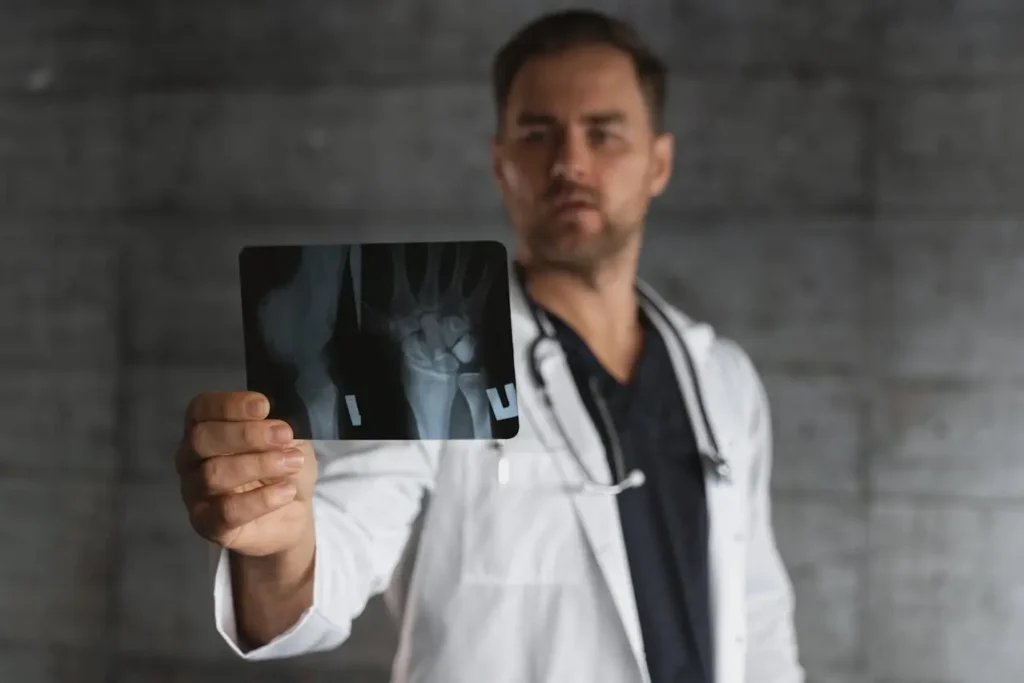
Table of Contents
What Causes Osteomalacia in Adults?
Osteomalacia in adults is the softening of the bones caused by severe vitamin D deficiency. This prevents proper bone mineralization, making it difficult to absorb calcium and phosphorus. Both minerals are essential for maintaining the structural hardness of bones.
The most common cause is Vitamin D deficiency due to low intake, limited sun exposure, or absorption problems. Gastrointestinal issues, like celiac disease or weight-loss surgeries, can prevent the adequate assimilation of nutrients. Kidney or liver diseases also affect the metabolism of vitamin D into its active form.
Certain antiepileptic medications and low phosphate levels also interfere with bone structure. In less frequent cases, genetic disorders or tumors can cause an excessive elimination of phosphorus. The condition causes muscle weakness and bone pain, which is common in older adults or those with intestinal malabsorption.
Identifying Early Bone Softening and Subtle Physical Changes
Early identification of osteomalacia (bone softening) is challenging because the initial symptoms are subtle and nonspecific, often confused with fatigue or aging. This bone softening is characterized by defective mineralization of the matrix, making the bones less rigid and more prone to bending.
- Diffuse bone pain: Dull, constant pain, most common in the hips, lower back, pelvis, legs, and ribs, which worsens when bearing weight.
- Proximal muscle weakness: Difficulty climbing stairs or getting up from a chair, causing a waddling gait.
- Bone sensitivity: Bones react to mild impact or pressure that would not normally cause pain.
- Spasms and paresthesias: Possible cramps, spasms in the hands and feet, or numbness around the mouth due to low calcium levels.
- Chronic fatigue: A generalized feeling of weakness and lack of energy.
- Looser’s Pseudofractures: Tiny, symmetrical fissure lines visible on X-rays of weight-bearing bones (such as the pelvis or femur).
- Mild deformities: The progression of weakness can lead to the curvature of long bones or a hunched posture.
- Biochemical changes: Blood tests showing low levels of vitamin D, calcium, and phosphorus, and high alkaline phosphatase.
Although early symptoms are nonspecific, the combination of persistent bone pain, muscle weakness, and the presence of radiographic signs like Looser’s pseudofractures are key for diagnosis. Confirmation is made via blood tests that reveal typical biochemical changes, such as decreased vitamin D and increased alkaline phosphatase.
Tracking Progressive Muscle Weakness and Mobility Decline
Tracking progressive muscle weakness and mobility decline is necessary, as these symptoms reflect severe bone softening due to lack of mineralization. This condition weakens the bones and affects muscle function, causing pain, stiffness, and a characteristic gait with difficulty climbing stairs or getting up.
| Tracking Aspect | Description |
|---|---|
| Muscle Weakness | Proximal musculature (shoulders, hips, glutes, and thighs) and the ability to get up without assistance are evaluated. The doctor observes the “waddling gait”. |
| Mobility | Monitoring of increased pain when bearing weight and the appearance of pseudofractures (Looser’s fractures) on X-rays of the pelvis and legs. |
| Laboratory Tests | Blood tests to measure levels of 25(OH) vitamin D, calcium, phosphorus, and alkaline phosphatase (elevated in this disease). |
| Post-Treatment Recovery | Although calcium and vitamin D levels normalize with supplementation, functional and muscular recovery can take several months. |
Clinical monitoring is required to evaluate the progression of the disease and the response to treatment. While supplementation quickly normalizes mineral levels, remember that the full recovery of muscle strength and mobility can extend over several months.
Observing Bone Pain Development in Hips, Legs, and Lower Back
Bone pain is one of the cardinal symptoms. It is typically progressive, often following a slow evolution pattern that can take months or years to diagnose.
- Early Phase: Can be asymptomatic or manifest as vague and diffuse discomfort.
- Pain Progression: Develops into a dull, deep, and persistent discomfort.
- Locations: The pain concentrates in weight-bearing areas, such as the lower back (lumbar area), pelvis, hips, and legs.
- Hip Pain: Is characteristic and can cause a swaying gait (waddling gait).
- Worsening Factors: The pain increases with activity, standing, or bearing weight, and can intensify at night.
- Sensitivity: Bones can become sensitive to light touch, especially in the pelvis and fémur.
- Fase Avanzada: High risk of spontaneous fractures or pseudofractures (Looser’s lines) with minimal trauma.
The transition from vague discomfort to dull, persistent pain in weight-bearing areas, like the lower back and hips, highlights the progression of bone softening. Recognizing this evolution and its location is necessary to seek adequate medical evaluation before the condition leads to fractures.
Noticing Increased Fracture Risk from Minor Stress
Early detection of increased risk of stress fractures from minor stress is necessary, as these bone fissures can be the first visible symptom or the “cry for help” of a skeleton suffering from osteomalacia.
Warning Signs
- Mild Stress Fractures: These fissures are the first visible symptom of the skeleton and present with dull, deep pain that worsens when bearing weight and improves with rest.
- Typical Location: They frequently occur in weight-bearing bones, such as the hips, pelvis, ribs, and feet.
- «Pseudofracturas»: Radiographically, they often present as thin, translucent bone bands, which are the site where fractures occur, even with minimal trauma.
- Bone Fatigue: Diffuse bone pain that is initially confused with sprains or muscle pain.
Detection and Diagnosis Methods
- Blood Tests: If unexplained fractures occur, levels of Vitamin D (25-hydroxyvitamin D)—which are typically very low—Phosphate (low), Calcium (normal or low), and Alkaline Phosphatase (elevated) are analyzed.
- Imaging Studies: X-rays identify “Looser zones” or pseudofractures. Magnetic Resonance (MR) or Bone Scintigraphy are also used to detect early stress fractures.
If unexplained or frequent stress fractures occur, a metabolic bone problem should be suspected. For definitive diagnosis, blood tests along with elevated alkaline phosphatase confirm the mineralization deficiency.
Linking Vitamin D Deficiency to Mineralization Problems
Active vitamin D is required for calcium absorption in the intestine. Its absence reduces blood calcium and phosphorus levels, which prevents the bone tissue (osteoide) from mineralizing correctly.
This defect in mineralization is the direct cause of osteomalacia in adults, manifesting as soft bones. Consequences include bone pain, muscle weakness, and an increased risk of fractures.
The deficiency originates from insufficient sun exposure, a diet poor in vitamin D, or intestinal malabsorption disorders. Treatment focuses on replacing vitamin D through supplementation, often complemented with calcium and phosphorus.
Key Takeaways
- Osteomalacia is adult bone softening caused by severely defective mineralization due to Vitamin D deficiency, which prevents the proper absorption of calcium and phosphorus.
- Early signs are subtle, including chronic, dull bone pain in weight-bearing areas (hips/lower back) and proximal muscle weakness like difficulty climbing stairs.
- Progression increases bone sensitivity and fracture risk from minor stress, evidenced radiographically by “Looser”s pseudofractures” in weight-bearing bones.
- Diagnosis requires clinical evaluation and lab tests showing critically low Vitamin D and high alkaline phosphatase, with imaging confirming bone fissures.
- Treatment involves aggressive supplementation with Vitamin D, calcium, and phosphorus; however, the functional recovery of muscle strength and mobility may take several months.
FAQs
What kind of doctor is best for bone disorders?
The best specialists are orthopedic surgeons, who treat musculoskeletal issues, and endocrinologists or rheumatologists, who often manage metabolic bone conditions like osteoporosis through specialized medical care.
What is the average T-score for a 70-year-old woman?
At age 70, the average T-score typically ranges between -1.5 and -2.5. This range indicates a higher prevalence of osteopenia or the onset of osteoporosis due to postmenopausal bone loss.
What is the one vitamin that rebuilds bone density? Vitamin D
is the most critical as it enables calcium absorption; however, it works best alongside Vitamin K2, which directs that calcium specifically into the bone matrix to strengthen it.
What is the most common bone disease?
Osteoporosis is the most common bone disease worldwide. It is characterized by a significant loss of bone mass and density, making bones fragile and highly susceptible to serious fractures.
Sources
- Cianferotti, L. (2022). Osteomalacia is not a single disease. International Journal of Molecular Sciences, 23(23), 14896.
https://www.mdpi.com/1422-0067/23/23/14896
- Du, H., Jia, A., Gu, M., Li, S., Zhang, P., & Bai, J. (2021). Thyrotoxicosis and osteomalacia: from symptom to pathogenesis. American Journal of Translational Research, 13(2), 803.
https://pmc.ncbi.nlm.nih.gov/articles/PMC7868833
You May Also Like
- Why Are Alcoholics More Likely to Suffer from Bone Disease
- What is metabolic bone disease?
- How to Prevent Bone Disease? 5 Key Strategies for Strong Bones
Medical and Editorial Commitment
The content of this article is strictly for educational and informational purposes. It does not replace in-person professional medical diagnosis, advice, or treatment..
Read Privacy PolicyRelated Posts
The Complete Diabetes Check Guide: Tests, Timing, and What Your Results Mean
More than 38 million Americans are living with diabetes today, and roughly one in five of them do not know it yet. [...]

Lipid Control: A Complete Guide to Managing Cholesterol and Protecting Your Heart
Nearly half of all American adults have high LDL cholesterol, yet fewer than half of them are receiving any treatment for it, [...]