
 By Atlantic Endo Medical Review Board
Two walnut-sized glands sitting atop your kidneys are quietly running some of the most critical operations in your body, and most people never think about them until something goes wrong. This patient’s guide to what do the adrenal glands actually do is designed to change that. Whether you have been told you have an adrenal nodule, you feel chronically exhausted, or your blood pressure simply will not respond to treatment, comprehending these glands can help you ask better questions and get better care.
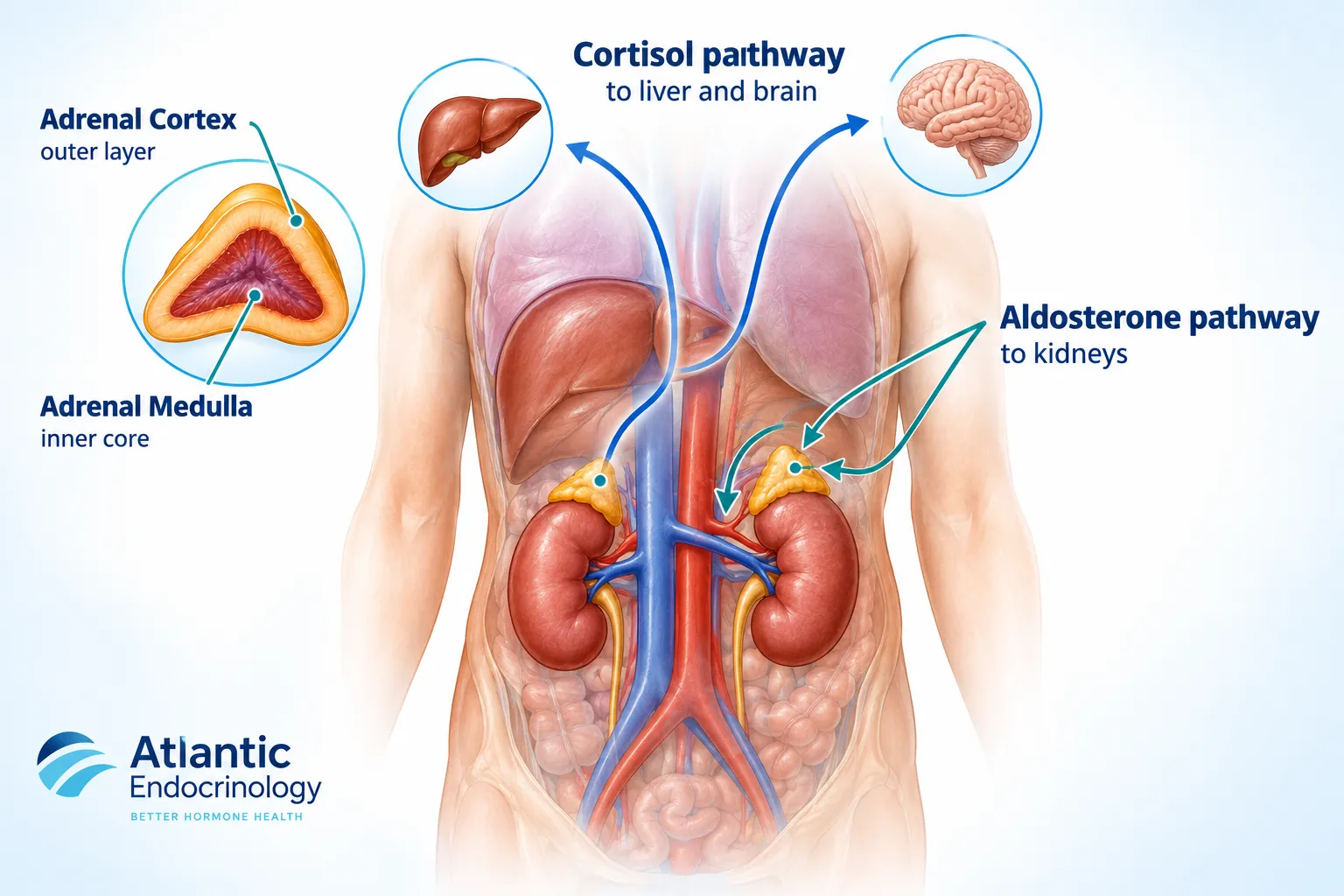
Table of Contents
1. The Adrenal Glands: Anatomy You Should Know
Each gland is made up of two distinct regions: the outer cortex and the inner medulla. These two zones are functionally separate, they produce different hormones, respond to different signals, and affect different body systems.
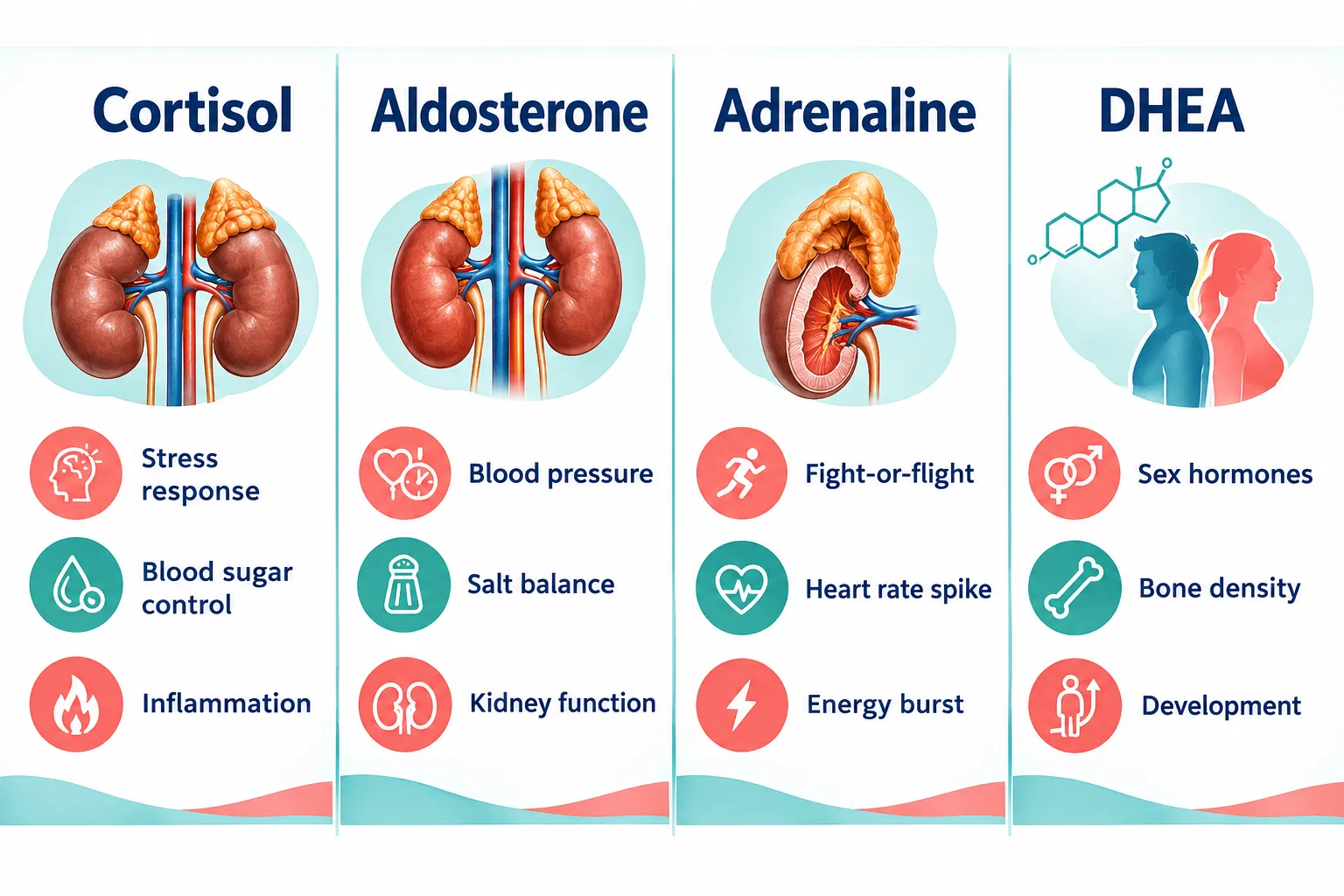
The cortex is divided into three layers. The outermost layer produces aldosterone, which regulates blood pressure and salt balance. The middle layer produces cortisol, the body’s primary long-term stress and metabolism hormone. The innermost cortical layer produces androgens, including DHEA, which are precursors to sex hormones.
The medulla, the gland’s inner core, produces adrenaline (epinephrine) and noradrenaline (norepinephrine), the rapid-response hormones most people associate with a sudden scare or physical threat.
Comprehending this two-part structure is essential because disorders of the cortex behave very differently from disorders of the medulla. For a deeper look at how endocrinologists evaluate the structure and function, see how the ACTH stimulation test works for adrenal health.
2. Cortisol: Far More Than a “Stress Hormone”
Cortisol is the gland’s most talked-about product, but calling it simply a stress hormone undersells its role by a wide margin. Cortisol regulates blood sugar by stimulating glucose production in the liver. It modulates immune function, suppresses excessive inflammation, and helps the body prioritize energy during illness or injury. It also plays a main role in fat distribution, muscle maintenance, and even memory consolidation during sleep.
Cortisol follows a daily rhythm called the diurnal pattern, it peaks in the early morning to help you wake up and gradually declines through the day. When this rhythm is disrupted, patients often experience fatigue, poor sleep, weight gain around the midsection, and difficulty concentrating.
A growing area of clinical concern involves what researchers now call mild autonomous cortisol secretion, a condition where adrenal adenomas (benign nodules) produce slightly elevated cortisol without triggering the dramatic symptoms of full Cushing’s syndrome. Studies have linked even this subtle excess to increased risk of type 2 diabetes, high blood pressure, and cardiovascular disease. This is why endocrinologists increasingly recommend evaluating adrenal incidentalomas, nodules found incidentally on imaging, rather than dismissing them as benign.
3. Aldosterone and Blood Pressure Regulation
Aldosterone is the adrenal cortex’s primary mineralocorticoid. Its job is to signal the kidneys to retain sodium and excrete potassium. Sodium retention pulls water with it, increasing blood volume and, consequently, blood pressure.
When aldosterone is overproduced, a condition called primary hyperaldosteronism, patients develop high blood pressure that is often resistant to standard medications, along with low potassium levels that cause muscle cramps, weakness, and fatigue. This condition is more common than many clinicians once believed, and it is now considered one of the leading secondary causes of hypertension.
Conversely, when aldosterone production falls, as in adrenal insufficiency, patients lose too much sodium, become dehydrated, and experience dangerously low blood pressure, particularly when standing up quickly.
4. The Adrenal Medulla and the Fight-or-Flight Response
The adrenal medulla functions more like nervous system tissue than classic endocrine tissue. When the brain detects an immediate threat, a near-accident, a sudden loud noise, an intense physical challenge, it sends a rapid nerve signal directly to the medulla, which releases adrenaline and noradrenaline into the bloodstream within seconds.
These hormones immediately raise heart rate, dilate the airways, redirect blood to the muscles, and mobilize glucose for quick energy. This is the fight-or-flight response in action. Under normal circumstances, it is life-saving. Under chronic activation, as seen in prolonged psychological stress, it contributes to cardiovascular strain, anxiety, and metabolic disruption.
A rare tumor called a pheochromocytoma can arise in the medulla and cause uncontrolled bursts of adrenaline. Patients typically experience sudden, severe headaches, sweating, and dramatic spikes in blood pressure. This is a condition that requires prompt specialist evaluation.
5. Androgens, Development, and Reproductive Health
The cortex produces androgens, primarily DHEA and DHEA-sulfate, which serve as building blocks for both testosterone and estrogen throughout the body. In children, a surge of adrenal androgens triggers adrenarche, an early phase of puberty that precedes the gonadal hormone surge. In adults, the androgens contribute to libido, bone density, muscle mass, and skin health in both men and women.
In conditions like congenital adrenal hyperplasia (CAH), an enzyme deficiency causes the adrenal glands to overproduce androgens while underproducing cortisol. In women, excess adrenal androgens are also a contributing factor in polycystic ovarian syndrome (PCOS), causing irregular periods, acne, and unwanted hair growth. If you are navigating PCOS, our guide on what to ask your doctor about PCOS can help you prepare for a productive specialist visit.
6. Adrenal Insufficiency: When the Glands Underperform
Its insufficiency occurs when the adrenal glands cannot produce adequate amounts of cortisol, aldosterone, or both. Primary adrenal insufficiency (Addison’s disease) results from damage to the glands themselves, most often from autoimmune destruction. Secondary adrenal insufficiency occurs when the pituitary gland fails to send adequate ACTH signals to stimulate cortisol production.
Symptoms are often gradual and nonspecific: persistent fatigue, unintentional weight loss, salt cravings, low blood pressure, darkening of the skin (in primary disease), and recurrent nausea. Because these symptoms overlap with many other conditions, diagnosis is frequently delayed.
An adrenal crisis, a sudden, severe drop in cortisol, is a medical emergency that can be life-threatening without immediate treatment. Patients with known adrenal insufficiency carry emergency hydrocortisone injections for this reason.
For a detailed look at long-term outcomes, what is the life expectancy of someone with adrenal insufficiency addresses the prognosis with modern treatment in plain language.
7. Cushing’s Syndrome and Cortisol Excess
Cushing’s syndrome results from prolonged exposure to excess cortisol. The most common cause is long-term use of corticosteroid medications. When it arises from within the body, it is usually driven by a pituitary tumor overproducing ACTH (Cushing’s disease) or, less commonly, by a cortisol-secreting adrenal tumor.
Classic features include central weight gain with a rounded face, a fatty hump at the base of the neck, thin skin that bruises easily, purple stretch marks, muscle weakness, and high blood pressure. Nevertheless, as noted earlier, milder forms of cortisol excess from adrenal adenomas can cause metabolic harm, including insulin resistance and elevated blood sugar, without these dramatic physical signs.
8. Warning Signs That Deserve a Specialist Evaluation
Knowing when to seek care is as important as comprehending the biology. Consider scheduling an evaluation with an endocrinologist if you experience any of the following patterns:
Unexplained, persistent fatigue that does not improve with rest, combined with low blood pressure or salt cravings, may point toward adrenal insufficiency. Resistant high blood pressure, particularly with low potassium, warrants investigation for hyperaldosteronism. Rapid central weight gain, new-onset diabetes, or easy bruising in the absence of another clear cause should prompt cortisol evaluation. Episodic severe headaches with sweating and heart pounding require urgent workup to rule out pheochromocytoma.
For a broader view of which symptoms warrant an endocrinology referral, see what symptoms would you see an endocrinologist for. And if you want to understand what diagnostic testing an endocrinologist typically orders, what is an endocrine test and how should it be interpreted walks through the process clearly.
FAQs
Can adrenal problems cause weight gain?
Yes. Excess cortisol, whether from a tumor, an adrenal adenoma, or long-term steroid use, is a well-established cause of central weight gain, increased appetite, and insulin resistance. Even mild cortisol excess from small nodules has been associated with metabolic changes including elevated blood sugar and increased abdominal fat. If unexplained weight gain accompanies fatigue, easy bruising, or blood pressure changes, an endocrinologist can order targeted testing to evaluate adrenal function.
What is the difference between adrenal fatigue and adrenal insufficiency?
Adrenal insufficiency is a diagnosable medical condition confirmed by laboratory testing, in which the adrenal glands produce insufficient cortisol and sometimes aldosterone. It requires medical treatment. “Adrenal fatigue” is a popular but clinically unrecognized term used to describe chronic tiredness attributed to overworked glands. Major endocrine societies do not recognize it as a distinct diagnosis. If you are experiencing persistent fatigue, a proper evaluation, including cortisol and ACTH testing, can determine whether a genuine hormonal deficiency is present.
Who treats adrenal gland disorders?
Disorders are primarily managed by endocrinologists, physicians who specialize in hormonal conditions. Depending on the specific diagnosis, care may also involve a radiologist for imaging-guided procedures, a surgeon for tumor removal, or a cardiologist for blood pressure management. At Atlantic Endocrinology and Diabetes Center, Dr. Stella Ilyayeva leads adrenal and endocrine care with over 20 years of experience.
Can adrenal gland problems affect bone health?
Yes. Chronic cortisol excess suppresses bone formation and accelerates bone resorption, significantly increasing the risk of osteoporosis and fractures. Adrenal insufficiency treated with long-term glucocorticoid replacement also carries bone density implications that require monitoring. Patients with known adrenal disorders should discuss bone density screening with their specialist.
References
- Fassnacht, M., Arlt, W., Bancos, I., Dralle, H., Newell-Price, J., Sahdev, A., Tabarin, A., Terzolo, M., Tsagarakis, S., & Dekkers, O. M. (2023). Management of adrenal incidentalomas: European Society of Endocrinology Clinical Practice Guideline. European Journal of Endocrinology, 189(1), G1, G42. https://doi.org/10.1093/ejendo/lvad066
- Bancos, I., & Prete, A. (2021). Approach to the patient with adrenal incidentaloma. Journal of Clinical Endocrinology & Metabolism, 106(11), 3331-3352. https://doi.org/10.1210/clinem/dgab512
- National Institute of Diabetes and Digestive and Kidney Diseases (NIDDK). (2023). Adrenal insufficiency and Addison’s disease. U.S. Department of Health and Human Services. https://www.niddk.nih.gov/health-information/endocrine-diseases/adrenal-insufficiency-addisons-disease
- Endocrine Society. (2022). Cushing’s syndrome. https://www.endocrine.org/patient-engagement/endocrine-library/cushings-syndrome
- Funder, J. W., Carey, R. M., Mantero, F., Murad, M. H., Reincke, M., Shibata, H., Stowasser, M., & Young, W. F. (2021). The management of primary aldosteronism: Case detection, diagnosis, and treatment: An Endocrine Society Clinical Practice Guideline update. Journal of Clinical Endocrinology & Metabolism, 106(8), e3523, e3524. https://doi.org/10.1210/clinem/dgab349
- MedlinePlus / National Library of Medicine. (2022). Adrenal gland disorders. U.S. National Library of Medicine. https://medlineplus.gov/adrenalglanddisorders.html
Medical and Editorial Commitment
The content of this article is strictly for educational and informational purposes. It does not replace in-person professional medical diagnosis, advice, or treatment..
Read Privacy PolicyRelated Posts
Thyroid Nodules: When to Watch and When to Worry
More than half of all adults will develop a thyroid nodule at some point in their lives, yet the vast majority will [...]
The Complete Diabetes Check Guide: Tests, Timing, and What Your Results Mean
More than 38 million Americans are living with diabetes today, and roughly one in five of them do not know it yet. [...]