
 By Atlantic Endo Medical Review Board
More than 38 million Americans are living with diabetes today, and roughly one in five of them do not know it yet. A routine diabetes check is not just a precaution, it is the single most powerful tool for catching a life-altering condition before it causes lasting damage to your heart, kidneys, eyes, and nerves.
In 2026, clinical guidelines have shifted in a meaningful way. Screening is starting earlier, happening more frequently for high-risk individuals, and relying on a broader set of tests than ever before. Whether you are newly concerned about your blood sugar or managing a long-standing diagnosis, comprehending what a proper diabetes check involves puts you in control of your health.
Table of Contents
Key Takeaways
- A diabetes check includes specific blood tests, fasting plasma glucose, HbA1c, oral glucose tolerance test, and random plasma glucose, each with defined diagnostic thresholds.
- The 2026 ADA Standards of Care recommend screening at least every three years for most adults, and every one to two years for those with risk factors.
- Prediabetes is detectable through the same tests and is fully reversible with early intervention.
- An endocrinologist provides the most specialized, comprehensive diabetes evaluation, beyond what urgent care or a general practitioner typically offers.
- Emerging technologies, including wearable sweat-based glucose monitors, are beginning to complement traditional lab-based testing.
What a Diabetes Check Actually Involves
A diabetes check is not a single test. It is a clinical process that combines laboratory blood work, a review of your personal risk factors, and in many cases, a physical examination. Knowing each component helps you walk into your appointment prepared.
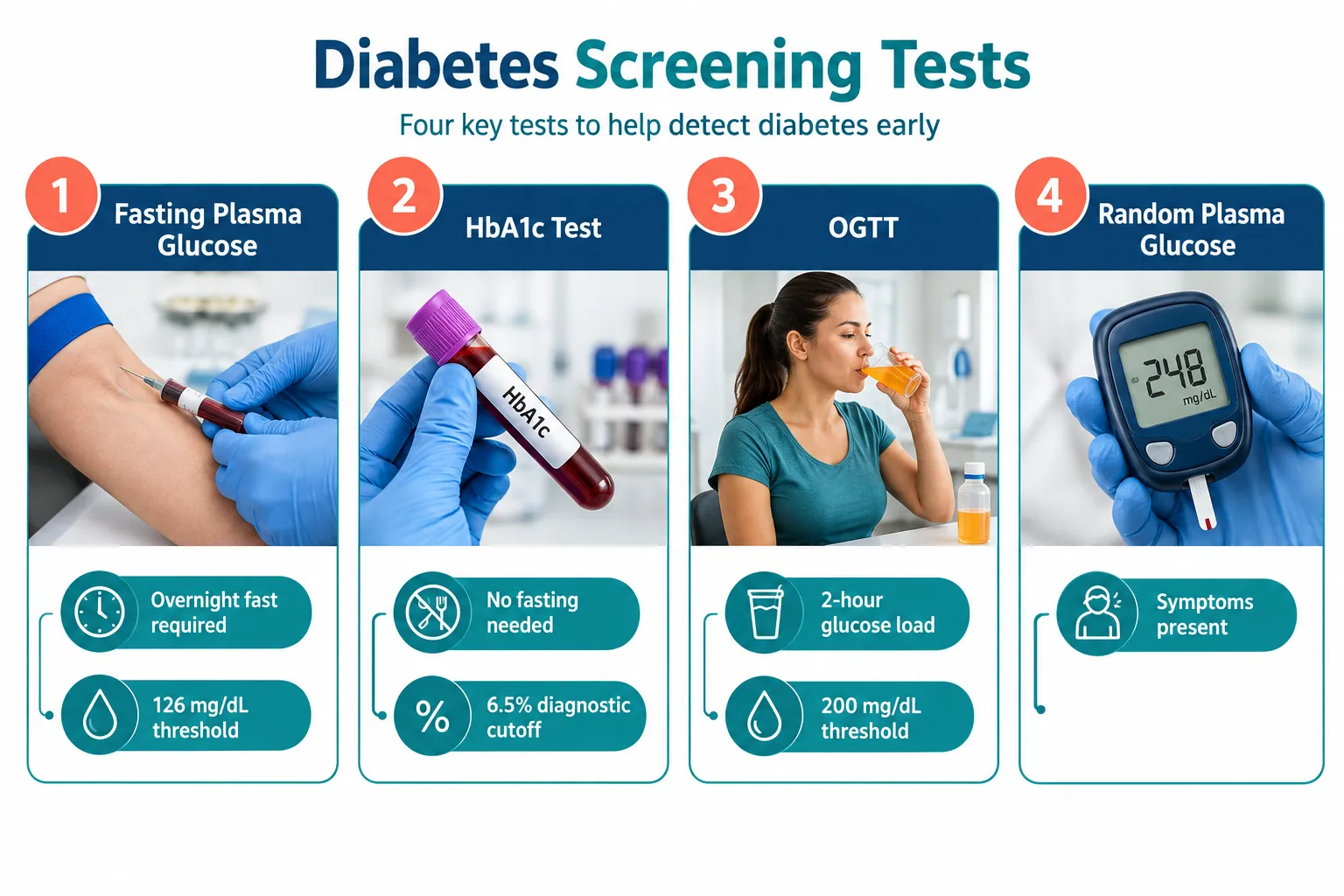
The Four Core Blood Tests
1. Fasting Plasma Glucose (FPG) This test measures your blood sugar after at least eight hours without eating. A result of 126 mg/dL or higher on two separate occasions confirms a diabetes diagnosis. A result between 100 and 125 mg/dL indicates prediabetes.
2. Hemoglobin A1c (HbA1c) The HbA1c test reflects your average blood sugar over the past two to three months. No fasting is required. A result of 6.5% or above on two tests confirms diabetes. A result between 5.7% and 6.4% signals prediabetes. While HbA1c remains the most widely used screening tool, 2026 guidelines place greater emphasis on its limitations, it can be affected by certain blood disorders, pregnancy, and ethnicity-related variations in red blood cell turnover.
3. Oral Glucose Tolerance Test (OGTT) The OGTT involves drinking a standardized glucose solution and having your blood drawn two hours later. A result of 200 mg/dL or higher confirms diabetes. This test is the preferred method for diagnosing gestational diabetes and is also recommended annually for cystic fibrosis-related diabetes (CFRD) starting at age 10. If you are curious about symptoms and causes of gestational diabetes, this test is central to that conversation.
4. Random Plasma Glucose If you have classic symptoms of diabetes, excessive thirst, frequent urination, unexplained weight loss, a random blood sugar reading of 200 mg/dL or higher at any time of day is sufficient for diagnosis.
Clinical Note:Current guidelines require confirmation with a second test on a separate day unless symptoms are unambiguous or two different tests from the same blood draw both exceed diagnostic thresholds. Multi-test confirmation is the standard, not the exception.
Beyond Blood Sugar: What a Comprehensive Evaluation Includes
At a specialized center, a diabetes check extends well beyond a single blood draw. It may include:
- Body composition analysis to assess visceral fat and metabolic risk
- Blood pressure measurement (hypertension and diabetes are closely linked)
- Kidney function panels (creatinine, eGFR, urine albumin)
- Lipid profile (cholesterol and triglycerides)
- Foot examination for early signs of neuropathy or circulation issues
- Digital fundoscopy to screen for diabetic retinopathy
At Atlantic Endocrinology & Diabetes Center, advanced diagnostics such as the Sudomotor Scan, Nerve Conduction Test, ANS Monitoring, and Digital Fundoscopy are available in-house, allowing for a thorough evaluation without requiring multiple referrals across the city.
Who Needs a Diabetes Check and How Often
The 2026 ADA Standards of Care have refined screening criteria significantly, pushing for earlier and more targeted testing based on individual risk profiles.
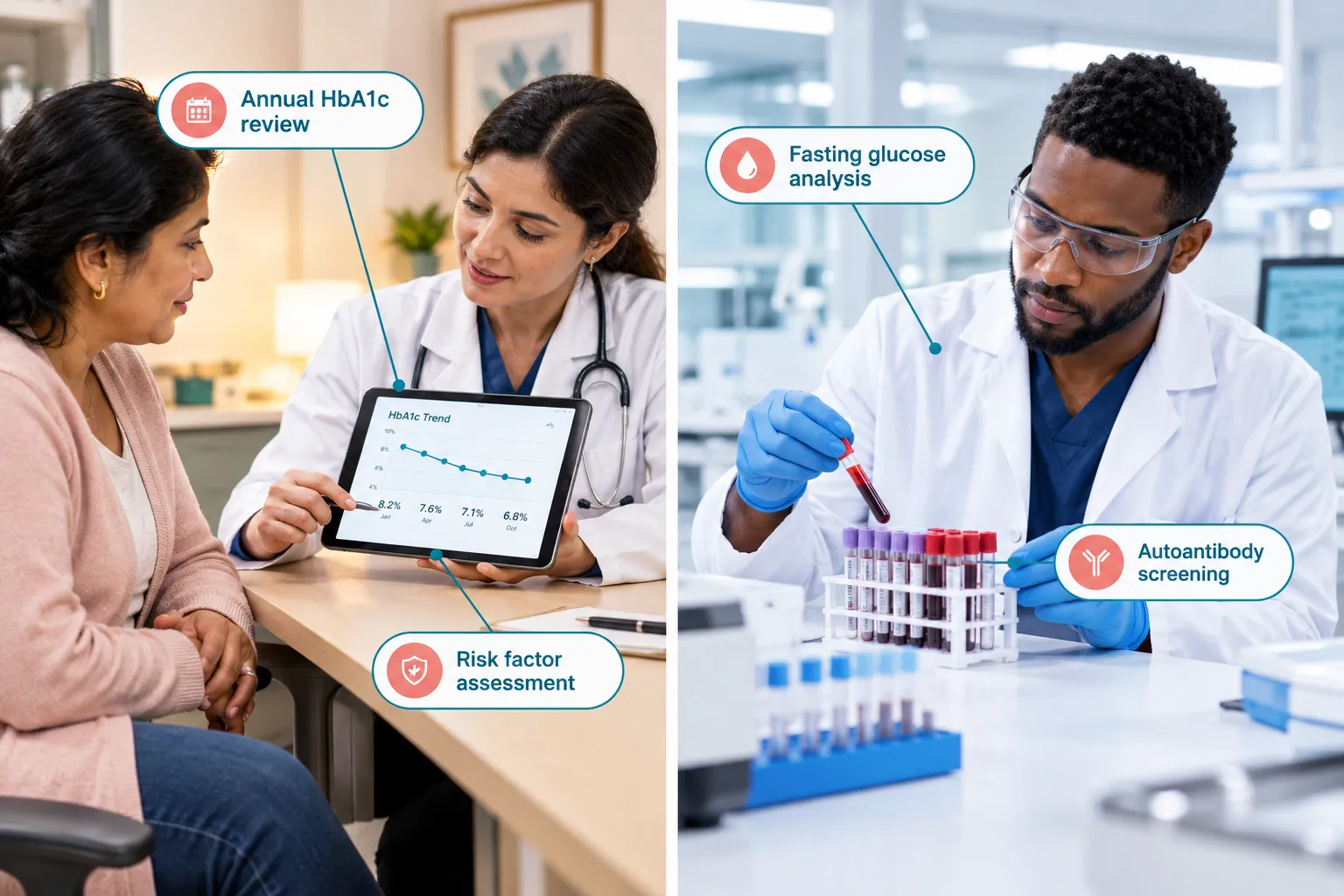
Standard Screening Recommendations
| Population | Recommended Frequency |
|---|---|
| Adults 35 and older, no risk factors | Every 3 years |
| Adults with one or more risk factors | Every 1-2 years |
| Adults with prediabetes | Every 1 year |
| Pregnant individuals (gestational screening) | 24-28 weeks gestation |
| High-risk children and adolescents | Starting at age 10 or puberty |
Main Risk Factors That Warrant Earlier Screening
You should consider a diabetes check sooner than age 35 if any of the following apply:
- Overweight or obesity (BMI 25 or higher, or 23 or higher in Asian Americans)
- Family history of type 2 diabetes in a first-degree relative
- History of gestational diabetes or delivering a baby over 9 pounds
- Polycystic ovary syndrome (PCOS)
- High blood pressure (130/80 mmHg or higher)
- Abnormal cholesterol or triglyceride levels
- History of cardiovascular disease
- Physical inactivity
- Certain racial and ethnic backgrounds with elevated genetic risk
If you have been wondering what is the best doctor to see for diabetes, the answer for comprehensive risk-based screening is an endocrinologist, a specialist trained specifically in hormonal and metabolic conditions.
Type 1 Diabetes and Autoantibody Screening
A significant development in 2026 guidelines is the explicit recommendation for autoantibody screening in high-risk groups for presymptomatic type 1 diabetes. If you have a first-degree relative with type 1 diabetes, specific autoantibody tests (such as GAD65, IA-2, and ZnT8 antibodies) can identify the condition years before symptoms appear. This creates a critical window for monitoring and early intervention.
To understand the full scope of what a specialist can do in this context, read about what endocrinologists do for diabetes.
Comprehending Your Diabetes Check Results
Receiving your results is only the beginning. Knowing what the numbers mean, and what to do next, is what actually protects your health.
Interpreting the Numbers
| Result | FPG | HbA1c | OGTT (2-hr) |
|---|---|---|---|
| Normal | Below 100 mg/dL | Below 5.7% | Below 140 mg/dL |
| Prediabetes | 100-125 mg/dL | 5.7%-6.4% | 140-199 mg/dL |
| Diabetes | 126 mg/dL or higher | 6.5% or higher | 200 mg/dL or higher |
A prediabetes result is not a life sentence, it is an opportunity. Research consistently shows that lifestyle changes including dietary improvements, regular physical activity, and modest weight loss can normalize blood sugar and prevent or significantly delay the onset of type 2 diabetes. Exercise and diabetes management is one of the most evidence-backed interventions available.
When Results Are Borderline
Borderline or inconsistent results are more common than many patients expect. Factors such as recent illness, stress, certain medications, and the limitations of HbA1c in specific populations can affect accuracy. This is precisely why clinical guidelines now stress multi-test confirmation and why seeing a diabetes specialist rather than relying solely on urgent care is so important. If you have ever wondered whether urgent care can check for diabetes, the answer is yes, but the follow-up interpretation and management require specialist expertise.
Emerging Technology in Diabetes Screening
As of mid-2026, prototype wearable devices, including a smart ring designed to monitor glucose through sweat analysis, are entering clinical trials. While not yet a replacement for blood-based testing, these non-invasive technologies signal a meaningful shift toward continuous, real-world monitoring that complements traditional lab work. Atlantic Endocrinology stays at the forefront of these developments to ensure patients benefit from the most current diagnostic options available.
Getting a Diabetes Check at Atlantic Endocrinology & Diabetes Center
Atlantic Endocrinology & Diabetes Center serves patients across Queens and Brooklyn with four convenient locations:
- Rego Park: 97-25 63 Dr 1 FL, Rego Park, NY 11374
- Forest Hills: 99-45 67th Rd Suite 103, Forest Hills, NY 11375
- Bushwick/Brooklyn: 359 Stockholm Street, Brooklyn, NY 11237
- Better Health Clinic: 97-32 63rd Rd, Rego Park, NY 11374
The practice accepts most major insurance plans including Medicare, Medicaid, Aetna, United Healthcare, EmblemHealth, Healthfirst, Cigna, and many others, making specialized care accessible for the communities we serve.
Dr. Stella Ilyayeva, M.D., leads the endocrinology team with over 20 years of experience in diabetes and hormonal disorders. Patients benefit from a multidisciplinary approach that may also involve Dr. David Tetrokalashvili, DPM for diabetic foot care, Dr. Ovidiu A. Krausz for cardiovascular risk management, and our in-house nutrition and physical therapy teams.
For patients navigating insurance coverage for ongoing care, it is worth knowing that Medicare covers nutrition counseling for diabetes, a benefit many patients are unaware of.
FAQs
How is a diabetes check different from a general blood test my primary care doctor orders?
A general blood panel may include a fasting glucose or HbA1c, but a dedicated diabetes check at a specialized center goes further. It includes a full risk factor assessment, interpretation of borderline results in clinical context, evaluation for complications such as neuropathy or retinopathy, and a personalized management plan. An endocrinologist is trained to catch patterns and nuances that a general screening may miss.
Can I have prediabetes or early type 2 diabetes without any symptoms?
Yes, and this is one of the most important points in diabetes care. The majority of people with prediabetes and a significant portion of those with early type 2 diabetes experience no noticeable symptoms. This is why routine screening based on age and risk factors is essential, regardless of how you feel. Waiting for symptoms often means waiting until complications have already begun. If you are concerned about nerve-related symptoms, it is also worth knowing that prediabetes can cause neuropathy even before a formal diabetes diagnosis.
How often should I have a diabetes check if I have already been diagnosed?
For individuals already managing diabetes, HbA1c testing is typically recommended every three months until blood sugar is well-controlled, then every six months. Annual comprehensive evaluations, including kidney function, eye exams, foot exams, and lipid panels, are standard of care. Your endocrinologist will tailor the frequency based on your specific treatment plan and how stable your numbers are.
What should I do to prepare for a diabetes check appointment?
Preparation depends on which tests your provider orders. For a fasting plasma glucose test, you will need to avoid eating or drinking anything other than water for at least eight hours beforehand. For an HbA1c test, no fasting is required. For an OGTT, fasting is required and the appointment will take approximately two to three hours. Bring a list of all current medications and supplements, as some can affect blood sugar readings. Wear comfortable clothing and be ready to discuss your family history, lifestyle habits, and any symptoms you may have noticed.
References
- American Diabetes Association. (2024). Standards of Medical Care in Diabetes, 2024. Diabetes Care, 47(Suppl 1). https://diabetesjournals.org/care/issue/47/Supplement_1
- Centers for Disease Control and Prevention. (2023). National Diabetes Statistics Report. https://www.cdc.gov/diabetes/data/statistics-report/index.html
- National Institute of Diabetes and Digestive and Kidney Diseases. (2023). Diabetes Tests & Diagnosis. https://www.niddk.nih.gov/health-information/diabetes/overview/tests-diagnosis
- U.S. Preventive Services Task Force. (2021). Screening for Prediabetes and Type 2 Diabetes: US Preventive Services Task Force Recommendation Statement. JAMA, 326(8), 736-743. https://doi.org/10.1001/jama.2021.12531
- Cystic Fibrosis Foundation. (2022). CFRD Guidelines: Diagnosis and Management of Cystic Fibrosis-Related Diabetes. https://www.cff.org/medical-professionals/cfrd
Medical and Editorial Commitment
The content of this article is strictly for educational and informational purposes. It does not replace in-person professional medical diagnosis, advice, or treatment..
Read Privacy PolicyRelated Posts
Lipid Control: A Complete Guide to Managing Cholesterol and Protecting Your Heart
Nearly half of all American adults have high LDL cholesterol, yet fewer than half of them are receiving any treatment for it, [...]

How to Enhance Your Metabolism: Step by Step in Rego Park, NY
Arrange a Visit Semaglutide Injections and IV Therapy in Rego Park, NY. Nearly 40% of American adults are living with obesity, yet [...]