
 By Atlantic Endo Medical Review Board
Cortisol has a reputation as the “stress hormone,” but when your adrenal glands produce too much of it for too long, the consequences go far beyond feeling tense. Recognizing the high cortisol symptoms and knowing whether your adrenal glands are overworking is one of the most important steps you can take for your long-term health. The cluster of physical, metabolic, and emotional changes that chronic cortisol excess produces is unmistakable once you know what to look for, yet it is routinely dismissed as normal aging, burnout, or lifestyle-related weight gain. That delay in recognition matters, because untreated hypercortisolism damages the heart, bones, brain, and immune system simultaneously. This guide walks through the clearest warning signs, explains why each one occurs, and tells you exactly when to seek a formal evaluation.
To know how this hormone shapes your overall health, our overview of endocrinologists and hormones provides helpful context before diving into symptoms.
Table of Contents
1. Unexplained Weight Gain in the Midsection and Face
The most widely recognized sign of adrenal overactivity is a specific pattern of fat accumulation that does not match ordinary weight gain. Cortisol drives fat cells in the abdomen and trunk to store energy while simultaneously causing fat redistribution toward the face and upper back. Clinicians describe this as “centripetal adiposity”, weight that collects at the center of the body rather than the limbs.
The face becomes noticeably rounder and fuller, sometimes described as a “moon face.” A soft fat pad develops between the shoulder blades, called a dorsocervical fat pad or “buffalo hump.” Meanwhile, the arms and legs may remain relatively thin, creating a disproportionate appearance that is difficult to explain through diet alone.
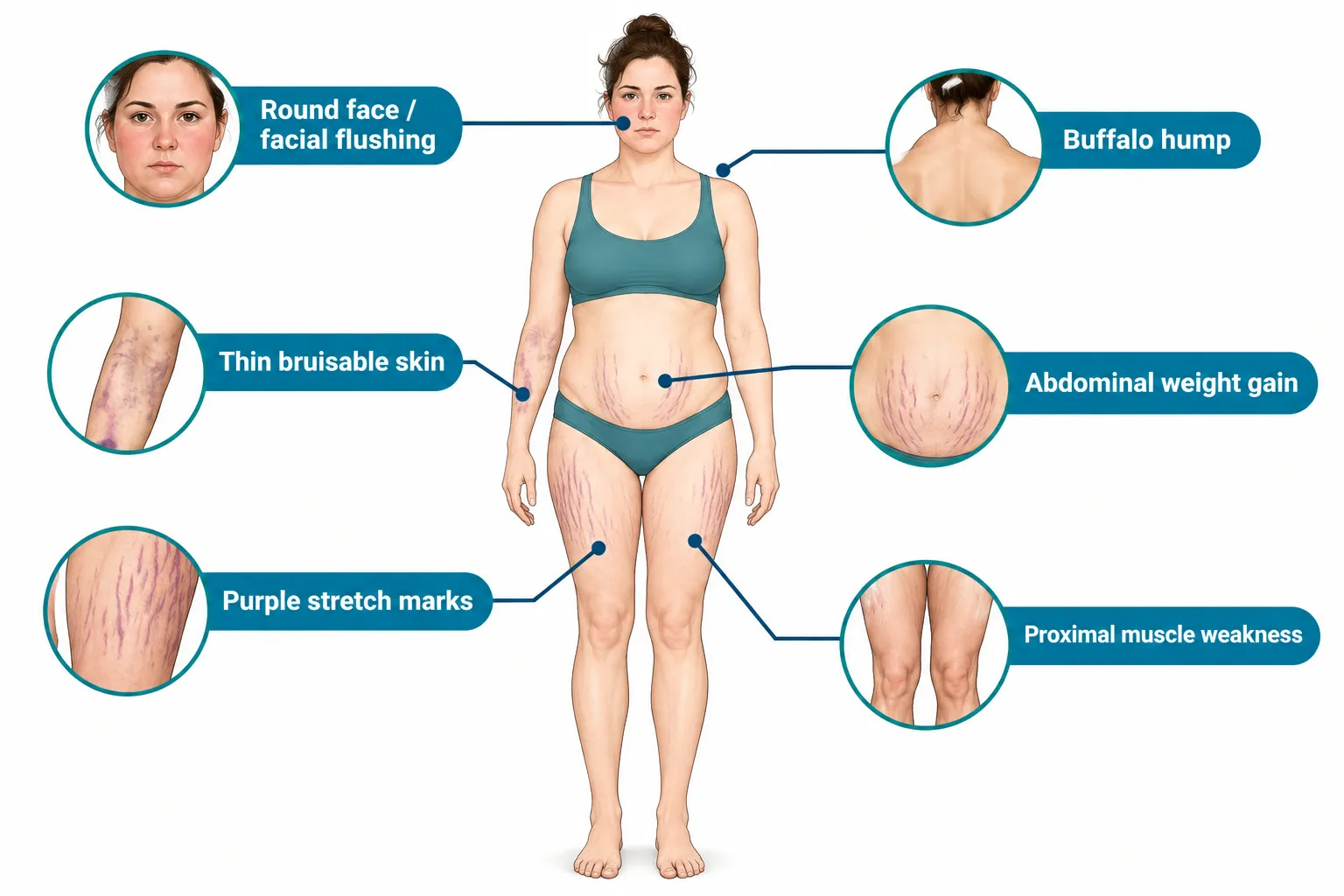
This pattern is the single most important red flag for chronically elevated cortisol. If you have gained significant weight around your midsection in a relatively short time, your diet and exercise habits have not changed meaningfully, and you are also noticing a rounder face, the combination warrants medical evaluation rather than a new gym membership. Learn more about what the adrenal glands actually do to understand why this redistribution happens at the hormonal level.
2. Skin Changes That Seem Out of Nowhere
Cortisol has a direct destructive effect on skin proteins. When levels remain elevated over months, the skin becomes thin, fragile, and prone to bruising from even minor contact. Wounds heal slowly and noticeably. Facial skin may appear flushed or reddened persistently.
Perhaps the most diagnostically specific sign is the appearance of wide stretch marks, typically purple or reddish, greater than one centimeter across, on the abdomen, breasts, thighs, or upper arms. These differ from the lighter, narrower stretch marks that follow pregnancy or rapid growth. In hypercortisolism, they are often described as violaceous (deeply purple) and can appear even without dramatic weight fluctuation.
If you are experiencing easy bruising with no clear explanation, slow-healing cuts, or new purple stretch marks, these are not cosmetic nuisances. They are signals that cortisol may be breaking down the structural proteins that keep skin healthy and strong. For a broader view of how adrenal pathology presents, the symptoms of pituitary adrenal disease explained resource covers the overlap between adrenal and pituitary dysfunction.
3. Mood Changes, Anxiety, and Brain Fog
Cortisol acts directly on the brain, particularly on regions involved in mood, memory, and emotional regulation. When it stays elevated for a prolonged period, the neurological effects become prominent. People describe a persistent low-level anxiety that does not track with actual life events, along with irritability, emotional swings, and a feeling that their thinking has slowed down or become less sharp.
“Brain fog” is a common complaint, difficulty concentrating, forgetting words or tasks, struggling to complete familiar mental work. Depressed mood is also frequently reported. These symptoms arise because glucocorticoid excess alters neurotransmitter activity and affects hippocampal structure, the brain region central to memory consolidation.
Importantly, long-term cortisol dysregulation is now linked in research to accelerated brain aging and increased vulnerability to neurodegenerative processes. This makes early identification especially urgent. If mood and cognitive changes are occurring alongside physical signs of cortisol excess, the combination should not be attributed solely to stress or a busy lifestyle.
4. Chronic Fatigue and Sleep Disruption
Cortisol follows a natural daily rhythm: highest in the early morning to promote wakefulness, and lowest at night to allow sleep. Adrenal overproduction disrupts this rhythm. Many people with high cortisol find themselves unable to fall asleep or stay asleep despite feeling exhausted. The sleep they do get is non-restorative, they wake feeling just as tired as when they went to bed.
This is not standard insomnia. The body is effectively stuck in a prolonged stress state, with cortisol signaling arousal and alertness even at hours when it should be near zero. Over time, this chronic energy depletion leads to a paradox: cortisol remains high, yet the person feels profoundly drained physically and mentally.
If you experience persistent fatigue that rest does not fix, combined with difficulty sleeping and other physical symptoms on this list, the adrenal angle deserves clinical attention. Our article on how to help adrenal fatigue naturally and improve energy offers supportive strategies, though these should complement, not replace, a formal diagnostic evaluation.
5. High Blood Pressure, Elevated Blood Sugar, and Metabolic Changes
Cortisol raises blood glucose by stimulating the liver to produce sugar and by reducing the effectiveness of insulin in muscle and fat cells. Over time, this leads to consistently elevated blood sugar, which may progress toward prediabetes or type 2 diabetes. Elevated cortisol also contributes to abnormal cholesterol and triglyceride levels.
At the same time, cortisol raises blood pressure by increasing the kidneys’ retention of sodium and fluid, and by sensitizing blood vessels to constricting signals. The combination of hypertension, high blood sugar, and abnormal lipids in someone without obvious lifestyle risk factors is a pattern that experienced endocrinologists recognize as a potential metabolic signature of adrenal overactivity.
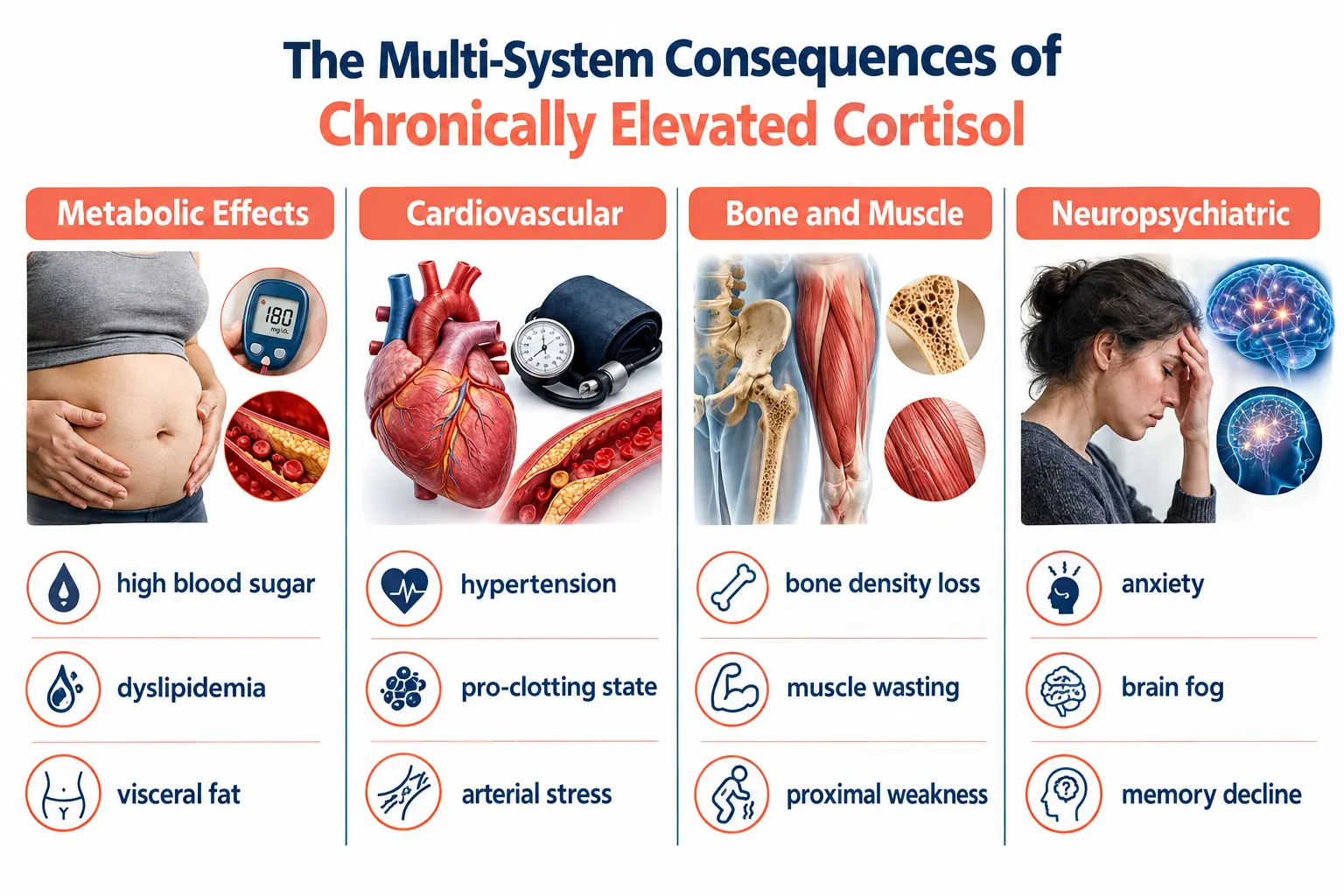
These metabolic effects also increase the tendency for blood to clot, raising cardiovascular risk. If you have recently been told you have high blood pressure or rising blood sugar without a clear explanation, and you also carry excess abdominal weight, it is worth asking whether cortisol excess could be driving the picture. A related condition worth knowing about is hyperaldosteronism, another adrenal hormone disorder that can contribute to high blood pressure.
6. Muscle Weakness and Bone Loss
Chronic cortisol excess breaks down muscle protein. The weakness that results is characteristically proximal, meaning it affects the muscles closest to the trunk. People notice difficulty rising from a low chair without using their arms, climbing stairs, or lifting their arms above their head. The legs and shoulders may feel increasingly weak even though the person has not changed their activity level.
Simultaneously, high cortisol suppresses bone-forming cells and interferes with calcium absorption, leading to progressive bone loss. This can ultimately result in osteoporosis and an elevated fracture risk. Vertebral fractures, often without significant trauma, are a recognized complication of untreated hypercortisolism.
These musculoskeletal changes are serious long-term consequences that underscore why adrenal overactivity should be treated aggressively rather than watched passively. If you are interested in how bone health is assessed and managed, our guide on what to expect during your first appointment with a bone disease specialist is a useful starting point.
7. Reproductive Irregularities and Increased Infections
In women, high cortisol suppresses the hormonal axis that regulates the menstrual cycle. Periods may become irregular, infrequent, or stop entirely. Cortisol excess can also trigger androgen-related symptoms in women, acne, unwanted facial or body hair, and contribute to infertility. In men, elevated cortisol reduces testosterone, leading to decreased libido and erectile dysfunction.
Women who experience the combination of abdominal weight gain, purple stretch marks, new menstrual irregularity, and rising blood pressure or blood sugar should specifically ask about cortisol testing rather than assuming these are unrelated or age-related changes.
High cortisol also suppresses immune function, making it easier to catch infections and harder to recover from them. Recurrent respiratory illnesses, slow-healing skin infections, or unusual frequency of infections in an otherwise healthy adult can be another piece of the adrenal overactivity puzzle. If PCOS is part of your health picture, comprehending the general PCOS symptoms from irregular cycles to hair loss can help you and your clinician distinguish overlapping hormonal conditions.
When to Seek Evaluation
No single symptom on this list confirms adrenal overactivity. Nevertheless, when several occur together, particularly progressive abdominal weight gain, a rounder face, purple stretch marks, proximal muscle weakness, high blood pressure or blood sugar, and notable mood or sleep changes, the pattern is clinically meaningful and warrants formal testing.
Biochemical evaluation typically involves a 24-hour urinary free cortisol test, a late-night salivary cortisol measurement, or a low-dose dexamethasone suppression test. These tests are ordered and interpreted by an endocrinologist who can place the results in context with your full clinical picture. To understand the diagnostic process further, our article on how the ACTH stimulation test works for adrenal health explains one essential assessment tool in detail.
At Atlantic Endocrinology and Diabetes Center, Dr. Stella Ilyayeva and the clinical team specialize in pituitary adrenal disease and have over 20 years of experience evaluating exactly these kinds of multi-system hormonal presentations. Our Queens and Brooklyn locations accept most major insurance plans, including Aetna, United Healthcare, Cigna, Medicaid, Medicare, Healthfirst, Fidelis Care, and EmblemHealth, among others.
If you recognize yourself in this list, the next step is a personalized evaluation, not self-diagnosis. Contact Atlantic Endocrinology at atlanticendomd.com/contact or call (718) 275-2900 to schedule an appointment with a specialist who can order the right tests and guide your care.
FAQs
What is the most common symptom of high cortisol?
The most commonly identified symptom is rapid, unexplained weight gain concentrated in the abdomen, face (moon face), and upper back (buffalo hump). This pattern of centripetal fat redistribution is considered the hallmark sign of chronic cortisol excess and is often the first change that prompts medical evaluation for adrenal overactivity.
Can high cortisol cause high blood sugar even if I do not have diabetes?
Yes. Cortisol stimulates the liver to release glucose and reduces insulin sensitivity in muscle and fat cells. This can elevate blood sugar even in people without a prior diabetes diagnosis. Prolonged cortisol excess is a recognized driver of prediabetes and type 2 diabetes, which is why metabolic monitoring is part of any workup for suspected hypercortisolism.
How is high cortisol diagnosed by a doctor?
Diagnosis requires biochemical testing, not symptom assessment alone. The most commonly used tests are the 24-hour urinary free cortisol measurement, the late-night salivary cortisol test, and the low-dose dexamethasone suppression test. An endocrinologist will typically order more than one test and interpret the results alongside your physical exam and symptom history before reaching a conclusion.
Is high cortisol the same as Cushing’s syndrome?
Cushing’s syndrome is the clinical condition caused by chronically elevated cortisol. It can result from the adrenal glands overproducing cortisol on their own (adrenal Cushing’s), from a pituitary tumor driving excess ACTH (Cushing’s disease), or from long-term use of corticosteroid medications. When someone has the characteristic symptom cluster described in this article, an endocrinologist will evaluate which of these causes is responsible and plan treatment accordingly.
References
Nieman, L. K., Biller, B. M. K., Findling, J. W., et al. (2021). Treatment of Cushing’s Syndrome: An Endocrine Society Clinical Practice Guideline. Journal of Clinical Endocrinology & Metabolism. https://doi.org/10.1210/jc.2015-1818
National Institute of Diabetes and Digestive and Kidney Diseases. (2021). Cushing’s Syndrome. U.S. Department of Health and Human Services. https://www.niddk.nih.gov/health-information/endocrine-diseases/cushings-syndrome
Lacroix, A., Feelders, R. A., Stratakis, C. A., & Nieman, L. K. (2023). Cushing’s syndrome. The Lancet, 386(9996), 913-927. https://doi.org/10.1016/S0140-6736(15)00375-1
Endocrine Society. (2022). Hypercortisolism (Cushing’s Syndrome), Patient Resources. https://www.endocrine.org/patient-engagement/endocrine-library/hypercortisolism
MedlinePlus / U.S. National Library of Medicine. (2023). Cushing syndrome. National Institutes of Health. https://medlineplus.gov/cushingssyndrome.html
Medical and Editorial Commitment
The content of this article is strictly for educational and informational purposes. It does not replace in-person professional medical diagnosis, advice, or treatment..
Read Privacy PolicyRelated Posts

Subclinical Hypothyroidism: Symptoms, Risks, and When It Needs Treatment
Endocrinology, Weight Management
Up to 10% of the general population may have a thyroid condition they do not even know about. Subclinical hypothyroidism, a state [...]

Low Testosterone in Men: Symptoms, Causes, and When to See an Endocrinologist
Nearly 40% of men over the age of 45 have testosterone levels that fall below the normal clinical threshold, yet the majority [...]