
 By Atlantic Endo Medical Review Board
Up to 10% of the general population may have a thyroid condition they do not even know about. Subclinical hypothyroidism, a state in which thyroid-stimulating hormone (TSH) is elevated but the thyroid still produces normal levels of its hormones, is one of the most frequently detected yet least understood endocrine findings in routine blood work. For many patients, the question is not whether the lab number is abnormal, but what that number actually means for their health and whether anything needs to be done about it.
Comprehending subclinical hypothyroidism: symptoms, risks, and when it needs treatment is essential for anyone who has received an unexpected TSH result or who lives with a chronic condition that can be complicated by even mild thyroid dysfunction.
Table of Contents
Key Takeaways
- Subclinical hypothyroidism is defined by a persistently elevated TSH with normal free T4 levels; many people have no obvious symptoms.
- About 62% of initially elevated TSH values normalize on their own when retested at least two months later, so a single abnormal result does not automatically mean lifelong treatment.
- A TSH above 10 mIU/L is the primary threshold at which most endocrine guidelines recommend treatment, especially when symptoms, positive thyroid antibodies, or cardiovascular risk are present.
- Cardiovascular health is the most significant concern in untreated subclinical hypothyroidism, particularly in women and people with existing heart disease.
- Treatment decisions should always be individualized based on age, symptoms, antibody status, and overall health profile, not on a single lab value alone.
What Is Subclinical Hypothyroidism and How Is It Diagnosed?
Subclinical hypothyroidism is diagnosed when a blood test shows a TSH level above the upper limit of the normal reference range, typically above 4.5 mIU/L, while free thyroxine (free T4) remains within the normal range. In plain terms, the pituitary gland is working harder than usual to stimulate the thyroid, but the thyroid is still keeping up well enough to maintain adequate hormone output.
Because the condition is defined by a lab value rather than obvious physical signs, it is often discovered incidentally during routine health screenings or workups for unrelated complaints. This is one reason why partnering with a thyroid specialist in New York who can interpret results in the context of your full clinical picture is so important.
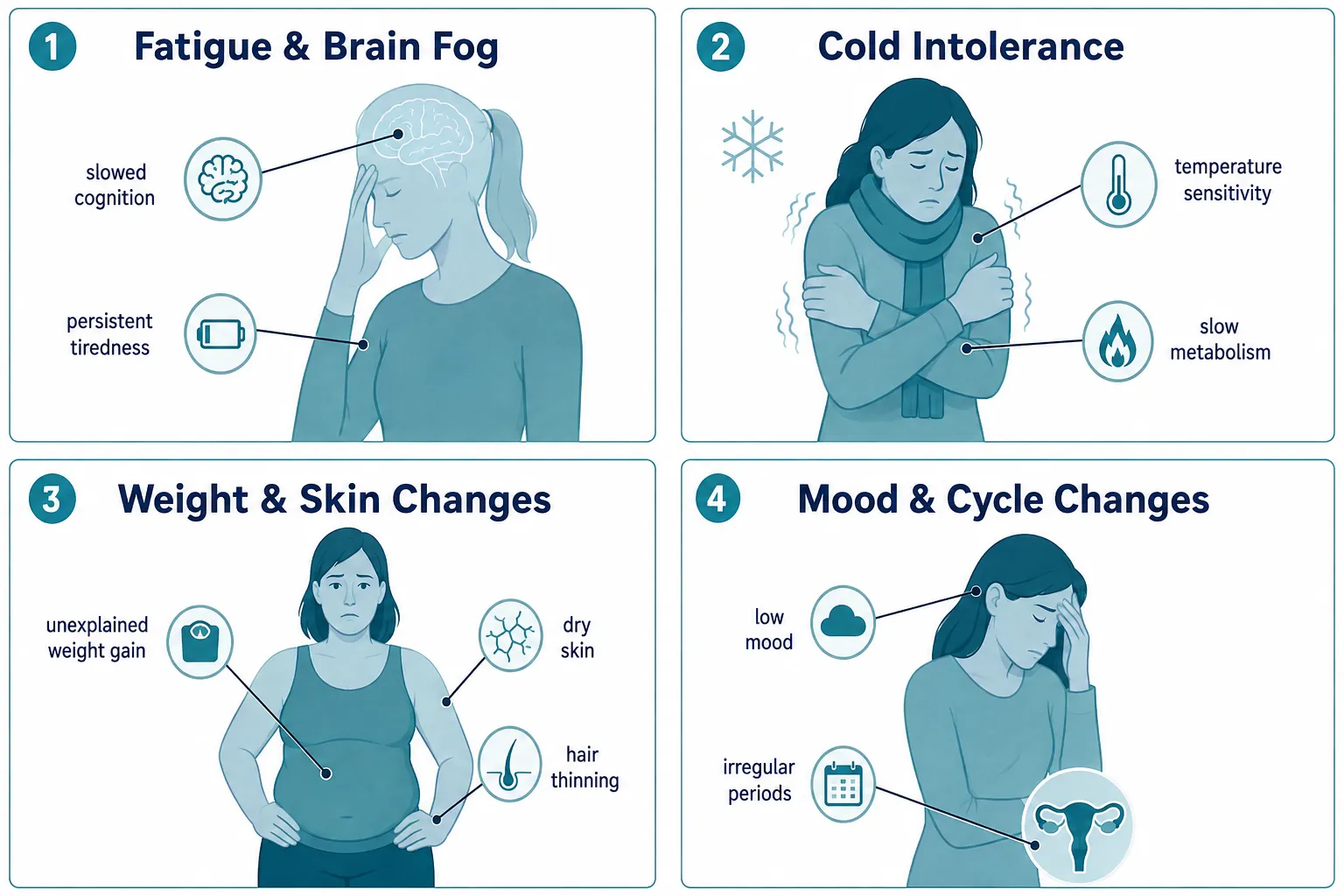
Several points are worth comprehending about the diagnosis itself:
- TSH reference ranges are age-dependent. The upper limit of a normal TSH rises from roughly 3.6 mIU/L in adults under 40 to approximately 7.5 mIU/L in adults over 80. This means that what appears to be an elevated TSH in an older patient may actually fall within an age-appropriate range.
- A single elevated TSH is not enough. Because TSH can fluctuate due to illness, stress, medications, or even time of day, guidelines recommend confirming the finding with a repeat test, ideally including a free T4 measurement, at least two to three months after the first abnormal result.
- Autoimmune thyroiditis is the most common underlying cause. Testing for thyroid peroxidase (TPO) antibodies helps identify patients whose immune system is attacking the thyroid, a finding that predicts a higher risk of progression to overt hypothyroidism.
If you have recently received an elevated TSH result, learning what to expect at your first endocrinologist thyroid visit can help you prepare for a productive and thorough evaluation.
Recognizing Subclinical Hypothyroidism: Symptoms, Risks, and When It Needs Treatment
Symptoms: Subtle, Variable, and Easy to Miss
One of the most challenging aspects of subclinical hypothyroidism: symptoms, risks, and when it needs treatment is that the condition often produces no symptoms at all. When symptoms are present, they tend to be mild and non-specific, the kind of complaints that are easy to attribute to stress, aging, or a busy lifestyle:
| Common Symptom | Why It Happens |
|---|---|
| Fatigue and low energy | Slowed cellular metabolism |
| Unexplained weight gain | Reduced metabolic rate |
| Cold intolerance | Decreased heat production |
| Dry skin and hair thinning | Reduced skin cell turnover |
| Constipation | Slowed gastrointestinal motility |
| Mild depression or mood changes | Thyroid hormones influence neurotransmitter activity |
| Menstrual irregularities | Hormonal feedback loop disruption |
| Cognitive slowing or “brain fog” | CNS sensitivity to thyroid hormone levels |
It is important to note that many people with mildly elevated TSH feel entirely well. Others experience symptoms that seem out of proportion to what the lab values would predict. This variability is one reason why treatment decisions in subclinical hypothyroidism are never one-size-fits-all.
Thyroid dysfunction can also affect mood significantly. If you are experiencing persistent low mood alongside fatigue or other symptoms, our article on thyroid disease and its effect on mood explores this connection in detail.
Cardiovascular Risks: The Concern That Drives Treatment Decisions
The most clinically significant risk associated with subclinical hypothyroidism is cardiovascular. Research consistently shows that even mildly underactive thyroid function can affect heart health through multiple pathways, including elevated LDL cholesterol, impaired endothelial function, increased arterial stiffness, and altered heart rate.
Main findings from recent cardiovascular research include:
- Coronary heart disease risk rises with TSH level. Studies using pooled individual patient data from multiple large cohorts found a hazard ratio of 1.89 for coronary heart disease events in patients with TSH at or above 10 mIU/L, and a hazard ratio of 1.42 for coronary heart disease mortality when TSH was at or above 7 mIU/L, a dose-response relationship.
- Post-cardiac procedure outcomes are worse. In patients who underwent percutaneous coronary intervention, subclinical hypothyroidism was associated with approximately double the cardiovascular mortality and a significantly increased rate of repeat revascularization compared to patients with normal thyroid function.
- Heart failure patients face compounded risk. Among individuals with chronic systolic heart failure, subclinical hypothyroidism was associated with a 42% higher risk of all-cause mortality and a 46% higher risk of cardiac events.
- Women are particularly vulnerable. Research specifically found that women with subclinical hypothyroidism faced greater risk of developing cardiovascular disease compared to women with normal thyroid function.
Given these findings, patients with existing heart conditions or high cardiovascular risk profiles deserve particularly careful thyroid monitoring. Our cardiology team, led by Dr. Ovidiu A. Krausz, works closely with our endocrinology specialists to provide coordinated care for patients managing both thyroid dysfunction and heart disease.
Bone Health and Other Long-Term Risks
Beyond the heart, subclinical hypothyroidism has been studied in relation to bone mineral density, lipid metabolism, and cognitive function. While the evidence is less definitive than it is for cardiovascular outcomes, patients with additional risk factors such as osteoporosis should discuss thyroid monitoring as part of a comprehensive bone health plan. Our detailed resource on metabolic bone disease covers the intersection of hormonal health and skeletal integrity.
When Does Subclinical Hypothyroidism Need Treatment?
The TSH 10 mIU/L Threshold
The question of when to treat subclinical hypothyroidism is one of the most actively debated topics in endocrinology. The current consensus among major endocrine societies centers on one specific number: TSH above 10 mIU/L.
When TSH is persistently above 10 mIU/L, confirmed on at least two tests separated by at least three months, most guidelines recommend treatment with levothyroxine regardless of whether symptoms are present. This threshold reflects a level of thyroid underactivity at which the cardiovascular and metabolic risks become substantial enough that the benefits of treatment are widely considered to outweigh the risks.
Below TSH of 10 mIU/L, treatment is more selective and guided by additional clinical factors:
Treatment is generally considered when TSH is below 10 mIU/L AND one or more of the following apply:
- Clear hypothyroid symptoms that are affecting daily quality of life
- Positive TPO antibodies (higher risk of progression to overt hypothyroidism)
- Significant cardiovascular risk or established heart disease
- Women of reproductive age, especially those planning pregnancy
- Progressive TSH rise documented on serial testing
Watchful waiting is generally preferred when:
- TSH is mildly elevated (typically between 4.5 and 7 mIU/L)
- No symptoms are present
- TPO antibodies are negative
- The patient is older, particularly above age 65, where mild TSH elevation may reflect normal aging rather than true thyroid disease
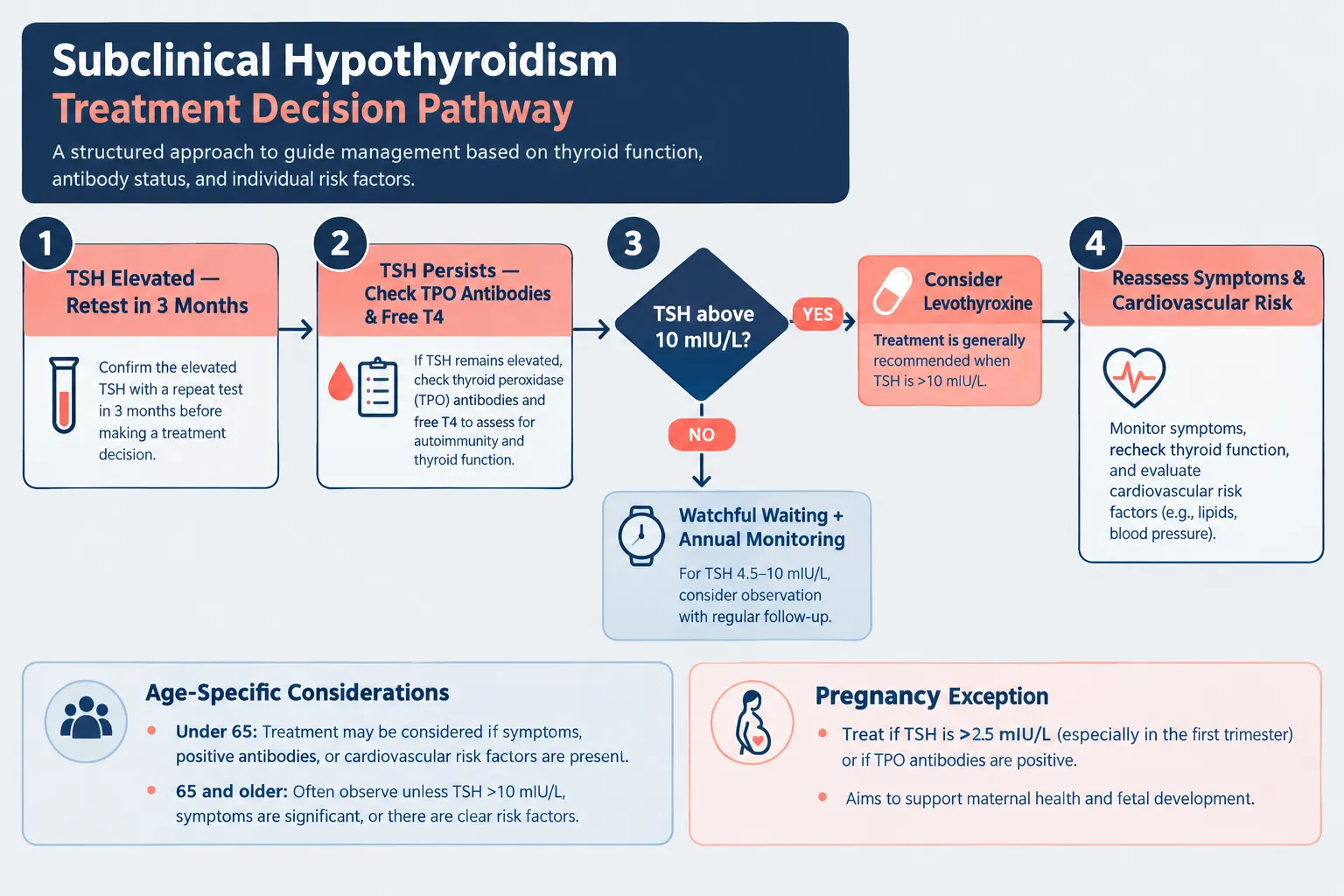
The Role of “Watchful Waiting” and Serial Testing
Approximately 62% of initially elevated TSH values return to normal on repeat testing without any intervention. This remarkable rate of spontaneous normalization is why guidelines emphasize confirmation over immediate action.
A practical monitoring framework involves:
- Repeat TSH and free T4 at 3 months after the first elevated result
- If still elevated, recheck at 6 months
- If TSH remains elevated but below 10 mIU/L with no symptoms, continue annual monitoring
- If TSH rises progressively or symptoms develop, reassess the treatment decision
Special Populations Requiring Individualized Decisions
Older adults (65+): Because age-related TSH increases can mimic subclinical hypothyroidism, levothyroxine is generally not recommended in this group unless TSH clearly exceeds 10 mIU/L. Clinical evidence does not convincingly show benefit from treating mild TSH elevations in older adults, and overtreatment carries its own risks, including bone loss and atrial fibrillation.
Pregnant women and those planning pregnancy: Thyroid health is critical during pregnancy because maternal thyroid hormones support fetal neurological development. Current guidance recommends individualized evaluation for women planning conception or who are already pregnant, with a lower threshold for intervention in symptomatic women or those with TSH above 10 mIU/L. Nonetheless, routine treatment of asymptomatic subclinical hypothyroidism in infertile women is not universally supported by current evidence.
Patients with cardiovascular disease: As outlined above, those with established heart disease or undergoing cardiac procedures should receive closer surveillance and may benefit from treatment at lower TSH thresholds.
Important note: Despite strong observational evidence linking subclinical hypothyroidism to worse cardiovascular outcomes, levothyroxine replacement has not yet been definitively proven to reduce cardiovascular events or mortality in this population. Large randomized trials are still needed. This uncertainty is precisely why personalized, expert-guided decision-making matters.
What Treatment Looks Like
For patients who do meet criteria for treatment, levothyroxine, a synthetic form of the T4 hormone the thyroid produces, is the standard therapy. The dose is carefully calibrated to normalize TSH without overcorrecting. Overtreatment leading to suppressed TSH carries its own risks, including accelerated bone loss and heart rhythm disturbances.
For symptomatic adults under 65 years, a trial of levothyroxine is reasonable, but if TSH remains below 10 mIU/L and symptoms do not improve after an adequate trial period, the medication should be reconsidered and other causes of the symptoms explored. If you are evaluating your options, knowing what symptoms would prompt an endocrinologist visit is a helpful starting point.
Getting the Right Care for Subclinical Hypothyroidism in New York City
Subclinical hypothyroidism requires more than a one-time lab result. It requires an expert who understands how to interpret TSH values in the context of your age, sex, cardiovascular health, antibody status, and personal goals.
At Atlantic Endocrinology & Diabetes Center, Dr. Stella Ilyayeva, M.D. brings over 20 years of experience in thyroid disease and endocrine disorders to every patient evaluation. Our team offers in-house thyroid ultrasound to evaluate thyroid structure, comprehensive laboratory services, and coordinated multidisciplinary care, including cardiology oversight when cardiovascular risk is a factor.
We also know that navigating insurance and access to specialist care can feel overwhelming. Atlantic Endocrinology accepts a broad range of insurance plans including Medicare, Medicaid, Aetna, United Healthcare, EmblemHealth, Healthfirst, Cigna, Empire Blue Cross Blue Shield, Fidelis Care, Humana, and many others. If you are wondering about your coverage, we encourage you to review our full list or speak with our team directly.
Our locations in Queens and Brooklyn:
- Forest Hills: 99-45 67th Rd Suite 103, Forest Hills, NY 11375
- Rego Park: 97-25 63rd Dr 1 FL, Rego Park, NY 11374
- Bushwick: 359 Stockholm Street, Brooklyn, NY 11237
Call us at (718) 275-2900 or visit atlanticendomd.com/contact to schedule your evaluation.
FAQs
Can subclinical hypothyroidism go away on its own without treatment?
Yes, it can. Approximately 62% of people whose TSH is elevated on an initial blood test will have a normal result when retested at least two months later. This is why guidelines consistently recommend confirming an elevated TSH with a repeat test before making any treatment decision. Spontaneous normalization is more likely when TSH is only mildly elevated, TPO antibodies are negative, and no clear underlying autoimmune process is present. Regular monitoring is essential to catch any cases where TSH rises progressively over time.
Is subclinical hypothyroidism the same as hypothyroidism?
No. In overt hypothyroidism, both TSH is elevated and free T4 falls below the normal range, meaning the thyroid is no longer producing enough hormone to meet the body’s needs. In subclinical hypothyroidism, free T4 remains within the normal range, indicating that thyroid output is still sufficient, even though the pituitary is working harder to maintain it. Symptoms in subclinical hypothyroidism tend to be absent or much milder, and the treatment threshold is higher and more individualized than it is for overt disease.
Does subclinical hypothyroidism affect fertility or pregnancy?
A: Thyroid function plays a meaningful role in reproductive health. Women with subclinical hypothyroidism, particularly those with positive TPO antibodies, may face modestly increased risks related to conception and early pregnancy. Current evidence does not support routine screening or treatment of all asymptomatic women with mildly elevated TSH who are trying to conceive. Nevertheless, women with TSH above 10 mIU/L, clear hypothyroid symptoms, or high antibody levels should discuss individualized management with a thyroid specialist before or during pregnancy.
Should older adults be treated for subclinical hypothyroidism?
In general, the recommendation for older adults, typically those over age 65, is more conservative. Research shows that mild TSH elevations in this age group often reflect normal physiological aging rather than true thyroid disease, and the upper limit of a normal TSH rises steadily with age. Levothyroxine treatment is generally not recommended for older adults unless TSH clearly exceeds 10 mIU/L, because the risks of overtreatment (including bone loss and atrial fibrillation) can outweigh any potential benefit. Individualized decision-making based on overall health status, comorbidities, and symptom burden is the standard approach.
References
- Biondi, B., & Cooper, D. S. (2022). Subclinical hypothyroidism. New England Journal of Medicine, 387(12), 1124-1131. https://www.nejm.org/doi/10.1056/NEJMcp2203014
- Pearce, S. H., et al. (2023). Management of subclinical hypothyroidism: A summary of the 2023 ETA guidelines. European Thyroid Journal, 12(1). https://doi.org/10.1530/ETJ-22-0213
- American Thyroid Association. (2021). Hypothyroidism: A booklet for patients and their families (4th ed.). https://www.thyroid.org/hypothyroidism/
- National Institute of Diabetes and Digestive and Kidney Diseases. (2021). Hypothyroidism (underactive thyroid). U.S. Department of Health and Human Services. https://www.niddk.nih.gov/health-information/endocrine-diseases/hypothyroidism
- Razvi, S., et al. (2023). Subclinical hypothyroidism in older individuals: A systematic review. Journal of Clinical Endocrinology & Metabolism, 108(8), 1923-1933. https://doi.org/10.1210/clinem/dgad134
- Andersen, M. N., et al. (2023). Subclinical hypothyroidism and cardiovascular events after percutaneous coronary intervention: Meta-analysis. International Journal of Cardiology, 372, 84-91. https://doi.org/10.1016/j.ijcard.2022.11.011
Medical and Editorial Commitment
The content of this article is strictly for educational and informational purposes. It does not replace in-person professional medical diagnosis, advice, or treatment..
Read Privacy PolicyRelated Posts
High Cortisol Symptoms: How to Know If Your Adrenal Glands Are Overworking
Cortisol has a reputation as the "stress hormone," but when your adrenal glands produce too much of it for too long, the [...]
Early Signs of Prediabetes in Women: What Your Body Is Trying to Tell You
More than 98 million American adults have prediabetes, and the majority do not know it. For women specifically, the early signs of [...]