
 By Atlantic Endo Medical Review Board
Over 3 million Americans are living with glaucoma right now, and roughly half of them do not know it. That is the unsettling reality of a disease that earns its nickname: “the silent thief of sight.” Comprehending what are the signs of glaucoma is not just a matter of curiosity; it is a matter of protecting your vision before irreversible damage sets in.
For patients managing chronic conditions such as diabetes or high blood pressure, the stakes are even higher. Systemic diseases that affect blood vessels and nerve health can accelerate glaucoma’s progression, making early detection a critical priority.
Diabetic Retinopathy Fundoscopy In Queens, NY.
Table of Contents
Key Takeaways
- Glaucoma often produces no noticeable symptoms in its early stages, which is why regular eye exams are essential.
- The most common early warning is a gradual loss of peripheral (side) vision that many people dismiss or fail to notice.
- Acute angle-closure glaucoma is a medical emergency marked by sudden severe eye pain, blurred vision, and headache.
- People with diabetes, elevated eye pressure, or a family history of glaucoma face a significantly higher risk.
- Early diagnosis and consistent management can slow or halt vision loss, but lost vision cannot be restored.
Comprehending Glaucoma: Why the “Silent Thief” Label Fits
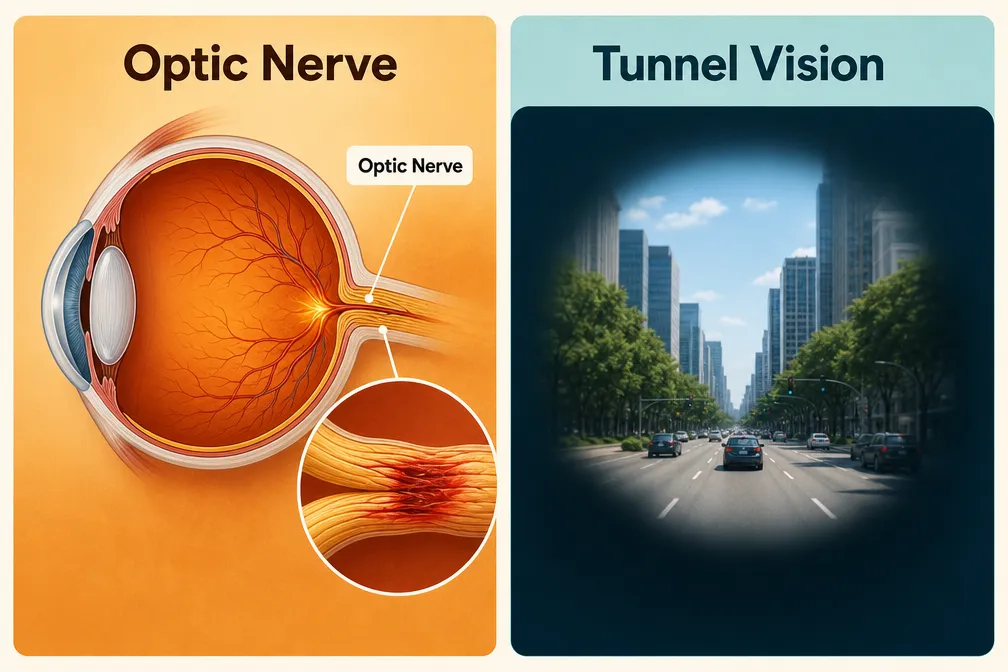
Glaucoma is not a single disease. It is a group of eye conditions that damage the optic nerve, the critical cable that sends visual information from your eye to your brain. In most cases, this damage is linked to elevated intraocular pressure (IOP), the fluid pressure inside the eye. When that pressure builds too high, or when the optic nerve is unusually vulnerable, nerve fibers begin to die off gradually.
What makes glaucoma particularly dangerous is its stealth. In the most common form, primary open-angle glaucoma, there is no pain, no redness, and no dramatic change in vision at first. The damage accumulates silently over months or years. By the time a person notices something is wrong, a significant portion of optic nerve fibers may already be gone.
Two main types account for the vast majority of cases
| Type | Onset | Key Feature |
|---|---|---|
| Primary Open-Angle Glaucoma | Gradual, over years | No early symptoms; slow peripheral vision loss |
| Acute Angle-Closure Glaucoma | Sudden, within hours | Severe pain, red eye, nausea, blurred vision |
There are also secondary glaucomas caused by other conditions, including diabetes-related eye changes, eye injuries, or prolonged steroid use.
People managing diabetes should be especially aware of their eye health. Elevated blood glucose damages small blood vessels throughout the body, including those that nourish the optic nerve. If you are already navigating blood sugar emergencies or complications, adding regular eye pressure checks to your care routine is a smart, proactive step.
What Are the Signs of Glaucoma? Recognizing the Warning Signals
This is the most important section to comprehend carefully. The signs of glaucoma vary significantly depending on the type and stage of the disease.
Early Signs: What Most People Miss
In open-angle glaucoma, the most prevalent form, early signs are nearly invisible. Most people do not experience pain or notice any change in their central vision until the disease is moderately advanced.
Early warning signs to watch for include
- Gradual loss of peripheral vision, This is the hallmark early sign. Side vision fades so slowly that the brain compensates, and most people do not notice until a large area is gone.
- Subtle halos around lights, Occasional rainbow-colored rings around light sources, especially at night.
- Mild blurring, Intermittent blurring that is easy to attribute to fatigue or needing a new glasses prescription.
- Increased eye pressure detected during an exam, Often discovered only by an eye doctor using a tonometer.
Because these early signs are so easy to overlook, many patients first learn they have glaucoma during a routine eye examination, not because they noticed a problem themselves.
Advanced Signs: When Vision Loss Becomes Obvious
As glaucoma progresses without treatment, the signs become harder to ignore:
- Tunnel vision, Central vision remains intact while peripheral vision narrows dramatically, creating a tunnel-like field of view.
- Patchy blind spots, Dark or missing areas in the visual field, particularly in the side or central vision.
- Difficulty adjusting to low light, Trouble seeing in dim environments or at night.
- Reduced contrast sensitivity, Difficulty distinguishing objects against similar-colored backgrounds.
At this stage, the optic nerve damage is significant and permanent. This is why waiting for obvious symptoms before seeking care is a dangerous strategy.
Signs of Acute Angle-Closure Glaucoma: A Medical Emergency
Unlike open-angle glaucoma, acute angle-closure glaucoma announces itself loudly and demands immediate medical attention. The drainage angle of the eye becomes suddenly blocked, causing a rapid spike in eye pressure.
Emergency warning signs include
- Sudden, severe eye pain
- Intense headache, often on one side
- Nausea and vomiting
- Blurred or hazy vision
- Seeing halos or rainbow rings around lights
- Redness of the eye
- The eye feeling unusually hard to the touch
If you or someone you know experiences these symptoms, seek emergency care immediately. Permanent vision loss can occur within hours.
Who Is Most at Risk? Comprehending Your Risk Profile
Knowing what are the signs of glaucoma is only part of the picture. Knowing your personal risk level helps you decide how urgently to act.
High-risk groups include
- People over age 60, Risk increases significantly with age.
- Individuals with diabetes, Diabetic eye disease and glaucoma often coexist. The same vascular damage that drives diabetic retinopathy can compromise optic nerve health. Comprehending what organ is most affected by glucose helps frame why metabolic control matters for eye health.
- People with a family history of glaucoma, First-degree relatives of glaucoma patients have a 4 to 9 times higher risk.
- Those with elevated intraocular pressure (ocular hypertension)
- People of African, Hispanic, or Asian descent, Certain ethnic groups face higher prevalence rates.
- Patients on long-term corticosteroid medications, Steroids can raise eye pressure over time.
- Individuals with high myopia (nearsightedness)
- People with cardiovascular disease or hypertension, Vascular health directly affects optic nerve perfusion.
If you have diabetes and are concerned about how systemic conditions connect to your eye health, speaking with a specialist is a wise first step. At Atlantic Endocrinology & Diabetes Center, our team, led by Dr. Stella Ilyayeva, M.D., with over 20 years of experience in endocrinology and diabetes care, understands the complex relationship between metabolic health and end-organ complications.
What Are the Signs of Glaucoma in Diabetic Patients Specifically?
Diabetes creates a uniquely challenging environment for eye health. Chronically elevated blood sugar damages the tiny blood vessels that supply the retina and optic nerve. This can contribute to neovascular glaucoma, a secondary form caused by abnormal new blood vessel growth that blocks fluid drainage from the eye.
In diabetic patients, glaucoma may develop alongside or be masked by diabetic retinopathy, making comprehensive eye screening essential. The overlap between these conditions means that a single symptom, such as blurred vision, may have multiple contributing causes.
Atlantic Endocrinology & Diabetes Center offers Digital Fundoscopy as part of its advanced diagnostic services, which allows for detailed imaging of the retina and optic nerve. This screening tool is especially valuable for patients managing diabetes who need regular monitoring of eye health as part of their overall care plan.
For patients who want to understand how their metabolic health connects to these risks, our resource on what an endocrinologist does for diabetes provides helpful context on the scope of comprehensive diabetic care.
How Glaucoma Is Diagnosed: What to Expect
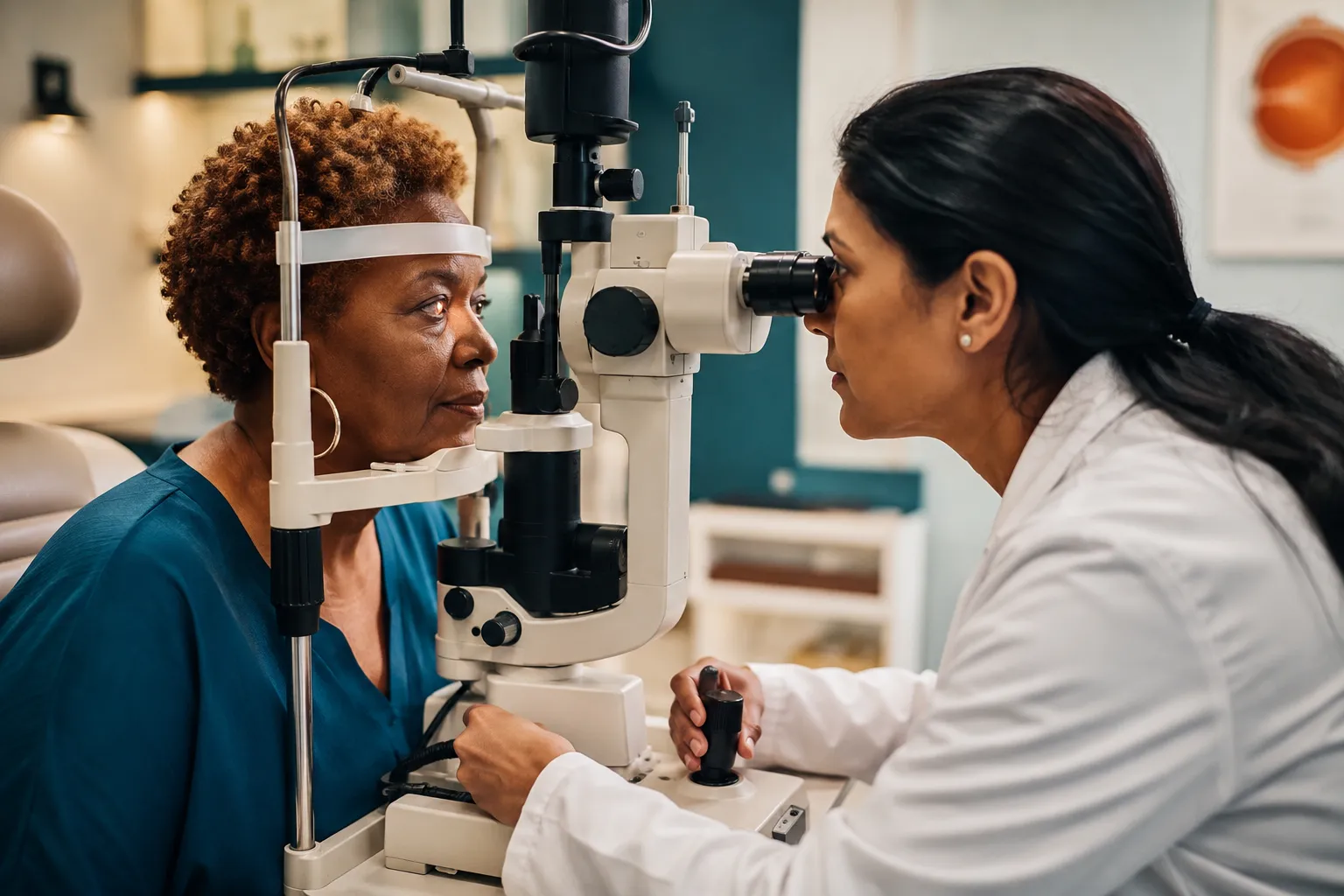
Diagnosing glaucoma requires more than a standard vision test. A comprehensive eye examination for glaucoma typically includes:
- Tonometry, Measures intraocular pressure.
- Ophthalmoscopy, Examines the shape and color of the optic nerve.
- Perimetry (visual field test), Maps peripheral vision to detect blind spots.
- Gonioscopy, Examines the drainage angle of the eye.
- Pachymetry, Measures corneal thickness, which affects IOP readings.
- Optical Coherence Tomography (OCT), Produces detailed images of the optic nerve and retinal nerve fiber layer.
Regular screening is the most reliable way to catch glaucoma before significant damage occurs. The American Academy of Ophthalmology recommends a comprehensive baseline eye exam by age 40, with more frequent exams for those in high-risk groups.
Managing Glaucoma: Treatment Options and Lifestyle Factors
While glaucoma cannot be cured, it can be managed effectively when caught early. The primary goal of treatment is to lower intraocular pressure and prevent further optic nerve damage.
Common treatment approaches include
- Prescription eye drops, The first line of treatment for most patients. These reduce fluid production or improve drainage.
- Oral medications, Sometimes used alongside eye drops.
- Laser therapy, Procedures such as selective laser trabeculoplasty (SLT) improve fluid drainage.
- Surgery, For advanced cases, surgical procedures create new drainage pathways.
Beyond medical treatment, certain lifestyle factors support overall eye and vascular health:
- Maintaining healthy blood pressure and blood sugar levels
- Regular aerobic exercise, which has been shown to modestly reduce IOP
- Avoiding activities that significantly raise eye pressure (such as certain yoga inversions)
- Protecting eyes from UV exposure
For patients managing diabetes, keeping blood glucose within target ranges is one of the most impactful things you can do for your long-term eye health. If you are working on metabolic improvements, identifying the first signs of reversing insulin resistance can be encouraging and motivating.
Patients with other chronic conditions, such as cardiovascular disease, benefit from coordinated multidisciplinary care. At Atlantic Endocrinology, our cardiologist Dr. Ovidiu A. Krausz works alongside endocrinology specialists to address the vascular risk factors that affect multiple organ systems, including the eyes. You can learn more about when to see a cardiologist as part of a proactive health strategy.
When to See a Doctor: Acting Before Vision Is Lost
The critical message about glaucoma is this: do not wait for symptoms to become obvious. By the time most people notice significant vision changes, irreversible damage has already occurred.
Schedule a comprehensive eye exam promptly if you
- Are over age 40 and have not had a baseline eye exam
- Have diabetes, hypertension, or cardiovascular disease
- Have a family history of glaucoma
- Have been told you have elevated eye pressure
- Notice any sudden eye pain, redness, or dramatic vision change
For patients already receiving care at Atlantic Endocrinology & Diabetes Center, discussing eye health with your provider is a natural extension of your comprehensive care. Our multidisciplinary approach means that your diabetes management, vascular health, and screening needs are all considered together.
To schedule an appointment or speak with our team, contact us at atlanticendomd.com/contact or call (718) 275-2900. We serve patients across Queens and Brooklyn at multiple convenient locations, and we accept most major insurance plans including Medicare, Medicaid, Aetna, United Healthcare, EmblemHealth, Healthfirst, and many more.
FAQs
Can glaucoma be detected without symptoms?
Yes, and this is precisely why routine eye exams are so important. In primary open-angle glaucoma, there are often no noticeable symptoms in the early stages. An eye doctor can detect elevated intraocular pressure, optic nerve changes, and peripheral vision loss through specialized tests long before a patient notices anything is wrong.
Is glaucoma only caused by high eye pressure?
Not exclusively. While elevated intraocular pressure is the most common risk factor, a condition called normal-tension glaucoma can occur even when eye pressure is within the normal range. In these cases, the optic nerve is unusually sensitive or has compromised blood flow.
How does diabetes increase the risk of glaucoma?
Diabetes damages small blood vessels throughout the body, including those that supply the retina and optic nerve. This vascular damage can reduce blood flow to the optic nerve, making it more vulnerable to pressure-related injury. Additionally, diabetic eye disease can trigger abnormal blood vessel growth that blocks the eye’s drainage system, leading to neovascular glaucoma.
Can glaucoma be reversed or cured?
Currently, there is no cure for glaucoma, and vision lost to the disease cannot be recovered. Nevertheless, with early detection and consistent treatment, including eye drops, laser therapy, or surgery, the progression of glaucoma can be significantly slowed or halted.
References
- National Eye Institute. (2023). Glaucoma. U.S. Department of Health and Human Services. https://www.nei.nih.gov/learn-about-eye-health/eye-conditions-and-diseases/glaucoma
- American Academy of Ophthalmology. (2022). Glaucoma: Preferred Practice Pattern. https://www.aao.org/preferred-practice-pattern/glaucoma-ppp
- Centers for Disease Control and Prevention. (2023). Vision health initiative: Common eye disorders and diseases. https://www.cdc.gov/visionhealth/basics/ced/index.html
- Glaucoma Research Foundation. (2023). Are you at risk for glaucoma? https://www.glaucoma.org/glaucoma/are-you-at-risk-for-glaucoma.php
Medical and Editorial Commitment
The content of this article is strictly for educational and informational purposes. It does not replace in-person professional medical diagnosis, advice, or treatment..
Read Privacy PolicyRelated Posts
11 Essential Strategies for Effective Diabetes Management
More than 38 million Americans are currently living with diabetes, yet studies consistently show that fewer than half meet their recommended blood [...]

Can Gastric Bypass Patients Take GLP-1? What the Latest Research Reveals
Weight Management, Information
More than 30% of patients who undergo Roux-en-Y gastric bypass experience significant weight regain within five years, and for many, the question [...]