
DIABETIC RETINOPATHY FUNDOSCOPY IN QUEENS & BROOKLYN, NY
EXPERT FUNDOSCOPY SERVICES FOR DIABETIC EYE HEALTH
At Atlantic Endocrinology, we specialize in the early detection and management of diabetic retinopathy through our state-of-the-art fundoscopy services. Understanding the critical link between diabetes and eye health, our dedicated team of endocrinology experts employs the latest technological advancements to ensure accurate diagnosis and effective treatment plans.
Our commitment to patient-centered care focuses on preserving your vision and enhancing your quality of life. By choosing us, you’re not just getting a medical service; you’re gaining a partner in your journey towards optimal eye health in the face of diabetes.
SCHEDULE YOUR FUNDOSCOPY CONSULTATION TODAY
WHY CHOOSE ATLANTIC ENDOCRINOLOGY FOR YOUR EYE HEALTH?
- Advanced Diagnostic Tools: Cutting-edge fundoscopy for accurate detection of diabetic retinopathy.
- Personalized Care Plans: Tailored treatments to suit your individual health needs.
- Experienced Specialists: A team of endocrinologists and ophthalmologists with years of expertise in diabetic eye care.
- Preventive Strategies: Proactive measures to safeguard your vision against diabetes-related complications.
- Comprehensive Support: Ongoing guidance and education about managing your diabetic eye health.
OUR FUNDUSCOPY SPECIALISTS
Meet the Atlantic Endocrinology Experts – a group of highly skilled endocrinologists, ophthalmologists, and healthcare professionals dedicated to providing exceptional care. Our team’s collaborative approach ensures that every aspect of your diabetic eye health is meticulously addressed, offering you the best possible outcomes.
WHERE ARE WE LOCATED IN NEW YORK?
If you’re searching for the top fundoscopy test in New York, look no further. We’re located in Queens. Our team offers a range of services to our patients and is always eager to answer any questions you may have:
Atlantic Endocrinology & Diabetes Center: Dr 1 FL, Rego Park
- 97-25 63 Dr 1 FL, Rego Park, NY 11374
- Monday – Thursday: 9 AM – 7 PM
- Friday: 8 AM – 5 PM
- Saturday: Closed
- Sunday: 8 AM - 6 PM
- +1 (718) 275-2900
Atlantic Endocrinology & Diabetes Center: Rd Suite 103, Queens
- 99-45 67th Rd Suite 103, Forest Hills, NY 11375
- Monday 9 AM – 5 PM
- Tuesday 9 AM – 5 PM
- Wednesday: Closed
- Thursday 9 AM – 5 PM
- Every other Friday 9 AM – 5 PM
- Saturday & Sunday: Closed
- +1 (718) 275-2900
Better Health by Atlantic Endocrinology & Diabetes Clinic
- 97-32 63rd Rd, Rego Park, NY 11374
- Monday – Thursday 9 AM – 7 PM
- Friday: Closed
- Saturday and Sunday: Closed
- (718) 275 - 2900
MEDICAL SERVICES ACROSS QUEENS & BROOKLYN NEIGHBORHOODS
With locations in Queens and Brooklyn, Atlantic Endocrinology & Diabetes Center proudly provides expert, patient-focused medical care to Elmhurst, Kew Gardens, Richmond Hill, Glendale, Downtown Brooklyn, Flushing, and surrounding neighborhoods.
Here is a short video to talk about fundoscopy:
What is a fundoscopy?
• Age-related Macular Degeneration: Macular degeneration is usually signified by leaking of fluid or bleeding in the back of the eye. This causes central vision loss.
• Cancer: A dark spot at the back of the eye may signal a melanoma, which can grow unnoticed within the retina. If caught early, melanomas can be treated before they cause serious damage and travel to other areas of the body through the bloodstream.
• Diabetic Retinopathy: Diabetes can cause changes in the blood vessels of the retina, like swelling and leakage or the creation of new blood vessels. Blindness can result without early detection.
•Glaucoma: Pressure against the optic nerve and compression of the eye’s blood vessels may indicate glaucoma. This disease causes permanent and irreversible vision loss.
• Hypertension (High Blood Pressure): Signs of high blood pressure often appear first in the eye. Indicators can include narrowing of the blood vessels, spots on the retina, or bleeding in the back of the eye.
• Retinal Detachment: Retinas can lift or pull away from the wall of the eye. If not properly treated, this can cause permanent vision loss.
• Multiple Sclerosis: This autoimmune disease causes inflammation of the optic nerve, known as optic neuritis. This disease can permanently affect eyesight.
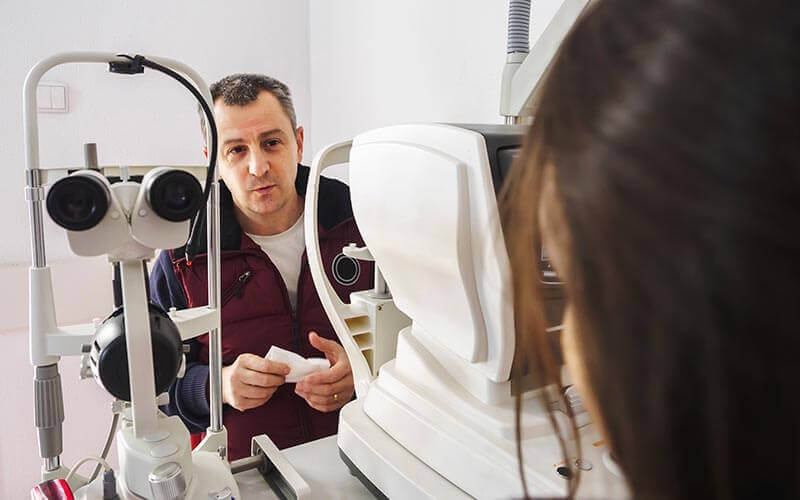
HOW LONG DOES A DIGITAL FUNDOSCOPY TAKE?
WHAT IS THE RECOVERY FROM A DIGITAL FUNDOSCOPY?
Since you may have trouble focusing your eyes for several hours after your test, you may want to have someone drive you home. If you have dilated pupils, you’ll need to wear sunglasses when outside or in a brightly lit room.
If you didn’t have dilation, the bright light used in the test may cause some temporary after-images to show in your vision. These pass quickly.
FREQUENTLY ASKED QUESTIONS (FAQS)
What is diabetic retinopathy and why is fundoscopy important?
Diabetic retinopathy is a complication of diabetes that affects the blood vessels of the retina. Fundoscopy is crucial because it allows for the early detection of changes in the retina caused by diabetes, such as swelling, leakage, or the creation of new blood vessels. Early detection is key to preventing blindness.
What diseases can retinal imaging help detect?
Diseases such as Age-related Macular Degeneration, Cancer, Diabetic Retinopathy, Glaucoma, Hypertension, Retinal Detachment, and Multiple Sclerosis can be detected or monitored closely through retinal imaging.
How long does a digital fundoscopy take?
The test itself takes just a few minutes. If pupil dilation is required, the drops need about 15 minutes to fully dilate the pupil.
What is the recovery process from a digital fundoscopy?
Recovery may involve temporary focusing difficulties, especially if pupils are dilated. It’s advisable to have someone drive you home and to wear sunglasses if outdoors or in brightly lit rooms. If no dilation was done, temporary after-images may occur due to the bright light used in the test.
HEALTH INSURANCE PLANS
WE ACCEPT AT ATLANTIC ENDOCRINOLOGY