
 By Atlantic Endo Medical Review Board
Nearly half of all American adults have high LDL cholesterol, yet fewer than half of them are receiving any treatment for it, according to the CDC. That gap between risk and action is where heart attacks and strokes are born. Effective lipid control is not simply about taking a pill; it is a comprehensive, personalized strategy that combines lifestyle changes, targeted nutrition, advanced diagnostics, and expert medical guidance. Whether you have recently received an abnormal cholesterol result or you are managing a long-standing cardiovascular risk, comprehending how to take charge of your lipid levels can genuinely save your life.
Endocrinologist Specializing in Diabetes in Queens, NY.
Table of Contents
Key Takeaways
- Lipid control means managing all components of your cholesterol panel, LDL, HDL, triglycerides, and total cholesterol, not just one number.
- Uncontrolled lipid levels are a leading driver of heart disease, stroke, and complications in diabetes and metabolic conditions.
- Lifestyle changes including diet, exercise, and weight management form the foundation of any effective lipid management plan.
- Medications such as statins, fibrates, and newer agents like PCSK9 inhibitors are powerful tools when lifestyle changes alone are insufficient.
- Specialized endocrinological care provides a multidisciplinary approach to lipid control that addresses root hormonal and metabolic causes.
Comprehending Lipid Control: What Your Numbers Actually Mean
Lipid control refers to the active management of fats circulating in your bloodstream, primarily cholesterol and triglycerides, to reduce the risk of cardiovascular disease, metabolic complications, and organ damage. To manage lipids effectively, you first need to know what your lipid panel measures.
The Four Essential Lipid Markers
| Marker | Desirable Level | Why It Matters |
|---|---|---|
| LDL Cholesterol (“bad”) | Below 100 mg/dL | Builds plaque in artery walls |
| HDL Cholesterol (“good”) | Above 60 mg/dL | Removes cholesterol from arteries |
| Triglycerides | Below 150 mg/dL | Elevated levels increase heart disease risk |
| Total Cholesterol | Below 200 mg/dL | Overall snapshot of cardiovascular risk |
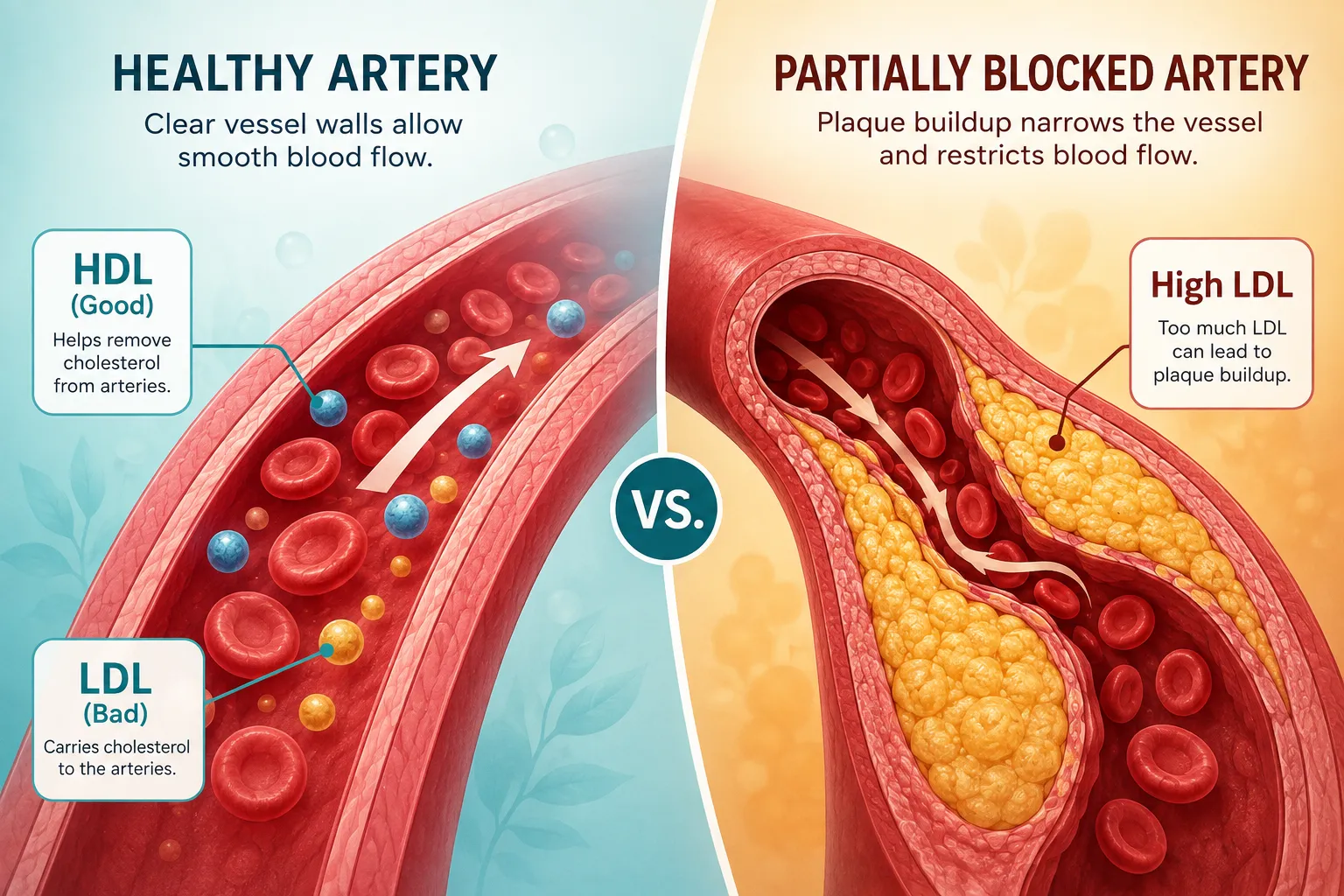
LDL cholesterol is the primary target of most lipid management strategies. When LDL particles accumulate in artery walls, they trigger inflammation and plaque buildup, a process called atherosclerosis. Over time, this narrows arteries and can cause a heart attack or stroke.
HDL cholesterol works in the opposite direction. It transports excess cholesterol back to the liver for removal. Higher HDL levels are generally protective.
Triglycerides are a separate type of blood fat. They rise sharply with excess sugar intake, alcohol consumption, and insulin resistance, making them particularly relevant for patients with diabetes or prediabetes.
Why Lipid Control Is More Complex Than One Number
Many patients focus exclusively on total cholesterol, but this is an incomplete picture. A person with a normal total cholesterol reading can still carry dangerous levels of small, dense LDL particles. Conversely, someone with elevated total cholesterol may have very high HDL levels that offset much of the risk.
This is why a thorough evaluation by a specialist matters. At Atlantic Endocrinology & Diabetes Center, our team assesses the full lipid panel alongside hormonal markers, metabolic health indicators, and cardiovascular risk factors, because lipid levels do not exist in isolation.
Hormonal imbalances are a frequently overlooked driver of dyslipidemia. Hypothyroidism, for example, raises LDL levels significantly. Insulin resistance, the metabolic state underlying type 2 diabetes, drives triglyceride elevation and lowers HDL. Polycystic ovarian syndrome (PCOS) is another condition strongly associated with unfavorable lipid profiles. Comprehending what an endocrinologist treats can help patients recognize when a specialist evaluation is the right next step.
Proven Strategies for Effective Lipid Control
Lipid management is most effective when it is layered, combining lifestyle modifications, targeted nutrition, appropriate medications, and ongoing monitoring. No single approach works for every patient.
Step 1, Dietary Changes That Move the Needle
Diet is the most immediate lever available for improving lipid levels. The following evidence-based dietary adjustments have the strongest impact:
Reduce saturated and trans fats
Saturated fats, found in red meat, full-fat dairy, and tropical oils, raise LDL directly. Trans fats, still present in some processed foods, raise LDL and simultaneously lower HDL. Replacing these with unsaturated fats from olive oil, avocados, and nuts is one of the most impactful dietary changes a person can make.
Increase soluble fiber
Soluble fiber binds to cholesterol in the digestive tract and removes it before it enters the bloodstream. Oats, legumes, flaxseed, and apples are excellent sources. Aim for at least 5-10 grams of soluble fiber daily.
Add omega-3 fatty acids
Fatty fish such as salmon, mackerel, and sardines are rich in EPA and DHA, omega-3 fatty acids that lower triglycerides and reduce inflammation. For patients who do not eat fish regularly, high-quality fish oil supplements can be considered under medical guidance.
Limit refined carbohydrates and added sugars
These are the primary dietary drivers of elevated triglycerides. Replacing white bread, sugary beverages, and processed snacks with whole grains, vegetables, and lean protein can lower triglycerides substantially within weeks.
Our Nutrition Wellness Center in New York provides personalized dietary counseling that is integrated with your medical care plan, ensuring that nutritional changes align with your overall health goals.
Step 2, Physical Activity and Weight Management
Regular aerobic exercise raises HDL cholesterol, lowers triglycerides, and modestly reduces LDL. The American Heart Association recommends at least 150 minutes of moderate-intensity aerobic activity per week. Even walking briskly for 30 minutes five days a week produces measurable lipid benefits.
Weight loss amplifies these effects. Losing as little as 5-10% of body weight can significantly improve all lipid markers, particularly triglycerides and HDL. For patients struggling with weight management, knowing your metabolic baseline is essential. A Resting Metabolic Rate (RMR) test can reveal how many calories your body burns at rest, helping to design a caloric strategy that is realistic and effective.
For patients with obesity-related dyslipidemia, medically supervised weight management, including options like semaglutide injections, can produce dramatic improvements in lipid profiles alongside significant weight reduction.
Step 3, Medications for Lipid Control
When lifestyle changes alone are insufficient to reach target lipid levels, particularly in patients with genetic hypercholesterolemia, established cardiovascular disease, or diabetes, medications become essential.
Statins
Remain the cornerstone of pharmacological lipid management. They work by blocking an enzyme in the liver that produces cholesterol, reducing LDL by 30-60% depending on the dose and specific agent. Common statins include atorvastatin, rosuvastatin, and simvastatin.
Ezetimibe
Reduces cholesterol absorption in the small intestine and is often combined with a statin for additive LDL reduction.
PCSK9 inhibitors
Are a newer class of injectable medications that dramatically lower LDL, sometimes by more than 60%, and are used in patients with very high cardiovascular risk or statin intolerance.
Fibrates and niacin
Are primarily used to lower triglycerides and raise HDL, particularly in patients with mixed dyslipidemia.
Icosapentaenoic acid (EPA)
A prescription-strength omega-3, has been shown in clinical trials to reduce cardiovascular events in patients with elevated triglycerides despite statin therapy.
Medication selection depends on your complete clinical picture. The cardiovascular endocrinology connection is critical here: hormonal conditions that drive dyslipidemia must be treated alongside lipid-lowering therapy for optimal outcomes.
Step 4, Advanced Diagnostics and Monitoring
Effective lipid control requires regular monitoring and, in some cases, advanced testing to know the full scope of cardiovascular risk. At Atlantic Endocrinology, we offer a range of diagnostic tools that go beyond the standard lipid panel:
- Body Composition Analysis, Excess visceral fat (fat around the organs) is a powerful driver of insulin resistance and dyslipidemia. A body composition test measures fat mass, lean mass, and visceral fat levels with precision, providing actionable data for your management plan.
- TM Flow Test, This non-invasive test evaluates autonomic nervous system function and vascular health, which can be impaired in patients with long-standing dyslipidemia and diabetes. Learn more about what a TM Flow test reveals.
- Sudomotor Scan, Used to detect early nerve damage associated with metabolic conditions. Sudomotor function testing helps identify complications before they become symptomatic.
- Laboratory Services, Comprehensive lipid panels, inflammatory markers (such as hsCRP), and hormonal assays are available at our Queens medical laboratory.

Step 5, Addressing the Hormonal Root Causes
Endocrinologists bring a unique perspective to lipid management because they recognize that cholesterol levels are often a symptom of an underlying hormonal or metabolic disorder, not just a standalone problem.
- Hypothyroidism raises LDL significantly. Treating the thyroid condition often normalizes cholesterol without additional lipid-lowering drugs.
- Type 2 Diabetes and Insulin Resistance drive a characteristic pattern of high triglycerides, low HDL, and elevated small-dense LDL. Effective diabetes management is inseparable from lipid control.
- PCOS is associated with insulin resistance and unfavorable lipid profiles in women. Our PCOS specialist team addresses both hormonal and metabolic aspects of this condition.
- Cushing’s syndrome and adrenal disorders can also produce secondary dyslipidemia.
FAQs
What is the difference between lipid control and cholesterol management?
Cholesterol management typically refers to controlling LDL and total cholesterol levels. Lipid control is a broader term that includes managing all blood fats, LDL, HDL, triglycerides, and lipoprotein subfractions. A comprehensive lipid control strategy addresses the full spectrum of cardiovascular risk, not just one number.
How quickly can lifestyle changes improve lipid levels?
Many patients see measurable improvements in their lipid panel within 6-12 weeks of consistent dietary changes and regular exercise. Triglycerides tend to respond fastest, sometimes within 2-4 weeks of reducing sugar and refined carbohydrate intake. LDL reduction through diet typically takes a bit longer and may require 8-12 weeks of sustained changes.
Do I need medication if my LDL is only mildly elevated?
Not necessarily. The decision to prescribe lipid-lowering medication depends on your overall cardiovascular risk profile, not just your LDL number. Factors such as age, blood pressure, smoking history, diabetes status, family history of heart disease, and inflammatory markers all influence the risk-benefit calculation. A specialist evaluation will give you the most accurate answer for your specific situation.
Can an endocrinologist help with lipid control, or should I see a cardiologist?
Both specialists play important roles, and the best care often involves both. Endocrinologists are particularly valuable when dyslipidemia is driven by hormonal or metabolic conditions such as hypothyroidism, diabetes, PCOS, or adrenal disorders. At Atlantic Endocrinology, our multidisciplinary team includes both an endocrinologist and a cardiologist, allowing for seamlessly coordinated lipid management.
References
- Centers for Disease Control and Prevention. (2023). High cholesterol facts. https://www.cdc.gov/cholesterol/facts.htm
- National Heart, Lung, and Blood Institute. (2022). Blood cholesterol: Causes and risk factors. https://www.nhlbi.nih.gov/health/blood-cholesterol/causes
- Handelsman, Y., et al. (2022). Consensus statement by the American Association of Clinical Endocrinology on the management of dyslipidemia and prevention of cardiovascular outcomes. Endocrine Practice, 28(5), 528-562. https://doi.org/10.1016/j.eprac.2022.03.010
- American Diabetes Association. (2023). Standards of care in diabetes, 2023: Cardiovascular disease and risk management. Diabetes Care, 46(Suppl 1), S158, S190. https://doi.org/10.2337/dc23-S010
Medical and Editorial Commitment
The content of this article is strictly for educational and informational purposes. It does not replace in-person professional medical diagnosis, advice, or treatment..
Read Privacy PolicyRelated Posts

How to Enhance Your Metabolism: Step by Step in Rego Park, NY
Arrange a Visit Semaglutide Injections and IV Therapy in Rego Park, NY. Nearly 40% of American adults are living with obesity, yet [...]
What Organ Is Most Affected by Glucose?
While every cell in your body relies on sugar, one vital organ bears the brunt of unregulated glucose levels, often suffering in [...]