
 By Atlantic Endo Medical Review Board
More than 98 million American adults have prediabetes, and the majority do not know it. For women specifically, the early signs of prediabetes are often quiet, easy to misread, and frequently attributed to stress, aging, or hormonal shifts. Comprehending the early signs of prediabetes in women and what your body is trying to tell you is not just empowering, it can be the difference between reversing a metabolic problem and developing full type 2 diabetes.
Table of Contents
Key Takeaways
- Most women with prediabetes feel completely normal; blood tests, not symptoms, are the most reliable early detection tool.
- Women carry unique risk factors, including PCOS, gestational diabetes history, and menstrual irregularities, that are often overlooked as metabolic warning signs.
- Skin changes, recurrent infections, fatigue, and cycle disruptions can signal insulin resistance before fasting glucose becomes critically elevated.
- Prediabetes is defined by a fasting glucose of 100-125 mg/dL, HbA1c of 5.7-6.4%, or a two-hour oral glucose tolerance of 140-199 mg/dL.
- With the right clinical support, prediabetes is reversible, but only if it is caught early.
The Subtle Physical Signs Women Often Miss
Prediabetes rarely announces itself with dramatic symptoms. In fact, most women with prediabetes feel entirely well, and blood sugar can be silently elevated for years before a diagnosis is made. This is exactly why knowing what your body is trying to tell you requires learning to read a different set of signals than the classic “I feel sick” warning.
Skin Changes That Point to Insulin Resistance
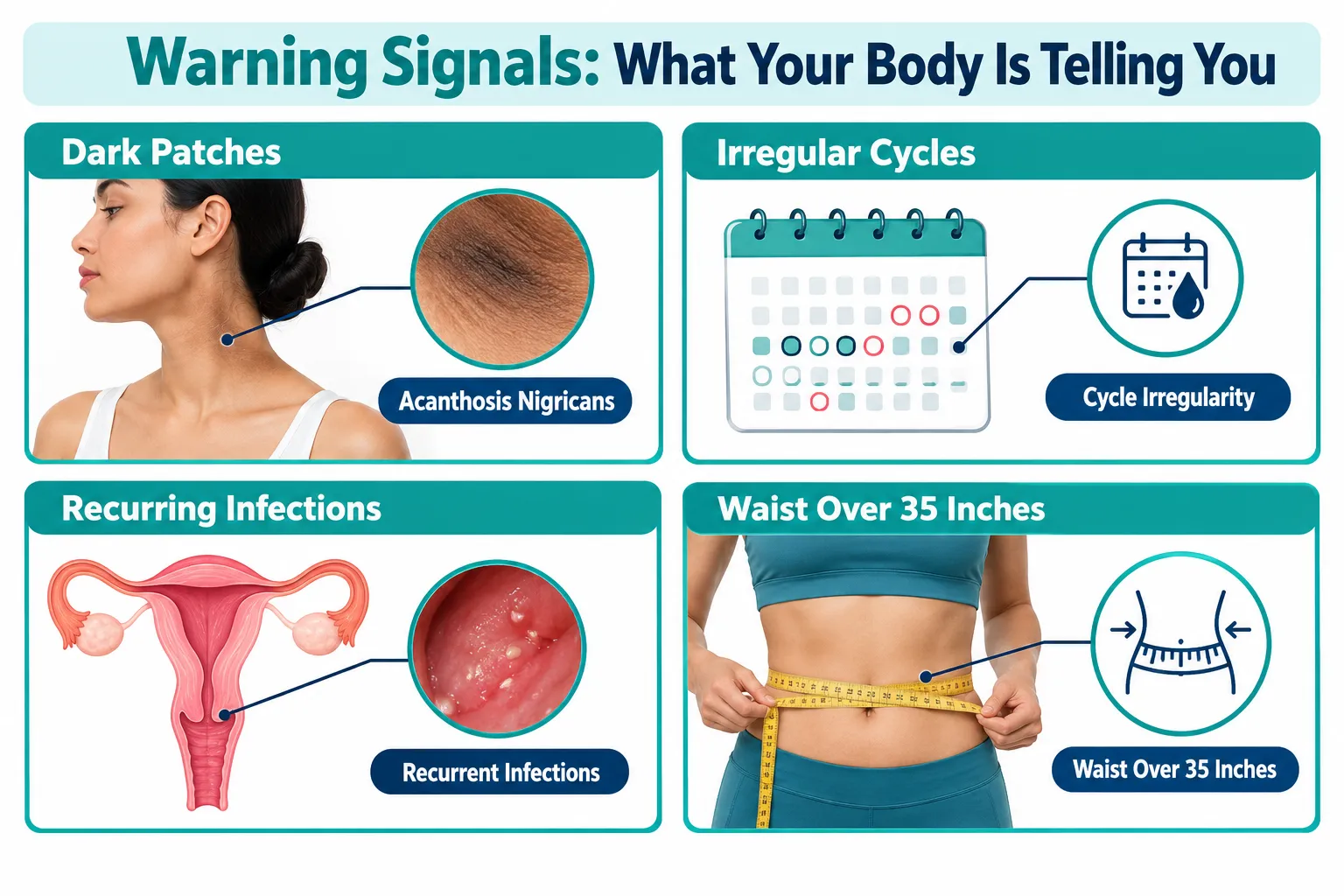
One of the most visible and overlooked physical clues is acanthosis nigricans, darkened, velvety patches of skin that develop on the neck, armpits, inner thighs, or groin. These patches are not a cosmetic issue; they are a direct outward marker of high circulating insulin levels. Small, soft skin tags appearing in the same areas often accompany them.
These findings are especially significant in women with obesity or polycystic ovary syndrome (PCOS), a condition in which insulin resistance is already a core metabolic feature. If you notice these changes, do not dismiss them as normal skin variation.
Fatigue That Does Not Match Your Activity Level
Persistent, unexplained tiredness, especially the kind that worsens after carbohydrate-heavy meals, is a common early complaint in women whose glucose regulation is beginning to falter. When cells cannot use insulin efficiently, glucose cannot enter them properly for energy, leaving you feeling drained despite adequate sleep.
Recurrent Vaginal Yeast Infections and UTIs
This is one of the most women-specific warning signs, and it is one of the most frequently missed. When blood sugar spikes repeatedly after meals, even while fasting values remain borderline, the sugar-rich environment in mucous membranes becomes a breeding ground for Candida and bacteria. Women who experience three or more vaginal yeast infections or urinary tract infections per year, particularly when they seem unprovoked, should request a glucose screening.
Menstrual Irregularities and Hormonal Disruption
Longer cycles, heavier periods, or increasing cycle irregularity can reflect emerging glucose dysregulation, particularly when combined with other metabolic risk factors. The relationship between insulin resistance and ovulatory function is well established; when insulin rises chronically, it disrupts the hormonal signaling that governs the menstrual cycle. This connection is especially pronounced in women with PCOS, where insulin resistance and cycle irregularity frequently coexist. If you have noticed changes in your periods alongside fatigue or weight gain around the abdomen, that pattern deserves clinical attention.
Sexual Health Changes
Reduced libido, vaginal dryness, and discomfort during intercourse are increasingly recognized as early red flags of glycemic and vascular changes in women. These symptoms often appear before classic neuropathy becomes detectable and are now understood as part of an early cluster of diabetes-related sexual dysfunction. Reduced blood flow and early nerve sensitivity changes driven by repeated glucose surges can affect the pelvic region long before a woman would ever suspect a metabolic cause.
The “Classic” Symptoms, When They Appear Early
Excessive thirst, frequent urination (especially at night), blurred vision after large meals, and slow-healing cuts or scrapes are typically associated with overt type 2 diabetes. Nevertheless, these symptoms can occur intermittently in women whose fasting values are still in the borderline range, reflecting repeated post-meal hyperglycemia. If you notice these symptoms appearing after eating and then resolving, do not assume you are fine just because you feel better later. The pattern itself is the warning.
Clinical Reminder:Clinicians at major medical centers emphasize that it is the repeating pattern of symptoms, not a single episode, that signals emerging glucose problems. One blurry morning does not mean prediabetes. Three months of afternoon fatigue, occasional night urination, and recurring yeast infections together absolutely merit a blood test.
Risk Factors Are Themselves Early Warning Signs
Beyond physical symptoms, certain risk profiles should be treated as biological signals in their own right. For women, the following constellation warrants immediate screening even in the absence of symptoms:
| Risk Factor | Why It Matters for Women |
|---|---|
| Waist circumference over 35 inches | Central obesity drives insulin resistance directly |
| History of gestational diabetes | Substantially raises lifetime prediabetes risk |
| PCOS diagnosis | Insulin resistance is a core feature of the condition |
| Baby weighing over 9 lbs at birth | Linked to maternal glucose dysregulation |
| High blood pressure or low HDL cholesterol | Part of the metabolic syndrome cluster |
| Age 35 or older with excess weight | Current guidelines recommend screening at this threshold |
| Family history of type 2 diabetes | Genetic predisposition compounds lifestyle risk |
| Physical inactivity and high-risk ethnicity | Recognized independent risk multipliers |
Comprehending what the first signs of reversing insulin resistance look like is equally valuable, because catching and acting on these early signals means you may be able to turn the process around entirely.
How Prediabetes Is Diagnosed and What to Do Next
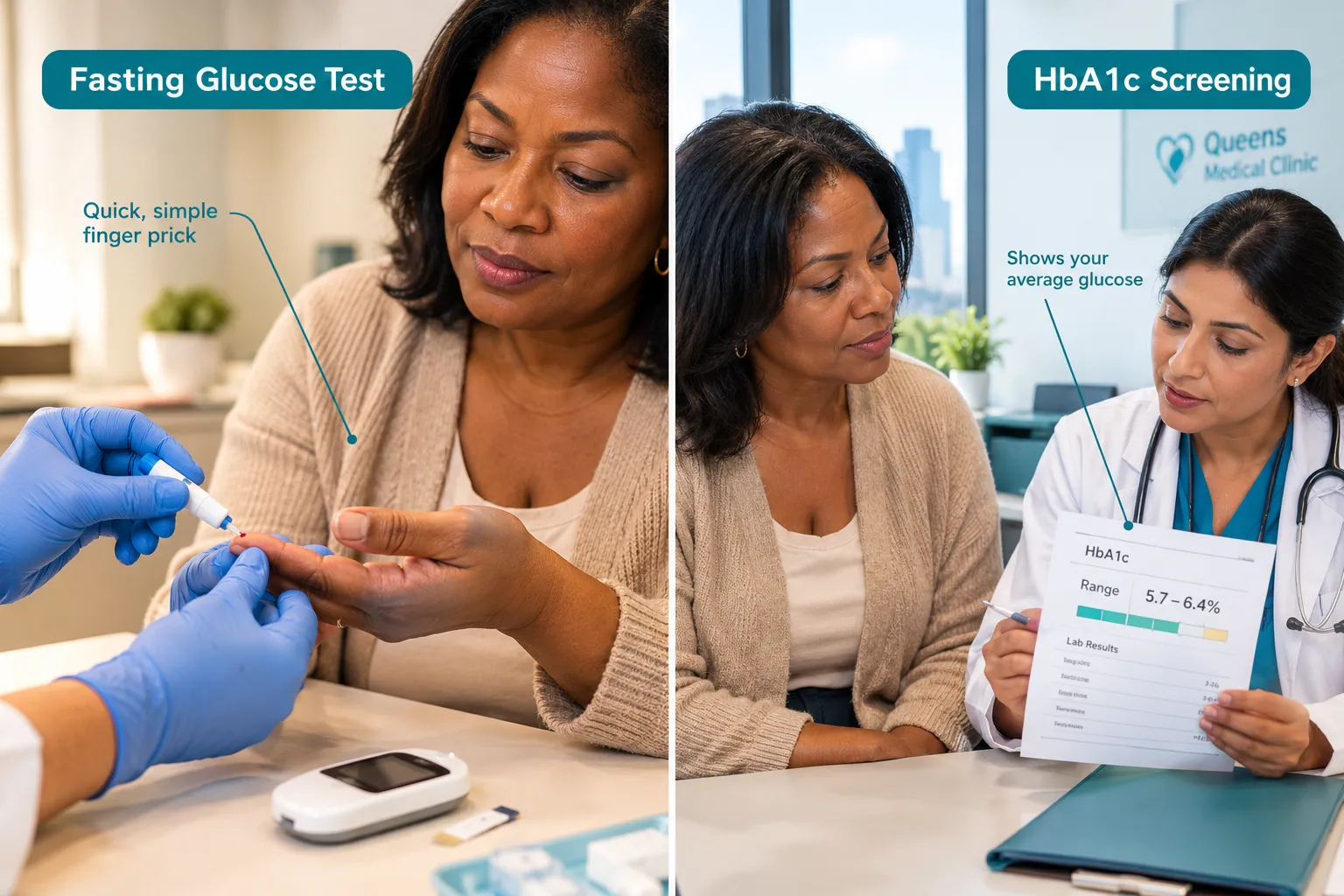
If any of the warning signs above resonate with you, the next step is straightforward: a blood test. Prediabetes has precise, objective diagnostic thresholds that your doctor can assess quickly.
The Three Diagnostic Tests
1. Fasting Plasma Glucose (FPG) A reading between 100 and 125 mg/dL after an overnight fast places you in the prediabetes range. At 126 mg/dL or above on two separate tests, the diagnosis shifts to type 2 diabetes.
2. HbA1c (Glycated Hemoglobin) An HbA1c between 5.7% and 6.4% reflects your average blood sugar over the past two to three months. This test does not require fasting and is one of the most convenient screening tools available.
3. Oral Glucose Tolerance Test (OGTT) A two-hour reading of 140-199 mg/dL after a 75-gram glucose drink confirms prediabetes. This test is particularly useful for women with a gestational diabetes history, since it can detect post-meal glucose problems that fasting tests might miss.
If you are uncertain about which test is right for your situation, knowing what endocrinologists test for can help you prepare for that first conversation with a specialist.
Why Screening Recommendations Have Shifted Earlier
Current clinical guidelines now recommend routine diabetes screening starting at age 35 for adults with excess weight and at least one additional risk factor, a shift driven by the recognition that women in particular accumulate risk through pregnancies, hormonal conditions, and body composition changes during their 30s. Waiting for symptoms means waiting too long.
Body Composition and Metabolic Assessment
Central obesity, fat stored around the abdomen rather than the hips and thighs, is the most dangerous form for metabolic health, yet standard weight measurements do not capture it. A body composition test can measure the ratio of fat mass to lean mass and identify visceral fat accumulation that a scale simply cannot detect. Similarly, a Resting Metabolic Rate test can reveal how efficiently your body burns calories at rest, a main data point when designing a reversal plan.
At Atlantic Endocrinology & Diabetes Center, our team also uses advanced tools including the Sudomotor Scan and TM Flow Test to assess early autonomic and nerve function changes, helping detect whether prediabetes has begun to cause neuropathy before symptoms become established.
The Role of a Specialist
A primary care physician can order initial screening blood work, but an endocrinologist brings a deeper layer of expertise to interpreting results, identifying hormonal contributors, and building a personalized reversal strategy. If you are wondering what the best doctor to see for diabetes management is, the answer for most women with complex risk profiles, particularly those with PCOS, thyroid disease, or a history of gestational diabetes, is a board-certified endocrinologist.
Dr. Stella Ilyayeva, M.D., leads our endocrinology practice at Atlantic Endocrinology & Diabetes Center with over 20 years of experience in diabetes and metabolic disease. Our multidisciplinary team also includes specialists in cardiology, podiatry, and women’s health, because prediabetes affects more than just blood sugar, and catching it early means protecting your heart, kidneys, nerves, and feet simultaneously.
Reversing Prediabetes: What the Evidence Supports
Prediabetes is not a life sentence. For most women, targeted lifestyle changes, sustained weight loss of 5-7% of body weight, 150 minutes of moderate physical activity per week, and dietary improvements, can normalize blood sugar and reduce the risk of progressing to type 2 diabetes by more than half. In some cases, medication may be appropriate as a complementary strategy.
A comprehensive weight management program that integrates nutrition counseling, metabolic testing, and medical supervision gives women the most structured path to reversal. At Atlantic Endocrinology, we also offer Semaglutide therapy and IV Vitamin Therapy as part of individualized weight and metabolic management plans, tools that are now reshaping how clinicians approach early metabolic intervention.
FAQs
Can a woman have prediabetes with completely normal fasting blood sugar?
Yes. Fasting glucose is only one part of the picture. Some women develop what is called “isolated post-load hyperglycemia,” meaning their fasting values remain below 100 mg/dL but their blood sugar spikes abnormally after meals. An oral glucose tolerance test or HbA1c can detect this pattern. This is one reason why women with recurrent yeast infections or post-meal fatigue should ask for more than just a fasting glucose reading.
How is PCOS related to prediabetes?
PCOS is fundamentally an insulin-resistance condition. Women with PCOS produce excess insulin, which drives up androgen levels, disrupts ovulation, and promotes weight gain around the abdomen, all of which feed back into worsening insulin resistance. Because of this cycle, women with PCOS have a significantly elevated lifetime risk of prediabetes and type 2 diabetes and should receive regular glucose screening regardless of their weight.
Does gestational diabetes mean I will definitely develop prediabetes later?
Not definitively, but it is a strong indicator of underlying metabolic vulnerability. Women who had gestational diabetes have a 3-10 times higher risk of developing type 2 diabetes compared to the general population. Annual or biennial glucose screening after pregnancy is strongly recommended. Returning to a healthy weight, staying physically active, and eating a balanced diet are the most powerful tools for reducing that risk.
At what point should I see an endocrinologist rather than just my primary care doctor?
You should consider an endocrinology referral if your HbA1c is in the prediabetes range and you have additional risk factors such as PCOS, a prior gestational diabetes diagnosis, thyroid disease, or a strong family history of type 2 diabetes. An endocrinologist can perform a more detailed hormonal and metabolic workup, order advanced diagnostic tests, and develop a precision management plan.
References
- American Diabetes Association. (2024). Standards of Medical Care in Diabetes, 2024. Diabetes Care, 47(Suppl. 1). https://diabetesjournals.org/care/issue/47/Supplement_1
- Centers for Disease Control and Prevention. (2023). National Diabetes Statistics Report. U.S. Department of Health and Human Services. https://www.cdc.gov/diabetes/data/statistics-report/index.html
- National Institute of Diabetes and Digestive and Kidney Diseases. (2023). Prediabetes & Insulin Resistance. https://www.niddk.nih.gov/health-information/diabetes/overview/what-is-diabetes/prediabetes-insulin-resistance
- Ding, E. L., et al. (2021). Sex differences in type 2 diabetes risk and metabolic syndrome prevalence. Journal of Women’s Health, 30(4), 512-521. https://doi.org/10.1089/jwh.2020.8470
- Kannan, S., & Bhaskaran, S. (2022). Prediabetes in women: A clinical and hormonal overview. Endocrine Practice, 28(3), 301-309. https://doi.org/10.1016/j.eprac.2021.12.010
Medical and Editorial Commitment
The content of this article is strictly for educational and informational purposes. It does not replace in-person professional medical diagnosis, advice, or treatment..
Read Privacy PolicyRelated Posts

Subclinical Hypothyroidism: Symptoms, Risks, and When It Needs Treatment
Endocrinology, Weight Management
Up to 10% of the general population may have a thyroid condition they do not even know about. Subclinical hypothyroidism, a state [...]

Can Non-Diabetics Use GLP-1 Medications for Weight Loss?
Only about 1 in 8 adults with obesity in the United States ever receives a prescription medication to help manage their weight, [...]