
 By Atlantic Endo Medical Review Board
Only about 1 in 8 adults with obesity in the United States ever receives a prescription medication to help manage their weight, and for years, many people assumed GLP-1 drugs were strictly for people with type 2 diabetes. That assumption is now outdated. The question of whether can non-diabetics use GLP-1 medications for weight loss has been answered definitively by clinical trials, FDA approvals, and real-world evidence: yes, they can, and in many cases, they respond even more powerfully than patients with diabetes.
This article breaks down exactly how GLP-1 medications work, who qualifies, what the research shows, and what a medically supervised program at a specialized center like Atlantic Endocrinology & Diabetes Center looks like for patients without diabetes.
Table of Contents
Key Takeaways
- GLP-1 receptor agonists like semaglutide are FDA-approved for chronic weight management in non-diabetic adults with obesity or overweight plus at least one weight-related condition.
- Non-diabetic patients typically lose 15-20% of body weight on GLP-1 therapy, often more than patients with type 2 diabetes on the same medication.
- Clinical trials show meaningful cardiovascular risk reduction in non-diabetic patients with obesity, independent of blood sugar changes.
- Eligibility is based on BMI and health profile, not diabetes status.
- GLP-1 therapy is a long-term, medically supervised treatment, not a short-term fix.
What Are GLP-1 Medications and How Do They Work?
GLP-1 stands for glucagon-like peptide-1, a hormone your gut naturally releases after you eat. It signals your brain that you are full, slows the rate at which food leaves your stomach, and helps regulate insulin secretion. GLP-1 receptor agonists are synthetic versions of this hormone that amplify these effects significantly.
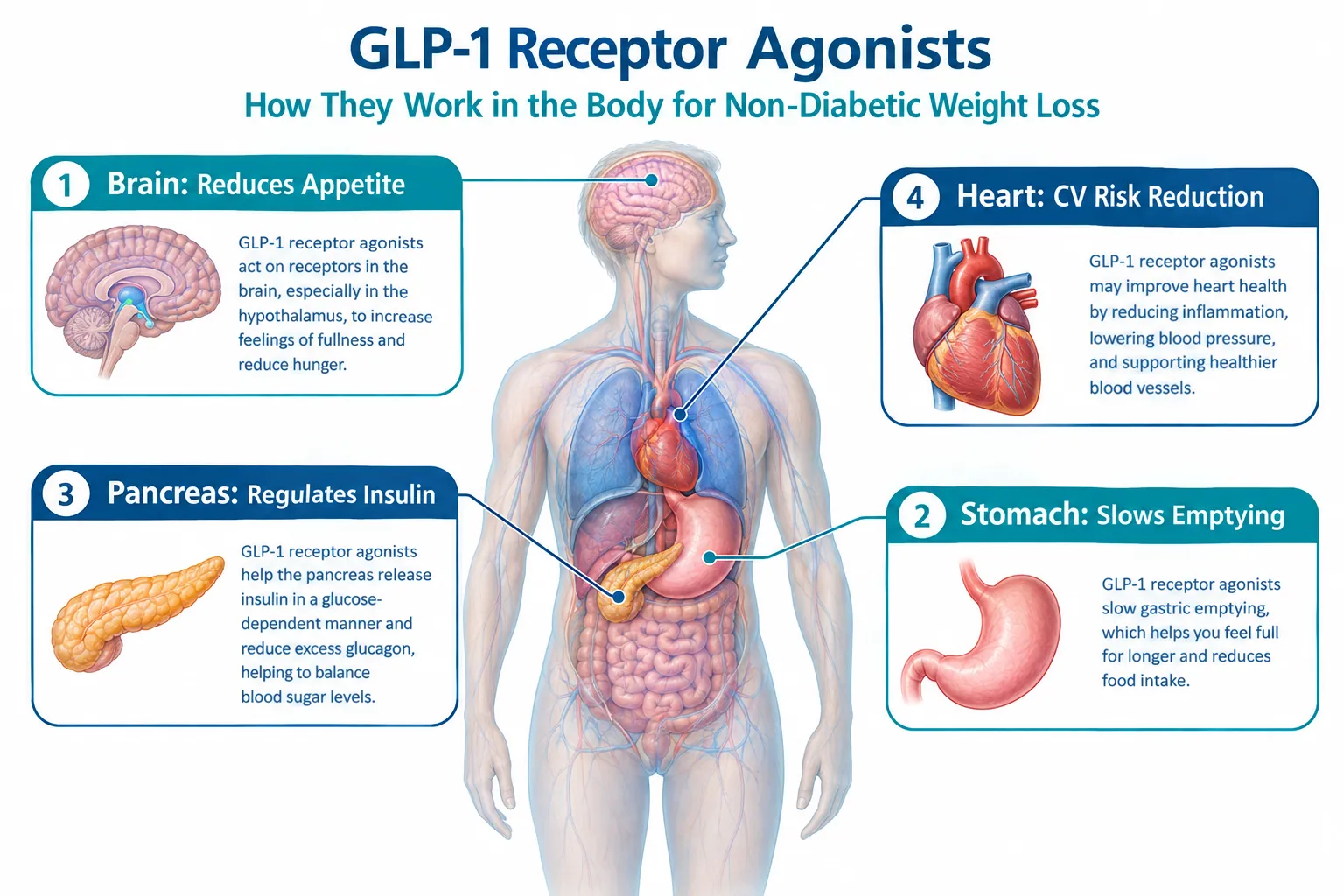
The most well-known GLP-1 medications used for weight loss include:
- Semaglutide (brand names Ozempic for diabetes, Wegovy for obesity)
- Liraglutide (Saxenda for obesity, Victoza for diabetes)
- Tirzepatide (Mounjaro for diabetes, Zepbound for obesity, a dual GIP/GLP-1 agonist)
For non-diabetic patients, the main mechanism is appetite suppression and slowed gastric emptying. The brain receives stronger satiety signals, food cravings decrease, and portion sizes naturally shrink, all without requiring willpower alone. This is why GLP-1 drugs represent a fundamentally different approach than older weight loss medications.
To understand which option may deliver the best results for your specific situation, our guide on which GLP-1 medication is most effective for weight loss provides a detailed breakdown.
Can Non-Diabetics Use GLP-1 Medications for Weight Loss? The FDA Answer
The FDA has given a clear answer. Semaglutide 2.4 mg (Wegovy) was approved specifically for chronic weight management in adults who are:
- Obese (BMI of 30 or higher), or
- Overweight (BMI of 27 or higher) with at least one weight-related condition such as high blood pressure, high cholesterol, or obstructive sleep apnea
Diabetes is not a requirement. Liraglutide (Saxenda) and tirzepatide (Zepbound) carry similar indications. This means that millions of non-diabetic Americans are medically eligible for GLP-1 therapy based on their weight and health profile alone.
The distinction matters because many patients, and even some general practitioners, still associate these drugs exclusively with blood sugar control. The obesity-specific approvals represent a separate regulatory pathway built on entirely different clinical trial programs focused on body weight, quality of life, and cardiovascular outcomes.
What the Research Shows: Weight Loss in Non-Diabetics
The clinical evidence is striking. In the STEP 1 trial, non-diabetic adults with obesity who took semaglutide 2.4 mg weekly lost an average of approximately 15% of their body weight over 68 weeks. Many participants lost 20% or more. A meaningful proportion lost over 30%.
Compare this to patients with type 2 diabetes in parallel trials: they typically lose somewhat less, around 9-12%, because elevated blood sugar and insulin resistance create a different metabolic environment. The takeaway is that non-diabetic patients often achieve superior weight loss outcomes on the same GLP-1 medication.
Two-year follow-up data reinforce that these results are durable. Patients who remain on therapy tend to maintain most of their weight loss, while those who discontinue the medication typically regain a significant portion of weight, underscoring why GLP-1 therapy is designed as a long-term treatment, not a short course.
Weight loss of this magnitude translates into real health improvements:
| Outcome | Benefit Observed in Non-Diabetics |
|---|---|
| Blood pressure | Significant reductions |
| Cholesterol levels | Improved lipid profiles |
| Joint pain and mobility | Reduced load on joints |
| Sleep apnea severity | Decreased episodes |
| Cardiovascular risk | Reduced major cardiac events |
If you are wondering whether excess weight may already be affecting your joints, our article on whether being overweight can cause joint and muscle pain explains the connection clearly.
Cardiovascular Benefits Beyond Weight Loss
One of the most important recent developments in GLP-1 research is the SELECT trial, the first major cardiovascular outcomes trial conducted exclusively in non-diabetic patients with obesity and established cardiovascular disease. The results showed a significant reduction in major adverse cardiovascular events, including heart attack and stroke, in patients taking semaglutide compared to placebo.
This finding was groundbreaking because it demonstrated that GLP-1 medications deliver cardiovascular protection in people without diabetes, not just those managing blood sugar. A 2026 mediation analysis of the SELECT data further clarified that the cardiovascular benefit comes through multiple pathways, not solely through weight reduction, suggesting direct anti-inflammatory and vascular effects of the drug itself.
Real-world registry data have since suggested the cardiovascular risk reductions seen in practice may be even larger than those observed in the controlled trial setting.
For patients at Atlantic Endocrinology & Diabetes Center, this means GLP-1 therapy is evaluated not just as a weight loss tool but as a comprehensive cardiometabolic intervention, particularly relevant given that our team includes cardiologist Dr. Ovidiu A. Krausz, who brings over 20 years of experience in managing cardiovascular risk.
Who Qualifies and How Is Eligibility Determined?
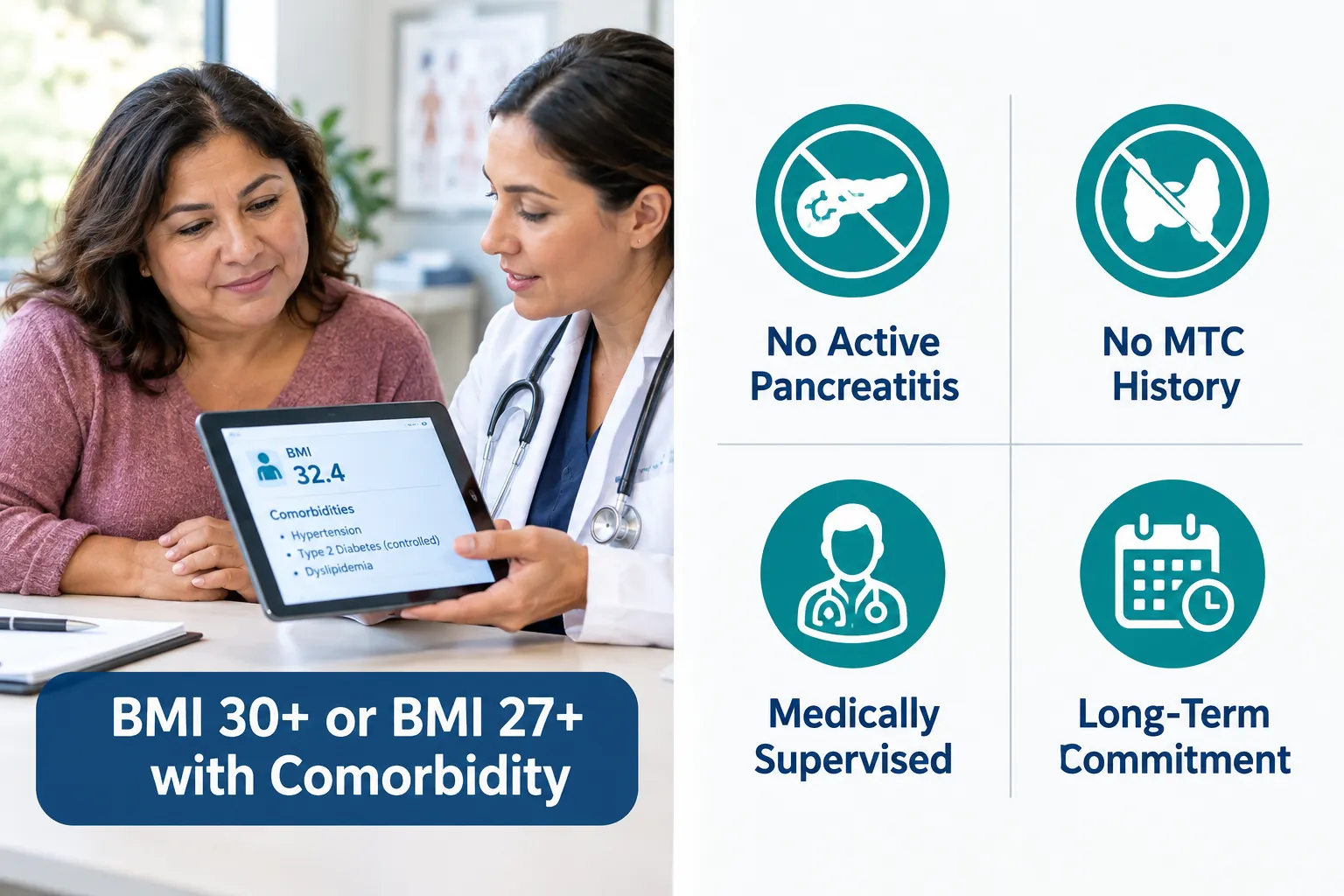
Eligibility for GLP-1 therapy in non-diabetic patients is shaped by BMI thresholds and comorbidities, not by blood sugar levels. A thorough medical evaluation is essential before starting any GLP-1 medication. At Atlantic Endocrinology, this evaluation typically includes:
- Body composition analysis to assess fat mass versus lean mass
- Resting metabolic rate testing to understand your baseline caloric needs
- Comprehensive laboratory work including metabolic panels, thyroid function, and lipid profiles
- Cardiovascular screening when indicated
- Review of current medications and health history
Certain conditions may make GLP-1 therapy inappropriate, including a personal or family history of medullary thyroid carcinoma, multiple endocrine neoplasia syndrome type 2, active pancreatitis, or severe gastrointestinal disease. This is why a specialist evaluation, not a telehealth questionnaire, is the appropriate starting point.
Dr. Stella Ilyayeva, M.D., our lead endocrinologist with over 20 years of clinical experience, leads individualized assessments that go far beyond a simple BMI check. Comprehending the hormonal and metabolic picture in full is what separates endocrinology-based weight management from a generic prescription.
If you are unsure whether a specialist is the right next step, our article on when to see an endocrinologist for weight loss outlines the main signals to watch for.
Integrating GLP-1 Therapy Into a Comprehensive Weight Management Plan
GLP-1 medications work best as part of a structured program, not as a standalone solution. At Atlantic Endocrinology & Diabetes Center, weight management is approached through multiple coordinated layers:
Nutritional support: Our nutrition wellness team helps patients build sustainable eating habits that complement the appetite-reducing effects of GLP-1 therapy. For patients curious about supplemental nutrition strategies, our guide on whether protein shakes support weight loss offers practical insights.
Hormonal evaluation: Weight gain is sometimes driven by underlying hormonal imbalances, thyroid dysfunction, PCOS, or cortisol dysregulation. Our article on how to balance hormones for weight loss explores this connection in depth.
IV therapy support: Some patients benefit from complementary IV vitamin therapy alongside their GLP-1 program. Learn more about our semaglutide weight loss and IV therapy program in Queens, NY.
Physical therapy and movement: Our Queens-based physical therapy team supports patients in building safe, effective exercise habits as weight decreases and mobility improves.
Insurance coverage: Many patients are surprised to learn that weight management services may be covered by their insurance plan. Atlantic Endocrinology accepts Medicaid, Medicare, Healthfirst, EmblemHealth, United Healthcare, and many others. Our article on whether Medicaid covers weight management provides guidance on navigating coverage.
To comprehend what a full program looks like from start to finish, our overview of what a comprehensive weight management program includes is a helpful resource.
Common Side Effects and Safety Considerations
GLP-1 medications are generally well tolerated, but side effects do occur, particularly during the dose escalation phase. The most common include:
- Nausea (most frequent, usually improves over time)
- Vomiting or diarrhea
- Constipation
- Fatigue during early weeks
Serious side effects are rare but include pancreatitis, gallbladder disease, and, based on animal studies, a theoretical thyroid cancer risk (not confirmed in humans at standard doses). Early data on kidney function in non-diabetic patients suggest minimal adverse changes, which is reassuring for patients with borderline kidney function.
Medical supervision is not optional, it is the foundation of safe GLP-1 use. Dose escalation schedules, monitoring intervals, and management of side effects all require clinical oversight.
FAQs
Can a non-diabetic person get a prescription for a GLP-1 medication just for weight loss?
Yes. FDA-approved GLP-1 medications such as semaglutide (Wegovy), liraglutide (Saxenda), and tirzepatide (Zepbound) are specifically indicated for chronic weight management in adults with obesity (BMI 30+) or overweight (BMI 27+) with at least one weight-related health condition. Diabetes is not a requirement. A physician or qualified specialist must evaluate your health profile and determine whether the medication is appropriate for you.
Will I lose more weight on a GLP-1 drug if I do not have diabetes?
Clinical trial data consistently show that non-diabetic patients achieve greater percentage weight loss on GLP-1 medications than patients with type 2 diabetes on the same drug. Average weight loss in non-diabetic participants in major trials has ranged from approximately 15% to over 20% of starting body weight, with some individuals losing 30% or more. The metabolic environment in non-diabetic patients appears to be more responsive to the appetite-suppressing effects of these medications.
How long do I need to stay on a GLP-1 medication?
GLP-1 therapy is designed as a long-term treatment for chronic obesity, not a short-term course. Two-year follow-up data show that weight loss is largely maintained while patients remain on the medication. Most patients who stop the drug regain a significant portion of lost weight within one to two years. Your endocrinologist will help you evaluate the long-term plan based on your health goals, response to treatment, and any changes in your medical status.
Are there any tests I should have before starting a GLP-1 medication?
Yes. A comprehensive pre-treatment evaluation typically includes laboratory work (metabolic panel, thyroid function, lipid profile, kidney function), body composition analysis, resting metabolic rate testing, and a review of your personal and family medical history. This helps rule out contraindications such as a history of medullary thyroid carcinoma or pancreatitis, and establishes a baseline to track your progress safely. At Atlantic Endocrinology & Diabetes Center, these evaluations are conducted by experienced endocrinology specialists who tailor the program to your individual needs.
References
- Wilding, J. P. H., Batterham, R. L., Calanna, S., et al. (2021). Once-weekly semaglutide in adults with overweight or obesity. New England Journal of Medicine, 384(11), 989-1002. https://doi.org/10.1056/NEJMoa2032183
- Lincoff, A. M., Brown-Frandsen, K., Colhoun, H. M., et al. (2023). Semaglutide and cardiovascular outcomes in obesity without diabetes. New England Journal of Medicine, 389(24), 2221-2232. https://doi.org/10.1056/NEJMoa2307563
- U.S. Food and Drug Administration. (2021). FDA approves new drug treatment for chronic weight management, first since 2014. https://www.fda.gov/news-events/press-announcements/fda-approves-new-drug-treatment-chronic-weight-management-first-2014
- National Institute of Diabetes and Digestive and Kidney Diseases. (2023). Prescription medications to treat overweight and obesity. https://www.niddk.nih.gov/health-information/weight-management/prescription-medications-treat-overweight-obesity
- Garvey, W. T., Batterham, R. L., Bhatta, M., et al. (2022). Two-year effects of semaglutide in adults with overweight or obesity: the STEP 5 trial. Nature Medicine, 28(10), 2083-2091. https://doi.org/10.1038/s41591-022-02026-4
- American Diabetes Association. (2023). Obesity and weight management for the prevention and treatment of type 2 diabetes: Standards of care in diabetes. Diabetes Care, 46(Suppl 1), S128, S139. https://doi.org/10.2337/dc23-S008
Medical and Editorial Commitment
The content of this article is strictly for educational and informational purposes. It does not replace in-person professional medical diagnosis, advice, or treatment..
Read Privacy PolicyRelated Posts

Homeopathic Weight Loss: What the Evidence Really Says (And What Actually Works)
Over 70% of American adults are classified as overweight or obese, yet billions of dollars are spent each year on remedies that [...]
Can Gastric Bypass Patients Take GLP-1? What the Latest Research Reveals
Weight Management, Information
More than 30% of patients who undergo Roux-en-Y gastric bypass experience significant weight regain within five years, and for many, the question [...]