
 By Atlantic Endo Medical Review Board
Nearly 40% of men over the age of 45 have testosterone levels that fall below the normal clinical threshold, yet the majority never receive a proper evaluation. Comprehending low testosterone in men, including its symptoms, causes, and when to see an endocrinologist, is one of the most overlooked conversations in men’s health today. This article breaks down everything you need to know, from the early warning signs to the specific red flags that warrant specialist care.
Table of Contents
1. What “Low Testosterone” Actually Means
Testosterone is the primary male sex hormone, responsible for far more than reproductive function. It regulates muscle mass, bone density, red blood cell production, mood, cognitive sharpness, and energy levels. Clinically, low testosterone, also called hypogonadism or “low T”, is generally defined as a total serum testosterone level below 300 nanograms per deciliter (ng/dL), though some guidelines use 264 ng/dL as the lower boundary.
The number alone, nevertheless, does not tell the full story. Many men with levels in the low-normal range still experience significant symptoms, while others with similar numbers feel perfectly well. This is why leading endocrinologists emphasize evaluating both lab values and clinical symptoms together rather than treating a number in isolation.
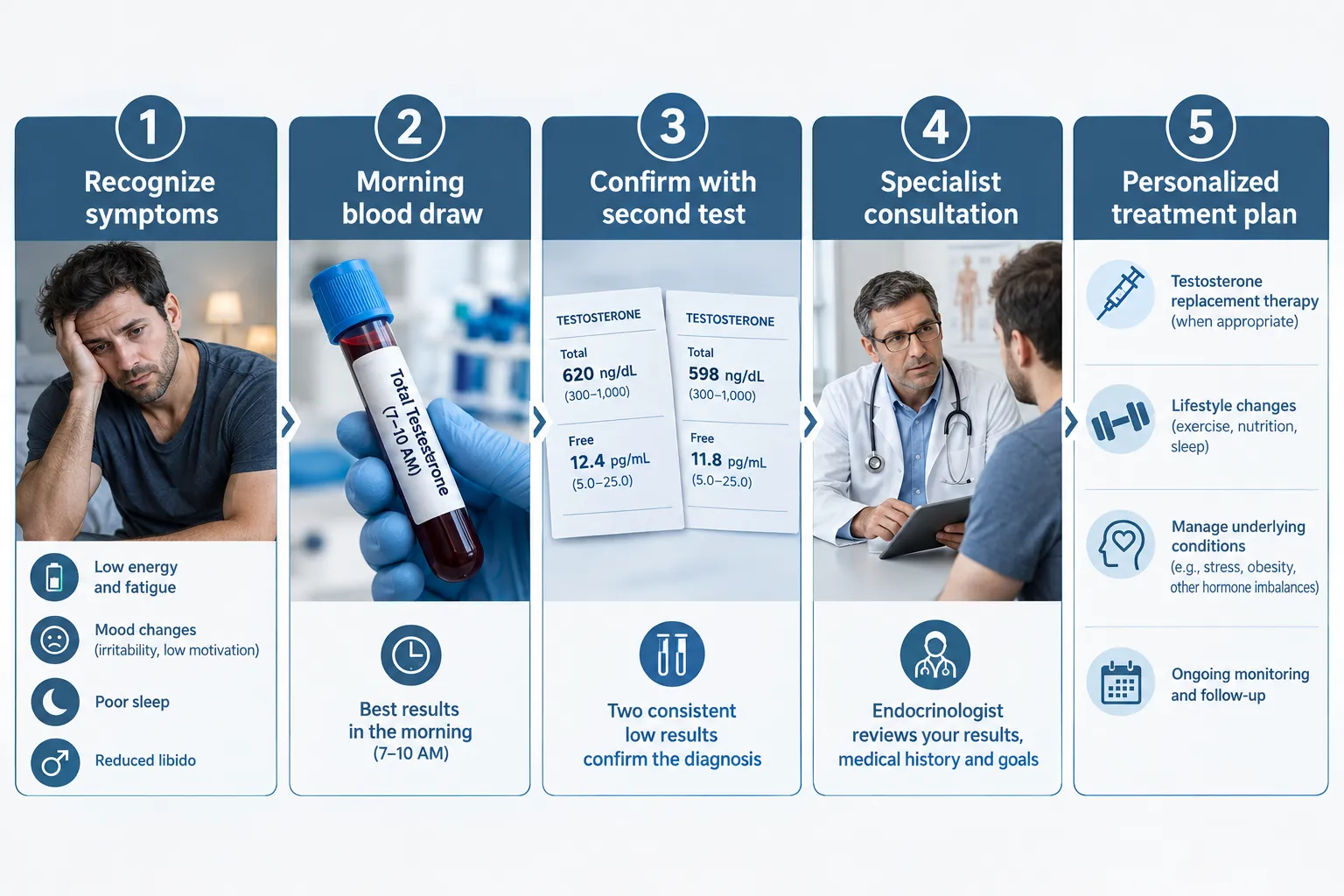
One important technical detail: testosterone levels follow a circadian rhythm, peaking in the early morning hours and declining through the day. A blood draw taken at 2 PM can read 20 to 30 percent lower than one taken at 8 AM for the same individual. This is why properly timed morning labs, typically between 7 and 10 AM, are considered the gold standard for an accurate baseline reading.
2. Recognizing the Symptoms: Sexual and Non-Sexual Signs
The symptoms of low testosterone in men span two distinct categories, and comprehending both is essential for accurate self-assessment before seeking care.
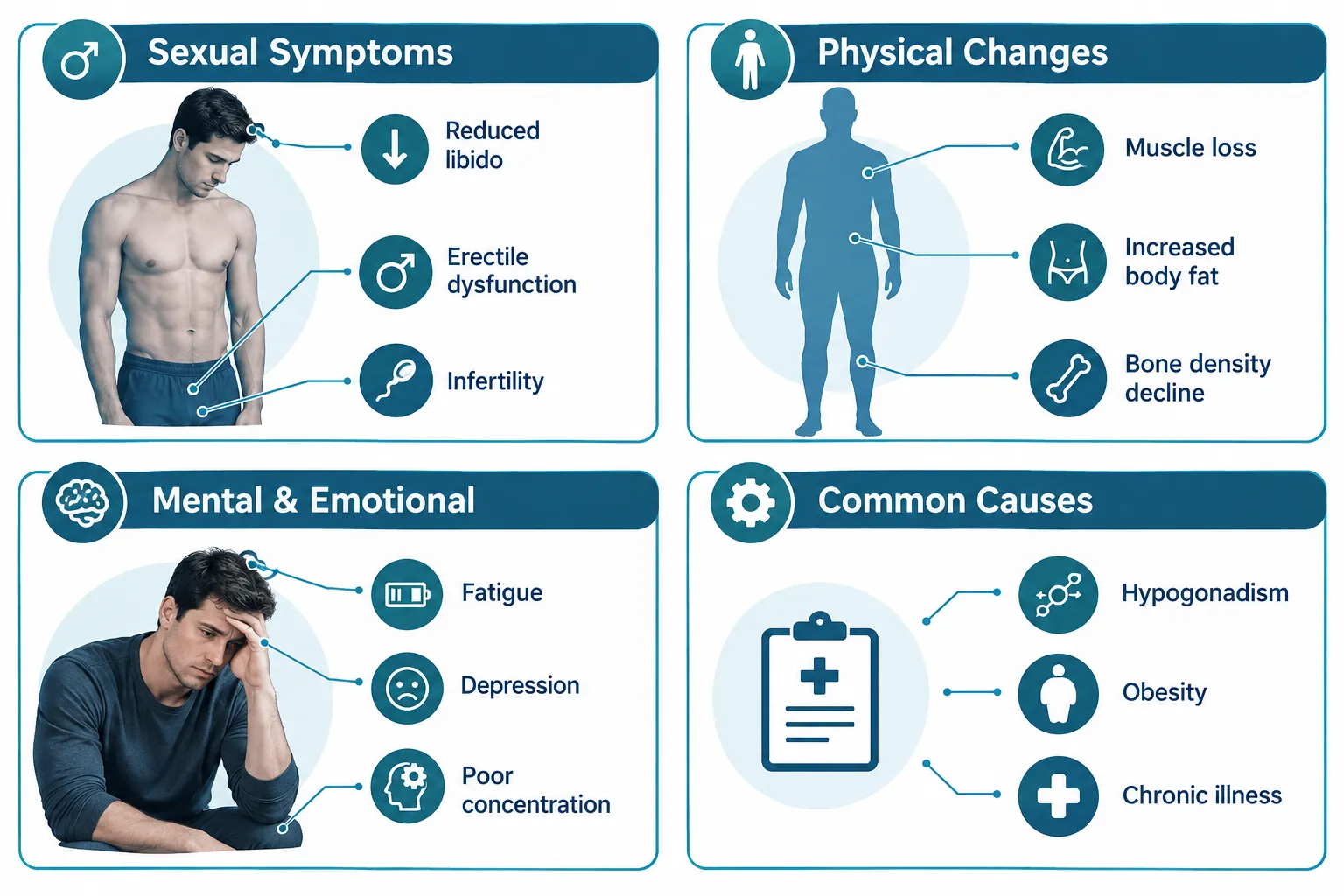
Sexual symptoms are the most clinically specific indicators. These include a noticeable decline in libido (sex drive), difficulty achieving or maintaining erections, reduced ejaculatory volume, and male infertility. If you have been trying to conceive without success, low testosterone may be a contributing factor, and seeing an endocrinologist early is critical, because some testosterone replacement therapies can actually suppress sperm production.
Non-sexual and general symptoms are broader and easier to miss or attribute to other causes. They include persistent fatigue that does not improve with rest, loss of muscle mass despite regular exercise, increased body fat (particularly around the abdomen), reduced bone density, difficulty concentrating, low mood or clinical depression, irritability, and disrupted sleep. Some men also notice a reduction in body and facial hair, or a decrease in the size of the testes.
The non-sexual symptoms are especially worth examining carefully because they are often labeled as “normal aging” or stress-related. In reality, when several of these symptoms appear together, particularly fatigue, mood changes, and physical decline, a hormonal evaluation is a reasonable and important next step. You can review what symptoms would prompt you to see an endocrinologist to better understand when specialist care is warranted.
An insight from current clinical commentary: many men presenting with these complaints do not primarily have a testosterone deficiency. Instead, underlying conditions such as obesity, sleep apnea, type 2 diabetes, or thyroid dysfunction are driving the hormonal disruption. Treating only the testosterone level without addressing root causes often leads to incomplete recovery. This is precisely why comprehensive endocrinological evaluation matters more than a quick hormone panel.
3. The Root Causes: Why Testosterone Declines
Low testosterone does not arise from a single cause. Knowing the mechanism helps patients have more productive conversations with their doctors.
Primary hypogonadism means the testes themselves are producing insufficient testosterone. Causes include Klinefelter syndrome (a genetic condition), undescended testes, testicular injury or infection, chemotherapy or radiation exposure, and certain autoimmune conditions.
Secondary hypogonadism means the signal from the brain, specifically the hypothalamus and pituitary gland, is failing to adequately stimulate testosterone production. Common causes include pituitary tumors, elevated prolactin levels, and chronic use of opioid medications. For a deeper look at how pituitary dysfunction affects hormonal health, read about symptoms of pituitary adrenal disease.
Lifestyle and metabolic contributors are the most prevalent drivers in clinical practice today. Obesity is strongly associated with lower testosterone because excess body fat converts testosterone to estrogen through a process called aromatization. Chronic sleep deprivation, excessive alcohol consumption, high psychological stress, and a sedentary lifestyle all suppress the hormonal axis. Type 2 diabetes and metabolic syndrome are particularly well-documented risk factors, the relationship between insulin resistance and low testosterone is bidirectional, meaning each condition worsens the other. If you are managing diabetes alongside hormonal concerns, our endocrinology team specializing in diabetes in New York can provide integrated care.
Age-related decline is real but should not be accepted uncritically. Testosterone levels fall roughly 1 to 2 percent per year after age 30. By the time a man reaches his 50s or 60s, the cumulative decline can be clinically significant, but age alone does not determine whether treatment is appropriate.
4. When to See an Endocrinologist: Specific Red Flags
Knowing when to escalate from “I feel off” to “I need a specialist” is one of the most practical parts of this conversation. While a primary care physician can order an initial testosterone panel, an endocrinologist brings the depth of hormonal expertise needed when results are ambiguous, symptoms persist, or underlying conditions are suspected.
Consider scheduling an evaluation with an endocrinologist if you experience any of the following:
You have multiple overlapping symptoms, fatigue, low libido, muscle loss, and mood changes, appearing together rather than in isolation. You have already received a low testosterone result from a general blood panel but have not had a full hormonal workup to identify the cause. You are planning to start a family, since testosterone therapy can impair fertility and an endocrinologist can guide hormone-stimulating alternatives. You have been diagnosed with obesity, type 2 diabetes, or a pituitary disorder, as these conditions require coordinated hormonal management. You have tried lifestyle interventions without meaningful symptom improvement. Or, if you have been prescribed testosterone therapy elsewhere and are not seeing the expected results, a re-evaluation of both dosing and underlying diagnosis is warranted.
For those uncertain about the process, what to expect at your first endocrinologist appointment provides a clear, reassuring overview of how a specialist evaluation unfolds.
It is also worth noting that the regulatory and clinical landscape around testosterone therapy has evolved significantly. Regulatory discussions have focused on broadening approved indications for testosterone treatment, which has intensified both patient interest and clinical debate. Many endocrinologists now emphasize that the decision to treat should never be driven by a single lab value or direct-to-consumer marketing, but by a thorough evaluation of symptoms, causes, and overall health goals.
Men concerned about unexplained weight changes alongside hormonal symptoms may find that addressing testosterone deficiency is one piece of a broader metabolic picture that includes nutrition, body composition, and cardiovascular health. Similarly, bone health is an underappreciated concern, long-term low testosterone contributes to reduced bone mineral density and increased fracture risk, a connection explored further in our resource on metabolic bone disease.
5. How the Evaluation Works at Atlantic Endocrinology
At Atlantic Endocrinology and Diabetes Center, the evaluation of suspected low testosterone begins with a thorough clinical history and a properly timed morning blood draw. Total testosterone is measured first. If the result falls below the clinical threshold, the test is typically repeated on a second occasion to confirm the finding, as a single low reading can occur due to acute illness, stress, or timing errors.
The workup then expands to include free testosterone (the biologically active fraction), luteinizing hormone (LH), follicle-stimulating hormone (FSH), sex hormone-binding globulin (SHBG), prolactin, and a complete metabolic panel. This broader picture allows the clinical team to distinguish primary from secondary hypogonadism and to identify reversible contributors such as elevated prolactin from a pituitary adenoma or thyroid dysfunction.
Our multidisciplinary model is a genuine advantage for patients with complex cases. Under the leadership of Dr. Stella Ilyayeva, M.D., who brings over 20 years of endocrinology experience, the practice coordinates hormonal care with cardiology, podiatry, nutrition, and other specialties when needed. Patients can reach any of our locations, including Forest Hills, Rego Park, and Bushwick, by calling (718) 275-2900, or by visiting atlanticendomd.com/contact to schedule an appointment. We also accept a wide range of insurance plans, including Medicaid, Medicare, Aetna, Empire Blue Cross Blue Shield, United Healthcare, and many others, to ensure care is accessible.
For those wanting to know the broader scope of conditions that prompt an endocrinology referral, reasons to see an endocrinologist as soon as possible offers additional context.
FAQs
Can low testosterone cause depression and anxiety in men?
Yes. Testosterone plays a direct role in mood regulation, and chronically low levels are associated with depressive symptoms, irritability, and reduced motivation. Nonetheless, depression has many causes, and a thorough evaluation should rule out other contributing factors before attributing mood changes solely to testosterone deficiency.
Is testosterone replacement therapy safe for all men with low T?
No. Testosterone therapy is not appropriate for men with prostate or breast cancer, untreated sleep apnea, high hematocrit, or those planning to father children in the near future. An endocrinologist will conduct a complete health assessment to determine whether treatment is safe and appropriate on an individual basis.
How long does it take to see results after starting testosterone therapy?
Improvement timelines vary by symptom. Energy and mood often begin to improve within three to six weeks. Sexual function improvements typically appear by six to twelve weeks. Physical changes such as increased muscle mass and reduced fat may take three to six months of consistent treatment.
Does low testosterone always require medication to treat?
Not always. In cases where low testosterone is driven by obesity, poor sleep, alcohol overuse, or nutritional deficiencies, addressing those underlying factors can meaningfully restore hormone levels without pharmacological intervention. An endocrinologist can help determine whether lifestyle correction alone is sufficient or whether medical treatment is needed.
References
- Yeap, B. B., et al. (2022). Lowering of testosterone in men: An overview of prevalence, mechanisms, and clinical implications. Best Practice & Research Clinical Endocrinology & Metabolism, 36(4), 101627. https://doi.org/10.1016/j.beem.2022.101627
- National Institute of Diabetes and Digestive and Kidney Diseases. (2021). Hypogonadism. U.S. Department of Health and Human Services. https://www.niddk.nih.gov
- Krasnow, R. E., et al. (2023). Testosterone deficiency and its management in older men. UpToDate. Retrieved from https://www.uptodate.com
- American Urological Association. (2022). Testosterone deficiency guideline. https://www.auanet.org/guidelines-and-quality/guidelines/testosterone-deficiency-guideline
Medical and Editorial Commitment
The content of this article is strictly for educational and informational purposes. It does not replace in-person professional medical diagnosis, advice, or treatment..
Read Privacy PolicyRelated Posts
High Cortisol Symptoms: How to Know If Your Adrenal Glands Are Overworking
Cortisol has a reputation as the "stress hormone," but when your adrenal glands produce too much of it for too long, the [...]

Subclinical Hypothyroidism: Symptoms, Risks, and When It Needs Treatment
Endocrinology, Weight Management
Up to 10% of the general population may have a thyroid condition they do not even know about. Subclinical hypothyroidism, a state [...]