
 By Atlantic Endo Medical Review Board
Last updated: June 4, 2026
Quick Answer: Vitamin D3 (cholecalciferol) is the superior choice for bone health. It raises and maintains blood levels of active vitamin D roughly 87% more effectively than D2 (ergocalciferol), which translates directly into better calcium absorption and stronger bones. Most physicians who provide bone specialist services recommend D3 as the first-line supplement for patients at risk of deficiency, osteopenia, or osteoporosis.
Speak with a foot doctor in Queens Today
Table of Contents
Key Takeaways
- Vitamin D3 is more potent than D2 at raising serum 25-hydroxyvitamin D levels, making it the preferred form for bone health.
- D3 comes primarily from animal foods and sunlight; D2 comes mainly from plant sources and fortified foods.
- Most adults need 600–2,000 IU of vitamin D daily, but people with deficiency or bone disease often require higher doses under medical supervision.
- Signs of vitamin D deficiency include bone pain, muscle weakness, frequent fractures, and fatigue.
- Vitamin D alone does not prevent osteoporosis; it works alongside calcium, weight-bearing exercise, and hormonal balance.
- Vegans can find D3 derived from lichen, making animal-free D3 supplementation possible.
- Toxicity is possible with excessive supplementation; always confirm your dose with a clinician.
- A simple blood test (25-OH vitamin D) is the standard way to check your levels; at-home test kits are available but have limitations.
- Multivitamins typically contain far too little vitamin D to correct a deficiency.
- Atlantic Endocrinology & Diabetes Center offers comprehensive bone specialist services in Queens and Brooklyn, NY.
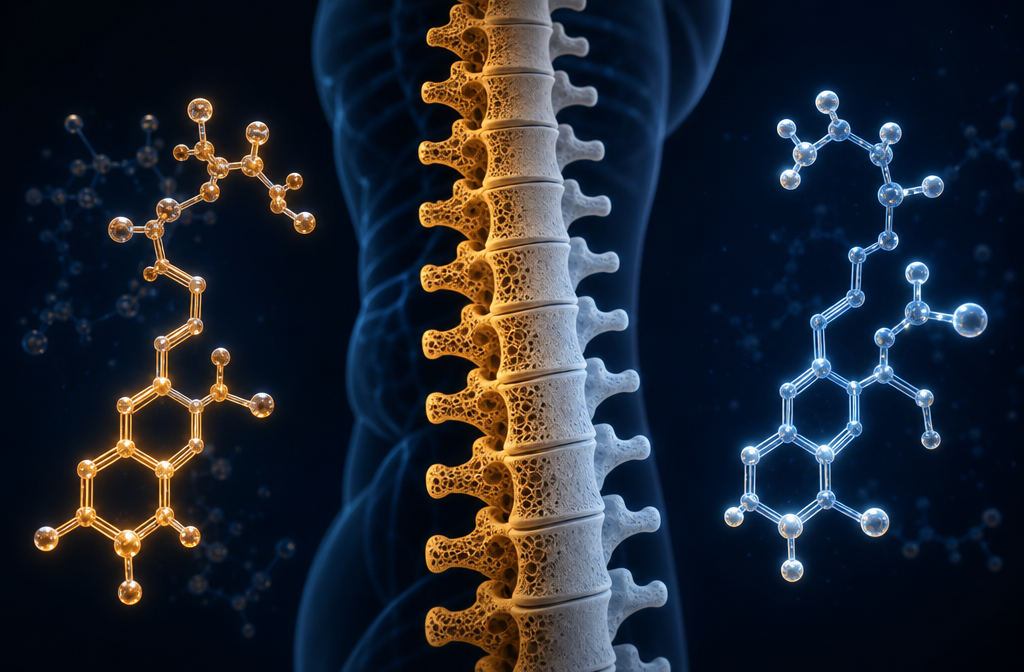
What Is the Difference Between Vitamin D3 and D2?
Vitamin D3 (cholecalciferol) and D2 (ergocalciferol) are two distinct forms of vitamin D that share the same biological goal but differ in origin, structure, and potency. D3 is the form your skin produces when exposed to UVB sunlight and is also found in animal-based foods. D2 is synthesized by plants and fungi and is commonly used in prescription-strength supplements and food fortification.
Once either form enters the bloodstream, the liver converts it into calcifediol (25-hydroxyvitamin D), the main circulating form used to assess vitamin D status. The kidneys then convert calcifediol into calcitriol, the active hormone that drives calcium absorption. The key difference is that D3 converts to calcifediol far more efficiently than D2, giving it a longer circulating half-life and a stronger sustained effect on blood levels.
In short:
- D3: animal-derived or synthesized from lanolin (sheep’s wool); more potent; longer half-life
- D2: plant/fungi-derived; less potent; shorter half-life; used in many prescription formulations
- Both require liver and kidney activation before they can support bone health
For a deeper look at how bone disease develops and what specialists look for, see our article on what metabolic bone disease is and the roles and responsibilities of a bone disease specialist.
Which Form of Vitamin D Helps Bone Density More?
D3 is the stronger option for supporting bone density. Because it raises calcifediol levels more effectively and sustains them longer, the body has more active vitamin D available to drive calcium absorption in the gut. Without adequate calcium absorption, bones gradually lose mineral density, increasing fracture risk.
Several clinical observations support this:
- D3 produces roughly 87% higher increases in serum 25-OH vitamin D compared to equivalent doses of D2.
- D3 binds more tightly to vitamin D-binding protein, which keeps it circulating longer between doses.
- Some research suggests that high-dose D2 supplementation may actually suppress circulating D3 levels, a counterproductive effect for patients already at risk.
Choose D3 if you are supplementing for general bone health, managing osteopenia, or following a bone disease treatment plan. D2 remains a valid clinical option when D3 is unavailable or when a physician specifically prescribes it in high-dose formulations.
For clinical context on how bone density is measured and what the results mean, our guide on bone densitometry and osteoporosis detection covers the process in detail.
Why Do Doctors Recommend D3 Over D2?
Physicians who provide bone specialist services recommend D3 primarily because of its superior bioavailability and stability. D3 supplements are also more widely available over the counter, making adherence easier for patients.
Additional clinical reasons include:
- Stability: D2 degrades faster when exposed to humidity and temperature changes, reducing potency over a supplement’s shelf life. D3 is more chemically stable.
- Predictability: D3 produces more consistent, measurable increases in blood levels, which makes dosing easier to manage.
- Immune benefit: D3 supports immune function more effectively than D2, a secondary benefit relevant to patients managing autoimmune or inflammatory bone conditions.
- Prescription context: D2 is often used in high-dose prescription formats (50,000 IU weekly) because it was historically the only pharmaceutical-grade option available. Today, high-dose D3 formulations exist as well.
How Much Vitamin D Do I Need Daily for Strong Bones?
The recommended dietary allowance (RDA) for vitamin D is 600 IU per day for adults aged 19–70 and 800 IU per day for adults over 70, according to U.S. health authorities. However, these figures represent the minimum to prevent deficiency in healthy people, not necessarily the optimal level for bone health in someone who is already deficient or at elevated risk.
Many endocrinologists and bone specialists work with target blood levels rather than fixed doses:
| Goal | Target 25-OH Vitamin D Level | Typical Supplemental Dose |
|---|---|---|
| Prevent deficiency | 20–30 ng/mL | 600–1,000 IU/day |
| Support bone health | 30–50 ng/mL | 1,000–2,000 IU/day |
| Correct deficiency | Below 20 ng/mL | 2,000–5,000 IU/day (supervised) |
| Severe deficiency | Below 12 ng/mL | High-dose protocol (MD-directed) |
Important: Dose requirements vary based on body weight, sun exposure, gut absorption, kidney function, and medications. Never self-prescribe high doses without a blood test confirming your baseline level.
What Are the Signs I Might Have a Vitamin D Deficiency?
Many people with low vitamin D have no obvious symptoms, which is why it is often called a “silent” deficiency. However, when levels drop significantly, the following signs can appear:
- Bone pain, especially in the lower back, hips, and legs
- Muscle weakness or aching, particularly in the thighs and upper arms
- Frequent stress fractures or slow fracture healing
- Persistent fatigue that does not improve with rest
- Mood changes, including low mood or difficulty concentrating
- Increased susceptibility to infections
People at higher risk include older adults, individuals with limited sun exposure, those with darker skin tones, people with malabsorption conditions (such as Crohn’s disease or celiac disease), and anyone with chronic kidney or liver disease.
Vitamin D deficiency also plays a role in conditions beyond bone health. For example, our article on what vitamin deficiency causes heel spurs explores how nutrient gaps affect foot and skeletal health in ways patients often don’t expect.
Can Vitamin D Help Prevent Osteoporosis?
Vitamin D is a necessary but not sufficient factor in osteoporosis prevention. Adequate D3 levels ensure that calcium consumed through diet or supplements is actually absorbed in the intestine. Without enough vitamin D, even a calcium-rich diet cannot fully protect bone density.
That said, vitamin D works as part of a broader system:
- Calcium provides the raw material for bone mineralization.
- Weight-bearing exercise stimulates bone remodeling and density.
- Hormonal balance (estrogen, testosterone, parathyroid hormone) regulates bone turnover.
- Vitamin K2 helps direct calcium into bones rather than soft tissues.
Osteoporosis is a multifactorial disease. Patients who receive bone specialist services at Atlantic Endocrinology benefit from a comprehensive evaluation that looks at all of these factors together, not just vitamin D in isolation. Our detailed resource on how to prevent bone disease outlines the full prevention framework.

Natural Sources of Vitamin D3 vs Synthetic Supplements
Sunlight is the most efficient natural source of D3. When UVB rays hit the skin, they trigger the conversion of a cholesterol compound into pre-vitamin D3, which the body then activates. However, factors like season, latitude, skin tone, sunscreen use, and age all reduce how much D3 the skin can produce.
Food sources of D3 (animal-based):
- Fatty fish (salmon, mackerel, sardines, herring)
- Cod liver oil
- Beef liver
- Egg yolks
- Full-fat dairy products and butter
Food sources of D2 (plant-based):
- UV-exposed mushrooms (portobello, maitake, shiitake)
- Fortified plant milks, cereals, and orange juice
Supplements: Most over-the-counter D3 supplements are derived from lanolin (a waxy substance from sheep’s wool). For people who avoid animal products, lichen-derived D3 is a vegan-friendly alternative that delivers the same molecular form as animal-sourced D3.
Eating for overall hormonal and bone health goes beyond vitamin D alone. Our guide on how to eat for hormone health covers the broader nutritional picture.
Can Vegans Get Enough Vitamin D3 From Supplements?
Yes, vegans can absolutely supplement with D3. Lichen-derived D3 is biologically identical to the D3 produced by human skin and found in animal foods. It is widely available in capsule, softgel, and liquid drop formats.
The practical consideration for vegans is that dietary D3 intake from food is essentially zero on a fully plant-based diet, and mushrooms (the main plant source) provide D2, not D3. This makes supplementation especially important.
Recommended approach for vegans:
- Choose a lichen-based D3 supplement (look for “vegan D3” or “cholecalciferol from lichen” on the label).
- Pair it with vitamin K2 (MK-7 form, often derived from natto) to support calcium metabolism.
- Test blood levels at least once yearly to confirm adequacy.
Best Vitamin D Supplement for Older Adults
Older adults are among those who benefit most from D3 supplementation. Skin’s ability to synthesize vitamin D from sunlight declines significantly with age, kidney conversion of calcifediol to active calcitriol becomes less efficient, and calcium absorption in the gut drops naturally after age 60.
For older adults receiving bone specialist services, the following considerations apply:
- Form: D3 is strongly preferred over D2 for the reasons described above.
- Dose: Most guidelines suggest 800–1,000 IU daily as a baseline, with higher doses if blood levels are low.
- Pairing: Calcium (from food first, supplements if needed) and vitamin K2 enhance the bone-protective effect.
- Medication interactions: Certain drugs including corticosteroids, some anticonvulsants, and cholesterol-lowering medications can reduce vitamin D absorption or accelerate its breakdown. A physician review is essential.
- Absorption format: Softgels with oil-based D3 are generally better absorbed than dry tablet forms, particularly in older adults with reduced fat absorption.
Risks of Taking Too Much Vitamin D Supplement
Vitamin D toxicity (hypervitaminosis D) is rare but real, and it occurs almost exclusively from excessive supplementation, not from food or sunlight. The body regulates skin synthesis automatically, but supplements bypass that control.
Toxicity leads to hypercalcemia (too much calcium in the blood), which can cause:
- Nausea, vomiting, and loss of appetite
- Excessive thirst and frequent urination
- Kidney stones or kidney damage
- Calcification of soft tissues, including blood vessels
- Confusion and fatigue
The tolerable upper intake level set by U.S. health authorities is 4,000 IU per day for most adults, though some individuals tolerate higher doses under medical supervision. Doses above 10,000 IU daily over extended periods carry meaningful toxicity risk.
The practical rule: Do not increase your dose beyond standard recommendations without a blood test confirming deficiency and a clinician’s guidance.
How Quickly Can Vitamin D Improve Bone Health?
Vitamin D supplementation can raise blood levels within a few weeks, but meaningful improvements in bone density take considerably longer. Bone remodeling is a slow process measured in months to years.
General timeline expectations:
- 2–4 weeks: Blood levels of 25-OH vitamin D begin to rise noticeably with consistent supplementation.
- 3–6 months: Symptoms of deficiency (bone pain, muscle weakness) typically improve as levels normalize.
- 12–24 months: Measurable improvements in bone mineral density on a DEXA scan become detectable, particularly when D3 is combined with calcium, exercise, and appropriate medical management.
Patients with osteoporosis or severe deficiency may also require prescription bone-strengthening medications alongside vitamin D. Atlantic Endocrinology’s bone disease specialists in Queens, NY and New York develop individualized treatment plans that address the full picture.
Do Multivitamins Have Enough Vitamin D for Bone Strength?
For most people, no. A standard multivitamin contains 400–1,000 IU of vitamin D, which may be sufficient to prevent deficiency in someone who is already replete and gets moderate sun exposure. But for someone with confirmed low levels or elevated bone disease risk, a multivitamin alone is unlikely to correct the problem.
Additionally, many multivitamins still use D2 rather than D3, reducing their effectiveness further.
Use a multivitamin as a baseline, not a treatment. If you have risk factors for vitamin D deficiency or bone disease, a standalone D3 supplement with a confirmed dose is a more reliable approach. Your clinician can advise based on your blood test results.
How to Test My Vitamin D Levels
The standard clinical test is a serum 25-hydroxyvitamin D (25-OH vitamin D) blood test, ordered by a physician. This is the most accurate and widely accepted measure of vitamin D status. Results are reported in ng/mL (nanograms per milliliter) or nmol/L:
- Below 12 ng/mL: Severe deficiency
- 12–19 ng/mL: Deficiency
- 20–29 ng/mL: Insufficiency
- 30–50 ng/mL: Adequate for most adults
- Above 50 ng/mL: Potentially excessive; above 150 ng/mL is associated with toxicity
At-home test kits (finger-prick blood spot tests) are available from several commercial labs and can provide a reasonable estimate. However, they are less standardized than laboratory blood draws, and results should be confirmed by a clinician before adjusting supplementation significantly.
At Atlantic Endocrinology, laboratory services are available on-site, making it straightforward to test vitamin D levels alongside other relevant markers such as calcium, parathyroid hormone, and kidney function as part of a complete bone health evaluation. If you’re preparing for your first visit, our guide on what to expect during your first appointment with a bone disease specialist walks you through the process.
FAQ: Vitamin D3 vs D2 for Bone Health
Is D3 always better than D2?
For most people supplementing for bone health, yes. D3 raises and sustains blood levels more effectively. D2 is a reasonable alternative when D3 is unavailable, and it is still used in certain prescription protocols.
Can I take D3 and D2 together?
There is no established benefit to combining them, and some evidence suggests high-dose D2 may suppress D3 levels. Stick with D3 unless a physician directs otherwise.
Should I take vitamin D with food?
Yes. Vitamin D is fat-soluble, so taking it with a meal that contains some fat improves absorption meaningfully, particularly with oil-based softgel formulations.
Does vitamin D3 help with muscle weakness and bone pain?
Yes. Correcting deficiency typically reduces bone pain and muscle weakness within a few months, as the body restores normal calcium metabolism.
The evidence is clear: for bone health, vitamin D3 is the better choice. It raises blood levels more effectively, lasts longer in the body, and provides a more predictable foundation for the calcium absorption that bones depend on. Whether you are looking to maintain healthy bones, manage osteopenia, or reduce fracture risk as you age, D3 supplementation supported by regular blood testing is the most reliable path forward.
That said, vitamin D is one piece of a larger puzzle. Bone strength depends on nutrition, hormonal health, physical activity, and in some cases, prescription treatment. Self-supplementing without knowing your baseline levels carries real risks, both from under-treating deficiency and from over-supplementing.
Your next steps:
- Schedule a vitamin D blood test and bone health evaluation with a qualified clinician.
- Review your current supplement regimen, including whether your multivitamin contains D3 or D2.
- Discuss your individual dose, diet, and risk factors with a specialist before making changes.
Atlantic Endocrinology & Diabetes Center provides expert bone specialist services at three convenient locations in Queens and Brooklyn, NY. Our team, led by Dr. Stella Ilyayeva, M.D., with over 20 years of endocrinology experience, offers comprehensive evaluations that go well beyond a single vitamin check. Call us at (718) 275-2900 or visit atlanticendomd.com/contact to schedule your appointment. We accept most major insurance plans including Medicare, Medicaid, Aetna, United Healthcare, EmblemHealth, and many more.
Sources
- Holick, M. F. (2024). Vitamin D and bone health: What vitamin D can and cannot do. Advances in food and nutrition research, 109, 43-66.
https://www.sciencedirect.com/science/chapter/bookseries/abs/pii/S1043452624000202
- Albarri, E. M. A., Alnuaimi, A. S., & Abdelghani, D. (2022). Effectiveness of vitamin D2 compared with vitamin D3 replacement therapy in a primary healthcare setting: a retrospective cohort study. Qatar medical journal, 2022(3).
https://www.qscience.com/view/journals/qmj/2022/3/article-35.xml
Medical and Editorial Commitment
The content of this article is strictly for educational and informational purposes. It does not replace in-person professional medical diagnosis, advice, or treatment..
Read Privacy PolicyRelated Posts

How to Enhance Your Metabolism: Step by Step in Rego Park, NY
Arrange a Visit Semaglutide Injections and IV Therapy in Rego Park, NY. Nearly 40% of American adults are living with obesity, yet [...]

Treatment for Neuropathy in Legs and Feet: A Complete Guide for Patients Seeking in Queens, NY
Last updated: June 11, 2026 Quick Answer: Diabetic neuropathy in the legs and feet is nerve damage caused by chronically high blood [...]