
 By Atlantic Endo Medical Review Board
Arrange a Visit Semaglutide Injections and IV Therapy in Rego Park, NY.
Nearly 40% of American adults are living with obesity, yet most of them have never had their resting metabolic rate professionally measured. That single gap in knowledge can derail years of effort. Metabolism is not a fixed number you are stuck with — but it is also not something you can triple overnight with a trending supplement. If you are searching for real, evidence-based steps to enhance your metabolism, and you want to understand how advanced options like Semaglutide Injections and IV Therapy in Rego Park, NY fit into that picture, you are in the right place. This guide walks you through every controllable lever, from daily habits to clinical interventions, in plain language.
Table of Contents
Key Takeaways
- Resting metabolic rate is shaped by body size, muscle mass, sex, and age — sustainable improvements are real but modest without medical support.
- Strength training is the single most powerful lifestyle tool for maintaining and building the lean muscle that drives calorie burn at rest.
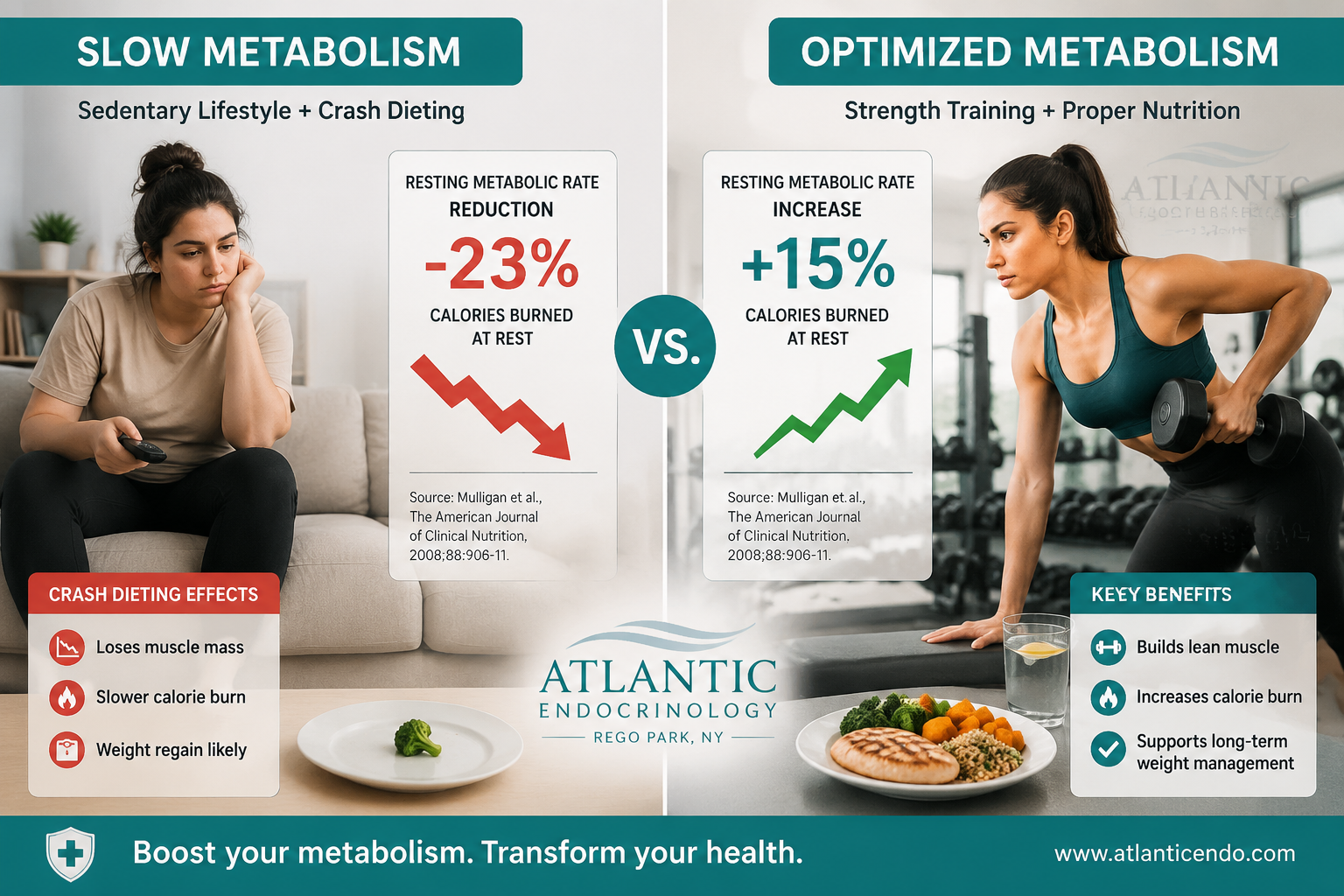
- Crash diets backfire by triggering metabolic adaptation, causing your body to burn fewer calories over time.
- Advanced clinical tools — including a Resting Metabolic Rate test, body composition analysis, and Semaglutide therapy — can address metabolic barriers that lifestyle changes alone cannot fix.
- Atlantic Endocrinology & Diabetes Center in Rego Park, NY offers a full spectrum of metabolic care under one roof, from diagnostics to weight management programs.
Step 1: Know What You Can and Cannot Change About Metabolism
Before spending money on metabolism-boosting products, it helps to know what science actually says.
Your resting metabolic rate (RMR) — the calories your body burns just to keep you alive — is largely determined by factors outside your control: body size, body composition, biological sex, and age. Dramatic claims about “hacking” your metabolism by hundreds or thousands of calories per day are not supported by evidence. Realistic, sustainable improvements tend to fall in the range of tens to a couple of hundred calories per day.
Here is what the research confirms about muscle and metabolism:
| Factor | Approximate Calorie Burn |
|---|---|
| One pound of muscle (at rest) | ~6 kcal/day |
| One pound of fat (at rest) | ~2 kcal/day |
| Gaining 10 lbs of muscle | ~40 extra kcal/day at rest |
This does not mean effort is wasted — it means your expectations should be calibrated correctly. For a deeper breakdown of how your body calculates energy at rest, read our guide on what RMR is and how your body’s metabolism works at rest.
Hormonal factors also play a major role. Conditions like hypothyroidism, insulin resistance, polycystic ovarian syndrome (PCOS), and adrenal dysfunction can all suppress metabolic rate in ways that no amount of diet or exercise will fully correct without medical treatment. If you have been doing everything right and still feel stuck, a clinical evaluation is not optional — it is essential.
Step 2: Build and Protect Lean Muscle Mass
Muscle tissue is metabolically active. The more lean mass you carry, the more calories your body burns around the clock, even while you sleep.
Strength training is the largest controllable lever you have. Current guidance from leading health authorities recommends working all major muscle groups at least two times per week, using enough resistance that your muscles fatigue within approximately 12 to 15 repetitions per set. Practical options include:
- Free weights and barbells
- Resistance bands
- Bodyweight exercises (push-ups, squats, lunges)
- Weight machines at a gym
- Wearing a weighted vest during walks
Consistency matters more than intensity when you are starting out. Two well-structured sessions per week, maintained over months, will produce measurable changes in body composition and resting calorie burn.
Do not neglect protein. Muscle repair and growth require adequate dietary protein. Aim for a source of lean protein at each meal — eggs, fish, poultry, legumes, or Greek yogurt are all good choices. Protein also has a higher thermic effect than carbohydrates or fat, meaning your body burns more calories simply digesting it.
Step 3: Add High-Intensity Intervals to Your Cardio Routine
Steady-state cardio burns calories during the workout. High-intensity interval training (HIIT) burns calories during and after — a phenomenon known as excess post-exercise oxygen consumption, or “afterburn.”
HIIT involves alternating short bursts of near-maximum effort with recovery periods. A simple example:
- Warm up for 5 minutes at a comfortable pace.
- Sprint or push hard for 30 seconds.
- Recover at low intensity for 90 seconds.
- Repeat 6 to 8 times.
- Cool down for 5 minutes.
This type of training elevates your metabolic rate for hours after the session ends, making it more time-efficient than moderate steady exercise of the same duration.
Major health guidelines recommend building toward at least 150 minutes per week of moderate activity or 75 minutes of vigorous activity. HIIT sessions count toward the vigorous category. Two HIIT sessions per week, combined with regular strength training and daily movement, form a solid metabolic foundation.
Step 4: Eat Enough — and Eat Consistently
This step surprises many people: eating too little is one of the most effective ways to slow your metabolism.
When you cut calories too drastically, your body interprets the shortage as a survival threat. It responds by lowering your resting metabolic rate — burning fewer calories to conserve energy. This is called metabolic adaptation, and it is why very low-calorie diets often produce rapid initial weight loss followed by a frustrating plateau.
For sustainable fat loss without metabolic downshifting, a moderate calorie deficit of approximately 500 to 750 calories per day is the evidence-supported range. This typically translates to losing about one pound per week — slower than crash diets promise, but far more durable.
Meal timing also matters. Eating at consistent times each day helps regulate hunger hormones and prevents the metabolic disruption that comes with erratic eating patterns. Skipping meals repeatedly — especially breakfast — can increase cortisol, promote fat storage, and blunt your body’s calorie-burning efficiency.
Additional dietary strategies that support metabolic health:
- Stay hydrated. Even mild dehydration reduces energy expenditure.
- Include fiber-rich vegetables at most meals to support gut health and blood sugar stability.
- Limit ultra-processed foods that spike blood sugar and promote insulin resistance.
- Moderate alcohol consumption, which suppresses fat oxidation and disrupts sleep.
If you are managing diabetes or pre-diabetes, nutrition counseling is a critical part of metabolic care. Learn whether Medicare covers nutrition counseling for diabetes to understand your coverage options.
Step 5: Prioritize Sleep and Stress Management
Two underestimated metabolism disruptors are chronic sleep deprivation and unmanaged stress.
Poor sleep reduces the hormones that regulate hunger (leptin and ghrelin), increases appetite for high-calorie foods, and impairs insulin sensitivity — all of which slow fat metabolism. Adults need seven to nine hours of quality sleep per night for optimal hormonal function.
Chronic stress elevates cortisol, a hormone that promotes fat storage — particularly around the abdomen — and suppresses thyroid function. Over time, sustained high cortisol can meaningfully reduce your resting metabolic rate.
Practical stress-reduction strategies include:
- Consistent sleep and wake times
- Mindfulness or breathing exercises (even 10 minutes daily)
- Regular physical activity (which itself reduces cortisol)
- Limiting caffeine after midday
- Seeking professional support when stress becomes unmanageable
Step 6: Get a Professional Metabolic Assessment
All the lifestyle steps above work better when you know your actual numbers. A professional metabolic assessment removes the guesswork.
At Atlantic Endocrinology & Diabetes Center, the Resting Metabolic Rate test in Queens, NY measures exactly how many calories your body burns at rest — giving you a precise target for your nutrition plan rather than a generic online estimate that may be off by hundreds of calories.
Additional diagnostics available at our Rego Park and Forest Hills locations include:
- Body Composition Analysis — distinguishes fat mass from lean mass
- Sudomotor Scan — screens for autonomic nerve dysfunction that can affect metabolism
- Laboratory Services — thyroid panel, fasting insulin, HbA1c, vitamin D, and more
- TM Flow Test — evaluates cardiovascular and autonomic health
Comprehending your complete guide to metabolism and basal metabolic rate is the foundation for any effective weight management strategy.
Step 7: Explore Clinical Weight Management Options, Including Semaglutide Injections and IV Therapy in Rego Park, NY
When lifestyle modifications are not enough — or when an underlying condition is driving metabolic dysfunction — clinical interventions can make a significant difference.
Semaglutide is a GLP-1 receptor agonist originally developed for type 2 diabetes that has demonstrated substantial effectiveness for weight management. It works by:
- Reducing appetite and food cravings
- Slowing gastric emptying to increase feelings of fullness
- Improving insulin sensitivity and blood sugar regulation
- Supporting meaningful, sustained weight loss when combined with lifestyle changes
At Atlantic Endocrinology & Diabetes Center, Semaglutide Injections and IV Therapy in Rego Park, NY are administered under the supervision of Dr. Stella Ilyayeva, M.D., an endocrinology specialist with over 20 years of experience. This is not a one-size-fits-all prescription — it is part of a comprehensive, personalized weight management program that includes nutritional guidance, metabolic testing, and ongoing monitoring.
IV Vitamin Therapy complements metabolic care by delivering essential nutrients — including B vitamins, magnesium, and antioxidants — directly into the bloodstream for maximum absorption. Many patients with metabolic dysfunction have underlying nutrient deficiencies that oral supplements cannot adequately correct.
To comprehend how semaglutide compares to other GLP-1 medications, read our breakdown of the difference between Ozempic and semaglutide.
FAQs:
How long does it take to see real changes in metabolism after starting strength training?
Most people begin to notice improvements in energy and body composition within four to eight weeks of consistent strength training. Measurable changes in resting metabolic rate typically become apparent after three to six months of regular resistance exercise combined with adequate protein intake. Results vary based on starting fitness level, age, hormonal status, and consistency.
Is semaglutide safe for long-term use in weight management?
Clinical trials have evaluated semaglutide over periods of up to two years, showing sustained weight loss and improved metabolic markers with a manageable side effect profile for most patients. Nevertheless, semaglutide is a prescription medication that requires medical supervision. Your provider at Atlantic Endocrinology will assess your full health history before recommending it and will monitor you throughout treatment. It is not appropriate for everyone.
Can thyroid disease explain why I cannot lose weight despite diet and exercise?
Yes. Hypothyroidism — an underactive thyroid — directly lowers resting metabolic rate and can make weight loss extremely difficult regardless of caloric restriction or exercise. If you suspect a thyroid issue, a simple blood test can confirm or rule it out. Atlantic Endocrinology specializes in thyroid disease and can provide a thorough evaluation.
Do I need a referral to access Semaglutide Injections and IV Therapy in Rego Park, NY at Atlantic Endocrinology?
In most cases, a referral is not required to schedule an appointment at Atlantic Endocrinology & Diabetes Center. The team accepts a wide range of insurance plans, including Medicare, Medicaid, Aetna, United Healthcare, EmblemHealth, Healthfirst, and many others.
References
- Harvard T.H. Chan School of Public Health. (2022). The Nutrition Source: Protein. https://www.hsph.harvard.edu/nutritionsource/what-should-you-eat/protein/
- National Institute of Diabetes and Digestive and Kidney Diseases. (2023). Overweight & Obesity Statistics. https://www.niddk.nih.gov/health-information/health-statistics/overweight-obesity
- U.S. Department of Health and Human Services. (2021). Physical Activity Guidelines for Americans, 2nd Edition. https://health.gov/paguidelines/second-edition/
- Centers for Disease Control and Prevention. (2023). Losing Weight: Getting Started. https://www.cdc.gov/healthyweight/losing_weight/index.html
Medical and Editorial Commitment
The content of this article is strictly for educational and informational purposes. It does not replace in-person professional medical diagnosis, advice, or treatment..
Read Privacy PolicyRelated Posts
Lipid Control: A Complete Guide to Managing Cholesterol and Protecting Your Heart
Nearly half of all American adults have high LDL cholesterol, yet fewer than half of them are receiving any treatment for it, [...]

Vitamin D3 vs D2 for Bone Health: Which Is Better? A Guide to Bone Specialist Services
Last updated: June 4, 2026 Quick Answer: Vitamin D3 (cholecalciferol) is the superior choice for bone health. It raises and maintains blood [...]