 By Atlantic Endo Medical Review Board
Connect With Experts Physical Therapy in Queens, NY.
More than 185,000 amputations are performed in the United States every year, and diabetes remains the leading cause — accounting for more than half of all non-traumatic lower-limb amputations. For patients managing chronic conditions like diabetes, the road after amputation is not simply about learning to walk again. It is about rebuilding strength, restoring independence, and reclaiming quality of life. Physical Therapy in Queens, NY plays a central, evidence-based role in making that journey possible.
At Atlantic Endocrinology & Diabetes Center, we comprehend that amputation does not happen in isolation. It is often the result of years of unmanaged or undertreated metabolic disease. That is why our multidisciplinary approach — connecting endocrinology, podiatry, physical therapy, and more — is designed to support patients at every stage of their care.
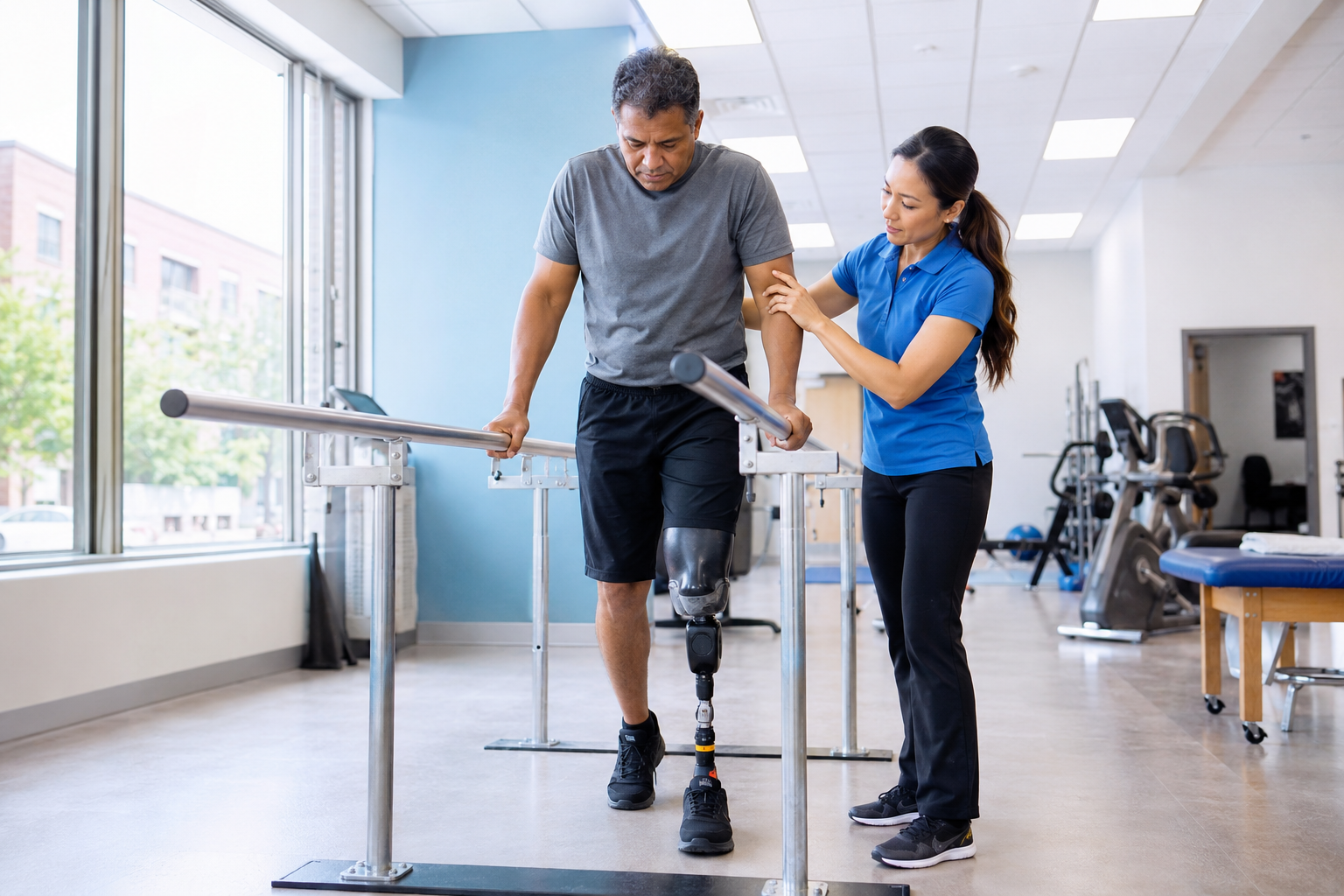
Table of Contents
Key Takeaways
- Physical therapy after amputation follows a structured, phase-based process from wound healing through advanced prosthetic training.
- Diabetes and other chronic conditions significantly increase amputation risk, making integrated medical care essential before and after surgery.
- Modern rehabilitation now incorporates advanced prosthetics and emerging technologies to improve outcomes.
- Selecting appropriate outcome measures is critical to tracking real rehabilitation progress.
- Multidisciplinary care — combining endocrinology, physical therapy, and podiatry — produces the best long-term results for amputees.
Comprehending Amputation and Why Rehabilitation Matters
Amputation is a life-altering event. Whether it results from trauma, vascular disease, infection, or complications of diabetes, the physical and psychological impact is profound. The goal of rehabilitation is not just to restore mobility — it is to help a person return to meaningful daily activity, reduce the risk of secondary complications, and improve overall well-being.
Diabetes-related amputations are particularly relevant to our patient community. Poorly controlled blood sugar damages blood vessels and nerves over time, reducing circulation to the feet and legs. This is why understanding how diabetes affects the body and managing it proactively with a specialist is so important. Our board-certified podiatrist, Dr. David Tetrokalashvili, DPM, works alongside our endocrinology team to address foot complications before they escalate — but when amputation does occur, a structured rehabilitation plan becomes the next critical step.
The Role of the Rehabilitation Team
Amputee rehabilitation is never a one-person effort. A well-coordinated team typically includes:
- Physical therapists — lead mobility training, strength building, and prosthetic gait training
- Prosthetists — design and fit prosthetic limbs
- Occupational therapists — help patients adapt to daily tasks
- Endocrinologists and primary care physicians — manage underlying conditions affecting healing
- Psychologists or counselors — address the emotional impact of limb loss
At Atlantic Endocrinology, our team includes specialists across all disciplines, allowing us to coordinate care seamlessly for patients in Queens and Brooklyn.
The Phases of Physical Therapy in Amputee Rehabilitation
Physical therapy for amputees is not a single event — it is a carefully sequenced process that evolves as the patient heals and gains strength. Comprehending these phases helps patients and families set realistic expectations.
Phase 1: Pre-Prosthetic (Post-Surgical) Rehabilitation
The work begins before a prosthetic limb is even fitted. In the days and weeks immediately following surgery, the physical therapist focuses on:
- Residual limb care — managing swelling, shaping the stump for prosthetic fitting, and protecting the surgical site
- Pain management — including phantom limb pain, which affects up to 80% of amputees
- Strength and conditioning — building upper body and core strength to support future mobility
- Positioning and contracture prevention — ensuring joints remain flexible and functional
This phase also involves significant patient education. Learning how to transfer safely, use assistive devices, and care for the residual limb are foundational skills that directly affect long-term outcomes.
Phase 2: Prosthetic Training and Gait Rehabilitation
Once the residual limb has healed sufficiently and a prosthetic device has been fitted, the focus shifts to learning how to use it effectively. This is where Physical Therapy in Queens, NY becomes especially intensive.
Gait training — the process of learning to walk with a prosthesis — involves:
| Training Component | Goal |
|---|---|
| Parallel bar walking | Build confidence and balance in a controlled environment |
| Weight shifting exercises | Improve symmetry and reduce compensatory movements |
| Stair and ramp navigation | Prepare for real-world environments |
| Fall prevention strategies | Reduce injury risk during daily activity |
| Endurance training | Build cardiovascular fitness for sustained walking |
A pilot randomized controlled trial found that individuals with below-knee amputations who participated in structured, evidence-based rehabilitation programs showed significant improvements in functional mobility — with nearly two-thirds of participants advancing at least one K-level, a clinical measure of prosthetic capability. This kind of measurable progress underscores why structured physical therapy matters.
It is also worth noting that identifying red flags in physiotherapy — such as unusual pain, skin breakdown, or cardiovascular symptoms during exercise — is a critical skill for both therapists and patients throughout this phase.
Phase 3: Advanced Functional Training and Community Reintegration
The final phase of rehabilitation focuses on returning to life outside the clinic. This includes:
- Navigating uneven terrain, curbs, and public transportation
- Returning to work or recreational activities
- Managing prosthetic maintenance and skin care
- Building long-term exercise habits to support cardiovascular and metabolic health
For patients with diabetes, this phase also connects directly back to endocrine care. Regular physical activity significantly improves insulin sensitivity and blood sugar control, which is why exercise plays a key role in managing diabetes and should be part of every amputee’s long-term plan.
Advanced Technologies Transforming Amputee Rehabilitation
The field of amputee rehabilitation is evolving rapidly. In 2026, patients have access to technologies that were not available even a decade ago — and the outcomes data is compelling.
Microprocessor-Controlled Prosthetic Knees
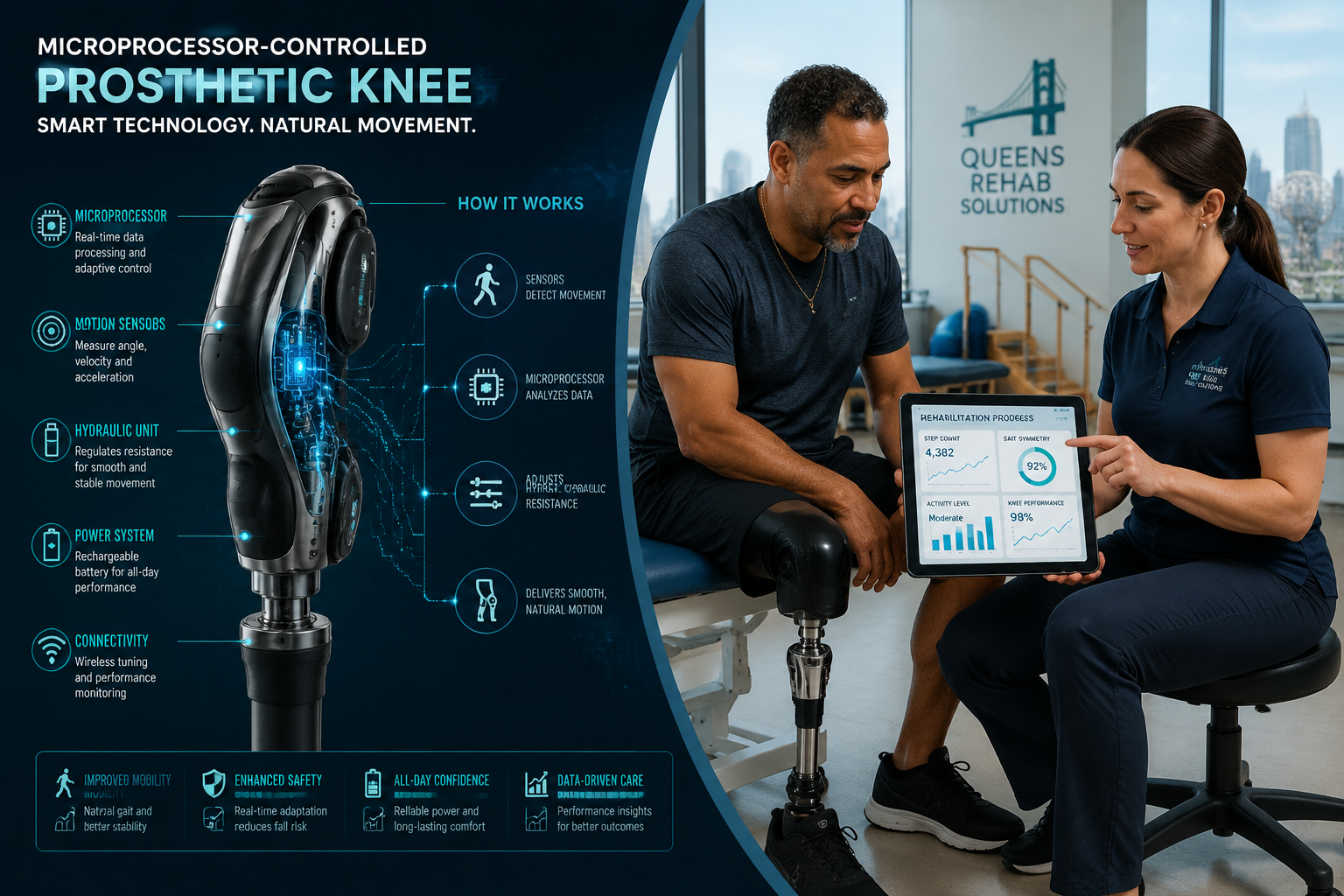
For individuals with above-knee amputations, microprocessor-controlled prosthetic knees — such as the Kenevo system — use real-time data to adjust resistance and support during each step. Research published in 2025 found that even low-activity users with bilateral above-knee amputations achieved safe and efficient ambulation with these devices, supporting better reintegration into daily life.
Surgical Advances That Enhance Therapy Outcomes
In July 2024, the NIH reported on a novel surgical technique for below-knee amputees that restores the natural pairing of muscle groups — the same muscle coordination that exists in a biological limb. Patients who underwent this procedure demonstrated faster walking speeds and improved ability to navigate stairs and obstacles. Physical therapy is essential to maximizing the benefit of these surgical advances, as the brain must learn to use the restored muscle signals effectively.
Collaborative Robotics and AI-Driven Rehabilitation
Emerging research from early 2026 suggests that collaborative robots — known as cobots — could soon assist physical therapists before, during, and after therapy sessions. These systems are designed to expand access to rehabilitation services and personalize therapy intensity based on each patient’s ability level.
Similarly, a framework called NeuRehab, introduced in late 2025, combines reinforcement learning with neural network technology to deliver adaptive rehabilitation exercises that respond in real time to patient performance. While these technologies are still being refined, they represent the direction that Physical Therapy in Queens, NY and nationwide is heading.
A Note on Virtual Reality
Virtual reality (VR) has been widely discussed as a rehabilitation tool. Nevertheless, a 2025 systematic review and meta-analysis found no significant improvement in walking capacity for lower-limb amputees using VR compared to traditional methods. This does not mean VR has no role — it may support motivation and pain management — but it reinforces that hands-on, evidence-based physical therapy remains the gold standard.
The Connection Between Chronic Disease Management and Amputation Prevention
The most powerful form of amputee rehabilitation is preventing amputation in the first place. For patients with diabetes, that means working with an endocrinologist to maintain tight blood sugar control, monitor nerve health, and address foot complications early.
At Atlantic Endocrinology & Diabetes Center, we offer advanced diagnostic tools specifically designed to detect complications before they become irreversible:
- Sudomotor Scan — detects early autonomic nerve damage in the feet, a precursor to diabetic foot ulcers. Learn more about sudomotor function testing in Queens, NY.
- Nerve Conduction Study — measures how well electrical signals travel through peripheral nerves, identifying neuropathy early. See our nerve conduction study services in Queens.
- TM Flow Test — assesses vascular and autonomic function, providing a comprehensive picture of diabetic complications. Explore the TM Flow Test in Queens, NY.
- ANS Monitoring — evaluates the autonomic nervous system’s role in cardiovascular and metabolic regulation. Learn about ANS testing in Queens.
These tests, combined with expert endocrinological management from Dr. Stella Ilyayeva, M.D. — who brings over 20 years of experience in diabetes and endocrine care — give patients the best possible chance of avoiding limb-threatening complications.
For patients who have already experienced amputation, our physical therapy services in Queens are integrated within a broader care model that addresses the whole patient, not just the missing limb.
Measuring Progress: Why Outcome Tools Matter
One of the most important — and often overlooked — aspects of amputee rehabilitation is how progress is measured. A 2023 systematic review emphasized that selecting the right physical performance outcome tools is essential for accurately assessing whether a rehabilitation program is working.
Common outcome measures used in amputee rehabilitation include:
- K-levels (K0–K4) — classify a patient’s functional potential with a prosthesis
- Timed Up and Go (TUG) test — measures mobility and fall risk
- 6-Minute Walk Test — assesses cardiovascular endurance
- Prosthetic Evaluation Questionnaire — captures patient-reported satisfaction and function
At Atlantic Endocrinology, our team uses a combination of clinical assessments and advanced diagnostic tools — including body composition analysis — to track functional improvements and adjust care plans accordingly.
FAQs:
How soon after amputation does physical therapy begin?
Physical therapy typically begins within 24 to 48 hours of surgery, once the patient is medically stable. Early therapy focuses on pain management, residual limb care, and preventing complications like joint contractures. The sooner therapy begins, the better the long-term functional outcomes tend to be.
How long does amputee rehabilitation take?
The timeline varies significantly based on the level of amputation, the patient’s overall health, and their rehabilitation goals. Pre-prosthetic training may last four to eight weeks. Prosthetic gait training can take several additional months. Patients with well-managed chronic conditions like diabetes tend to heal faster and progress more quickly through rehabilitation phases.
Can people with diabetes successfully complete prosthetic rehabilitation?
Yes — with proper medical management. Patients whose blood sugar, blood pressure, and cardiovascular health are well-controlled tend to achieve significantly better rehabilitation outcomes. This is why integrated care between an endocrinologist and a physical therapist is so valuable. Atlantic Endocrinology’s multidisciplinary model is specifically designed to support this kind of coordinated care.
Does insurance cover physical therapy for amputees in Queens, NY?
Most major insurance plans, including Medicare, Medicaid, and many commercial insurers, cover medically necessary physical therapy following amputation. Atlantic Endocrinology accepts a wide range of insurance plans, including Aetna, Empire Blue Cross Blue Shield, United Healthcare, Healthfirst, Fidelis Care, and many others. Contact our office at (718) 275-2900 to verify your specific coverage before scheduling.
References
- Gailey, R. S., et al. (2022). Evidence-based amputee rehabilitation: A systematic review of functional outcomes. Physical Therapy Journal. https://academic.oup.com/ptj
- National Institute of Child Health and Human Development (NICHD). (2024). New surgical procedure for below-knee amputees restores natural muscle function. U.S. Department of Health and Human Services. https://www.nichd.nih.gov/newsroom/news/072324-new-surgical-procedure-below-knee-amputees
- Centers for Disease Control and Prevention (CDC). (2023). Diabetes and lower-limb amputations: National statistics and prevention strategies. https://www.cdc.gov/diabetes/data
- Springer Link. (2023). Physical performance outcome tools in lower-limb amputee rehabilitation: A systematic review. Prosthetics and Orthotics International. https://doi.org/10.1007/s40141-023-00383-w
- National Institutes of Health (NIH). (2022). Phantom limb pain: Mechanisms and management in amputee populations. National Library of Medicine. https://www.ncbi.nlm.nih.gov/pmc/articles/PMC9012345
Medical and Editorial Commitment
The content of this article is strictly for educational and informational purposes. It does not replace in-person professional medical diagnosis, advice, or treatment..
Read Privacy PolicyRelated Posts

What Are the Signs of Glaucoma? A Complete Guide to Symptoms, Risks, and When to Act
Over 3 million Americans are living with glaucoma right now, and roughly half of them do not know it. That is the [...]
Can Gastric Bypass Patients Take GLP-1? What the Latest Research Reveals
Weight Management, Information
More than 30% of patients who undergo Roux-en-Y gastric bypass experience significant weight regain within five years, and for many, the question [...]