
 By Atlantic Endo Medical Review Board
Nearly 40% of adults with a normal BMI carry enough hidden visceral fat to raise their metabolic risk, a fact that a standard scale will never reveal. That gap between what we weigh and what our bodies are actually made of is exactly why body composition testing has moved from elite sports labs into everyday clinical care. If you have been researching your options, the question of DEXA Scan vs. InBody: Which Body Composition Test Is Right for You? comes up quickly, and the answer is more nuanced than most online guides suggest.
Both tests go far beyond BMI. To understand why that matters, it helps to start with what body composition analysis actually measures and why those measurements change how clinicians manage chronic conditions like diabetes, osteoporosis, and thyroid disease.
Table of Contents
1. What Each Technology Actually Does
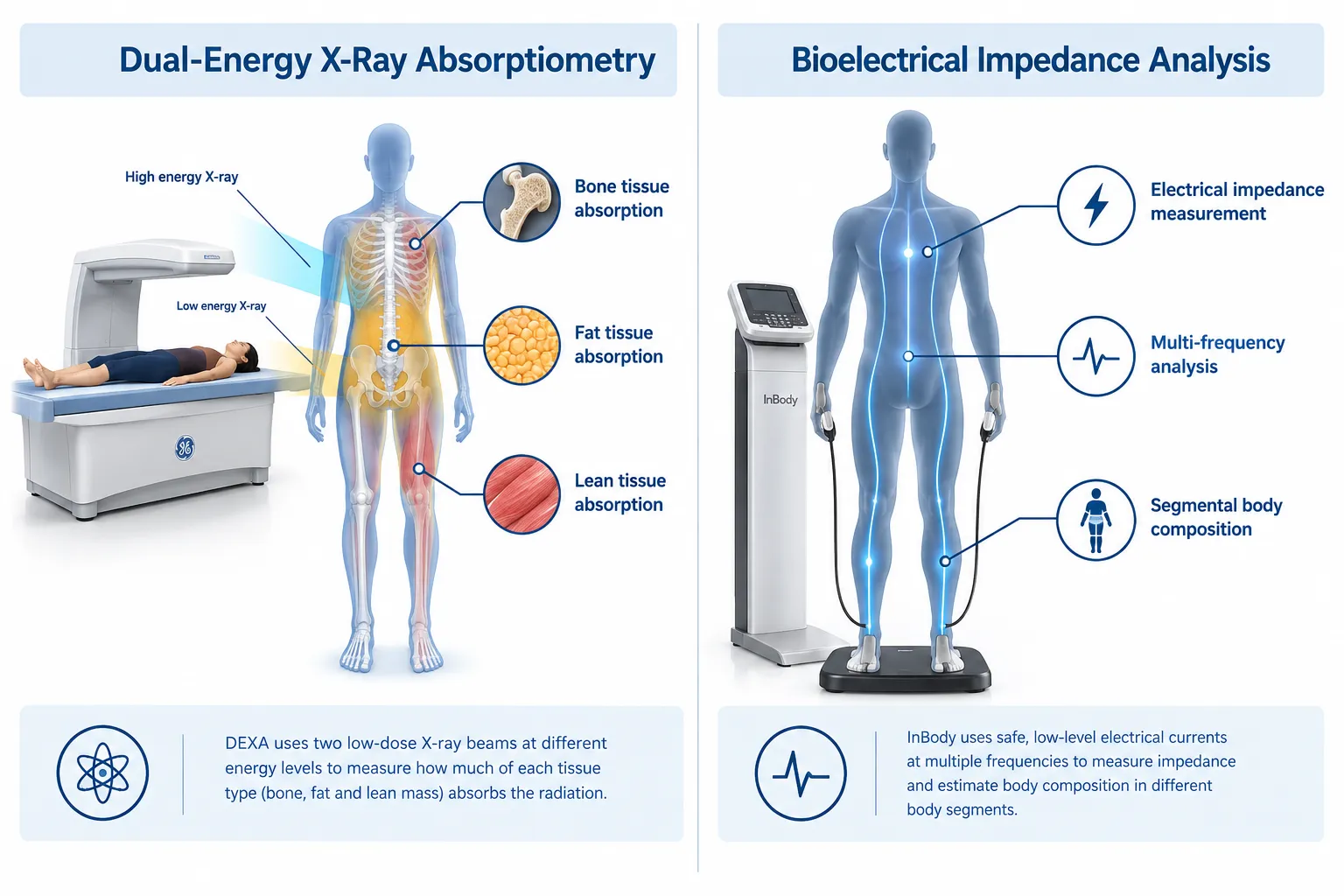
DEXA stands for Dual-Energy X-Ray Absorptiometry. It works by passing two low-dose X-ray beams at different energy levels through your body. Because bone, fat, and lean tissue absorb those beams differently, the scanner can map each tissue type with remarkable precision, not just overall, but region by region. You get separate readings for your arms, legs, trunk, and android (belly) zone. It also produces a bone mineral density score, which is the clinical gold standard for diagnosing osteoporosis.
InBody devices use a method called bioelectrical impedance analysis, or BIA. A very low electrical current travels through your body from electrodes on your hands and feet. Fat tissue resists that current more than muscle and water do, so the device estimates body composition based on how much resistance it encounters. Modern multi-frequency InBody units are considerably more sophisticated than older single-frequency scales, and they generate detailed segmental reports that look similar in format to a DEXA printout.
The core distinction is this: DEXA directly images tissue. InBody estimates tissue from an indirect electrical signal. That difference matters enormously when precision is the clinical goal, and it matters less when the goal is affordable, repeatable monitoring over time. For a broader overview of what these assessments involve, the body composition analysis services available in New York can help you know your options before booking a test.
2. Accuracy and Reliability: What the Evidence Shows
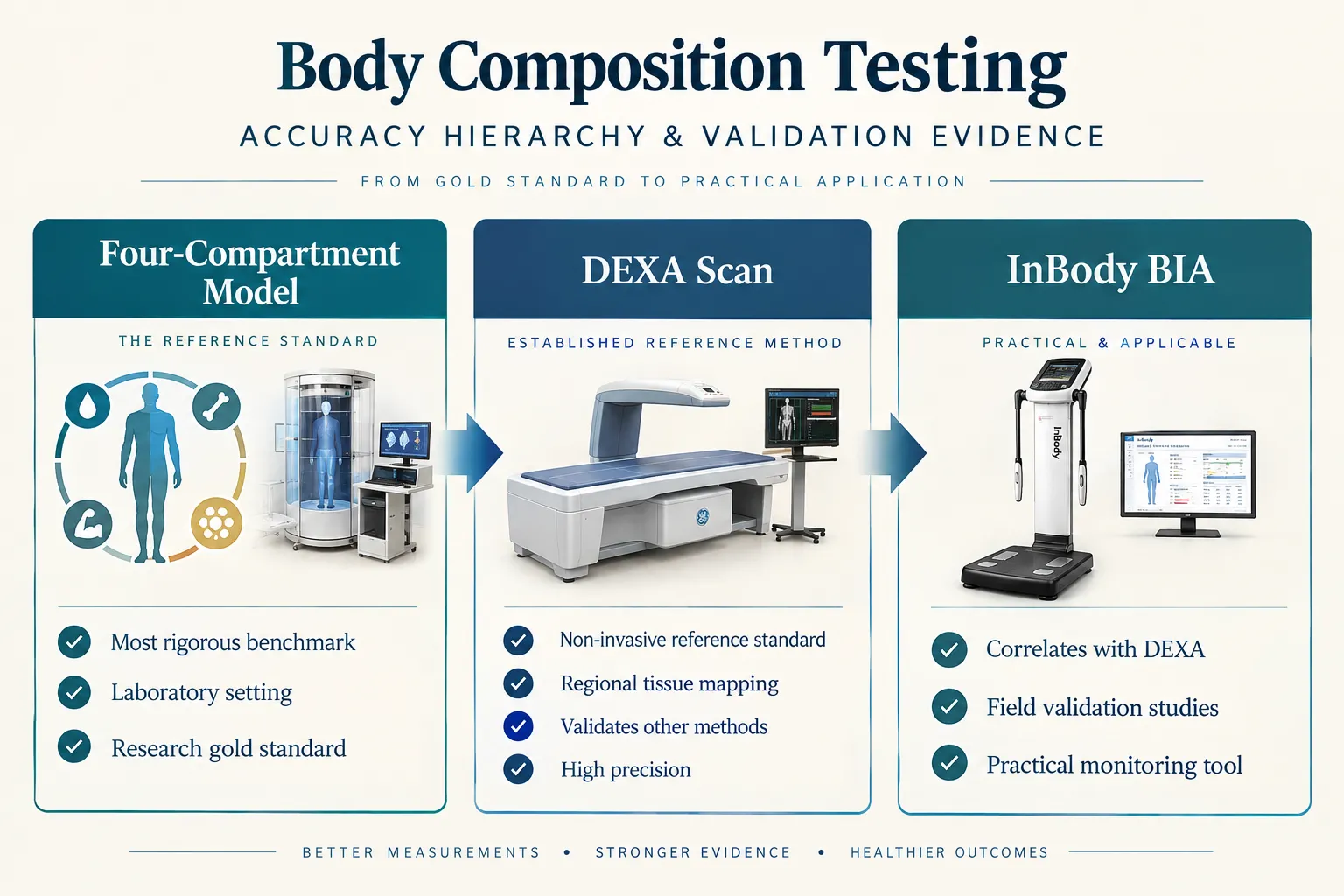
Research consistently positions DEXA as the non-invasive reference standard against which other body composition methods are validated. Independent studies comparing InBody devices to four-compartment models, the most rigorous benchmark in the field, show that InBody correlates well with DEXA at the group level but can show meaningful systematic bias in specific populations.
In older adults, strong correlations have been reported between InBody 720 results and DEXA, but the underlying algorithms may not generalize cleanly across all age groups, hydration states, or body types. A Frontiers review confirmed that InBody is widely used in clinical nutrition settings, yet flagged that results are strongly device-dependent and sensitive to testing conditions, hydration level, recent exercise, time of day, and even skin temperature can shift readings.
Manufacturer data suggest very high agreement with DEXA under controlled, standardized conditions. The practical reality in clinical settings is that those controlled conditions are not always achievable. For patients managing fluid-affecting conditions, heart failure, kidney disease, lymphedema, or aggressive diuretic therapy, BIA readings can be unreliable in ways that DEXA is not.
The takeaway from current evidence is clear: InBody is reliable for tracking trends in a single individual over time, especially when test conditions are kept consistent. DEXA is the right tool when you need a precise, one-time diagnostic measurement, bone density evaluation, detailed visceral fat quantification, or a baseline before a major intervention.
3. Clinical Applications: When Each Test Earns Its Place
Comprehending which test fits which clinical scenario is the practical heart of the DEXA Scan vs. InBody question.
DEXA is the preferred choice when a clinician needs diagnostic-grade data. If you are being evaluated for osteoporosis or low bone mass, DEXA is not optional, it is the only non-invasive method that produces a T-score and Z-score for fracture risk assessment. Patients with diabetes, thyroid disease, or long-term corticosteroid use often have accelerated bone loss, making this measurement especially important. DEXA also provides the most accurate visceral fat measurement available without invasive imaging, which is directly relevant to cardiovascular risk stratification. Paired with a resting metabolic rate test in New York, DEXA data gives clinicians a comprehensive metabolic picture.
InBody shines as a monitoring and motivational tool. If you are enrolled in a weight management program, tracking muscle preservation during GLP-1 therapy, or working with a nutritionist to optimize body composition over months, InBody provides fast, radiation-free, repeatable snapshots. It is practical for frequent re-testing, something you would not want to do repeatedly with any radiation-based method. For patients curious about the broader landscape of body composition analysis in Queens, New York, InBody-style testing is often the most accessible entry point.
Patients managing PCOS, hypothyroidism, or insulin resistance often benefit from both: a DEXA scan at baseline to establish accurate reference values, followed by periodic InBody assessments to track progress between clinical visits.
4. Practical Considerations: Cost, Access, and Preparation
DEXA scans require specialized equipment found in radiology suites and dedicated body composition centers. They involve a small radiation dose, roughly equivalent to a few hours of normal background radiation, which is negligible for most adults but worth noting for pregnant patients. The scan itself takes 10 to 20 minutes, and preparation is minimal: avoid calcium supplements the day before and wear comfortable, metal-free clothing.
InBody tests take roughly five minutes. Preparation matters more than most people realize. You should be well-hydrated but not over-hydrated, avoid vigorous exercise for 12 hours beforehand, and test at a consistent time of day, ideally in the morning before eating. Failing to standardize these conditions is the most common reason for inconsistent results between sessions.
Cost varies by location and insurance coverage. DEXA scans for bone density are covered by Medicare and many commercial insurers when medically indicated. Body composition DEXA (as distinct from bone density DEXA) is less consistently covered. InBody testing is often available at lower out-of-pocket cost, though coverage varies.
It is also worth noting that body composition data does not exist in isolation. At Atlantic Endocrinology, results are interpreted alongside other diagnostic tools. Comprehending what a body composition test involves before your appointment helps you arrive prepared and get more from your consultation.
5. Which Test Is Right for You? A Decision Framework
The emerging clinical consensus offers a practical decision rule. Choose DEXA when you need a diagnosis, a precise baseline, or bone density data. Choose InBody when you need affordable, frequent monitoring and your conditions do not significantly affect fluid balance.
For patients with osteoporosis risk, fragility fractures, or long-term endocrine conditions, DEXA is the medically appropriate starting point. For someone in a structured weight loss program who wants to track muscle-to-fat ratio every six to eight weeks, InBody is a practical and cost-effective choice.
Many patients benefit from a hybrid approach: DEXA for the clinical benchmark, InBody for the ongoing journey. This is particularly relevant for patients working with a multidisciplinary team, endocrinologists, nutritionists, and physical therapists, who each need different levels of data precision. If you are curious about how body composition data fits into a broader health strategy, reviewing the key principles of healthy body composition provides useful context.
At Atlantic Endocrinology & Diabetes Center, Dr. Stella Ilyayeva and her team integrate body composition analysis into comprehensive endocrine care across locations in Queens and Brooklyn. Whether you are managing diabetes, navigating weight management with semaglutide therapy, or monitoring bone health, the right test is the one that answers your specific clinical question, and a specialist can help you determine which that is.
FAQs
Can I use InBody results to diagnose osteoporosis?
No. InBody devices do not measure bone mineral density. Osteoporosis diagnosis requires a DEXA scan, which produces the T-scores and Z-scores used in clinical fracture risk assessment. If you have risk factors for bone loss, including diabetes, thyroid disease, or long-term steroid use, a DEXA scan is the appropriate diagnostic tool.
How often should I repeat a body composition test?
For DEXA bone density scans, guidelines generally recommend every one to two years for patients on treatment or with elevated risk. For body composition monitoring with InBody, every six to twelve weeks is a common interval in active weight management programs, provided testing conditions remain consistent each time.
Does hydration really affect InBody results that much?
Yes, significantly. Because InBody measures electrical resistance through body water, even moderate dehydration or over-hydration can shift your body fat percentage reading by several percentage points. This is why consistent pre-test preparation, same time of day, same hydration habits, no recent intense exercise, is essential for meaningful comparisons between sessions.
Is DEXA body composition scanning covered by insurance?
DEXA scans ordered for bone mineral density assessment are covered by Medicare and most major insurers when medically indicated. Body composition DEXA (measuring fat and muscle distribution without a bone density component) has more variable coverage. Patients are encouraged to contact Atlantic Endocrinology at (718) 275-2900 or visit atlanticendomd.com/contact to discuss their specific insurance situation. Atlantic Endocrinology accepts a wide range of plans including Medicare, Medicaid, Aetna, EmblemHealth, United Healthcare, and many others.
References
- National Institutes of Health, Office of Dietary Supplements. (2022). Calcium: Health Professional Fact Sheet. https://ods.od.nih.gov/factsheets/Calcium-HealthProfessional/
- U.S. Preventive Services Task Force. (2021). Screening for Osteoporosis to Prevent Fractures: US Preventive Services Task Force Recommendation Statement. JAMA, 326(13), 1231-1238. https://www.uspreventiveservicestaskforce.org/uspstf/recommendation/osteoporosis-screening
- National Institute of Diabetes and Digestive and Kidney Diseases. (2023). Body Weight Planner and Composition Assessment Resources. https://www.niddk.nih.gov/
- Harvard T.H. Chan School of Public Health. (2022). The Nutrition Source: Measuring Obesity. https://www.hsph.harvard.edu/nutritionsource/healthy-weight/measuring-obesity/
- Centers for Disease Control and Prevention. (2023). Body Mass Index: Considerations for Practitioners. https://www.cdc.gov/healthyweight/assessing/bmi/index.html
Medical and Editorial Commitment
The content of this article is strictly for educational and informational purposes. It does not replace in-person professional medical diagnosis, advice, or treatment..
Read Privacy PolicyRelated Posts

What Are the Signs of Glaucoma? A Complete Guide to Symptoms, Risks, and When to Act
Over 3 million Americans are living with glaucoma right now, and roughly half of them do not know it. That is the [...]

Can Gastric Bypass Patients Take GLP-1? What the Latest Research Reveals
Weight Management, Information
More than 30% of patients who undergo Roux-en-Y gastric bypass experience significant weight regain within five years, and for many, the question [...]