
 By Atlantic Endo Medical Review Board
More than 1 in 500 people carry a genetic variant linked to cardiomyopathies, yet most are diagnosed only after symptoms appear, sometimes after a life-threatening event. Cardiomyopathies are diseases of the heart muscle itself, distinct from coronary artery disease or valve problems.
They alter the structure and function of the myocardium in ways that can lead to heart failure, dangerous arrhythmias, and sudden cardiac death. Comprehending what these conditions are, how they differ from one another, and what modern medicine can now do about them is essential for anyone managing a chronic condition, especially one tied to metabolic or hormonal health.
Table of Contents
Key Takeaways
- Cardiomyopathies are primary diseases of the heart muscle, classified mainly as dilated, hypertrophic, restrictive, and arrhythmogenic types.
- Genetic testing now plays a central role in diagnosis and family screening, particularly for dilated and hypertrophic forms.
- New drug classes, including cardiac myosin inhibitors, are transforming how obstructive hypertrophic cardiomyopathy is managed.
- Endocrine and metabolic conditions such as diabetes and obesity significantly raise the risk and severity of cardiomyopathy.
- Early, coordinated care between cardiologists, endocrinologists, and other specialists improves outcomes and quality of life.
What Are Cardiomyopathies and How Are They Classified
Cardiomyopathies are a heterogeneous group of heart muscle diseases defined by structural or functional abnormalities of the myocardium that are not explained by coronary artery disease, hypertension, valve disease, or congenital heart defects alone. The 2023 European Society of Cardiology (ESC) guidelines reinforced a “phenotype-first, aetiology-driven” approach to classification, meaning clinicians identify the pattern of heart muscle change first, then work backward to find the underlying cause.
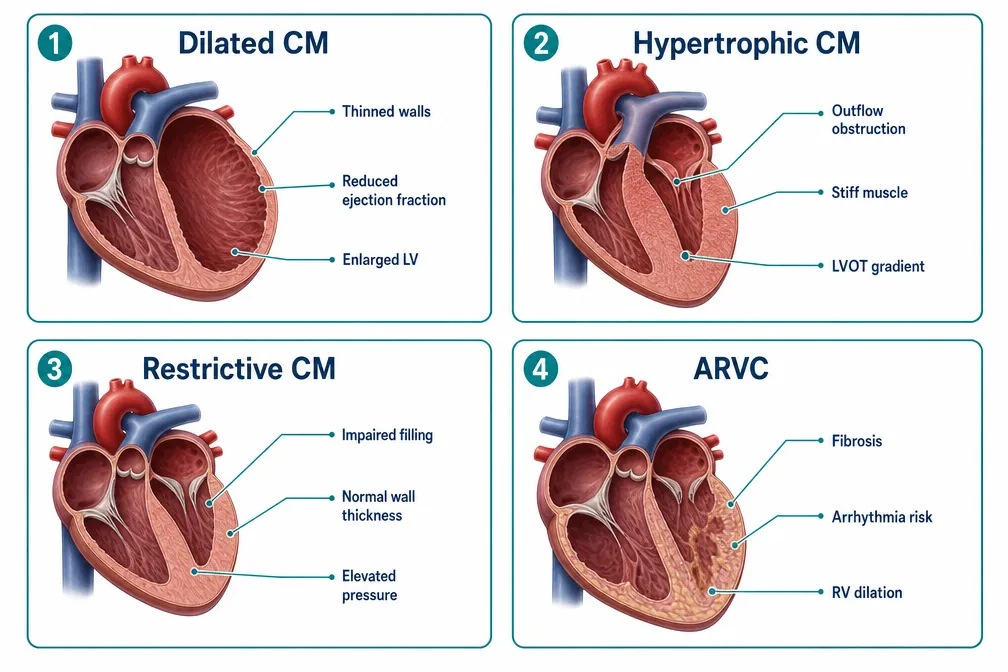
The major recognized phenotypes include:
- Dilated Cardiomyopathy (DCM): The left ventricle becomes enlarged and weakened, reducing the heart’s pumping efficiency. It is the most common reason for heart transplantation worldwide.
- Hypertrophic Cardiomyopathy (HCM): The heart muscle, especially the septum, thickens abnormally. This can obstruct blood flow out of the heart (obstructive HCM) or cause stiffness without obstruction.
- Restrictive Cardiomyopathy (RCM): The heart walls become rigid and cannot fill properly, even though wall thickness may be normal. Infiltrative diseases like amyloidosis are common causes.
- Arrhythmogenic Cardiomyopathy (ACM): Characterized by fibro-fatty replacement of heart muscle, primarily in the right ventricle, increasing the risk of life-threatening arrhythmias. Importantly, recent expert consensus has moved away from labeling this as a single, distinct subtype, recognizing it as a spectrum.
- Non-Dilated Left Ventricular Cardiomyopathy (NDLVC): A newer category recognizing left ventricular abnormalities, including fibrosis or wall motion problems, that do not fit neatly into older classifications.
The Role of Genetics
A significant proportion of cardiomyopathies have a genetic basis. Mutations in genes encoding sarcomere proteins (like MYH7 and MYBPC3 in HCM) or cytoskeletal proteins (like LMNA in DCM) are well established. Newer research has shed light on how LMNA mutations drive disease: they appear to reprogram endothelial cells through a process called endothelial-to-mesenchymal transition (EndoMT), mediated by a protein called RUNX1. This mechanism promotes fibrosis and electrical instability, helping explain why LMNA cardiomyopathy carries such a high risk of arrhythmia and sudden death.
Genetic testing is now recommended not just for the patient but for first-degree relatives, enabling earlier intervention before symptoms develop.
Diagnosing Cardiomyopathies: From Imaging to Advanced Testing
The diagnostic workup for cardiomyopathies has become increasingly sophisticated. The ESC 2023 guidelines place imaging, particularly cardiac MRI, at the center of evaluation, alongside echocardiography, electrocardiography, and genetic analysis.
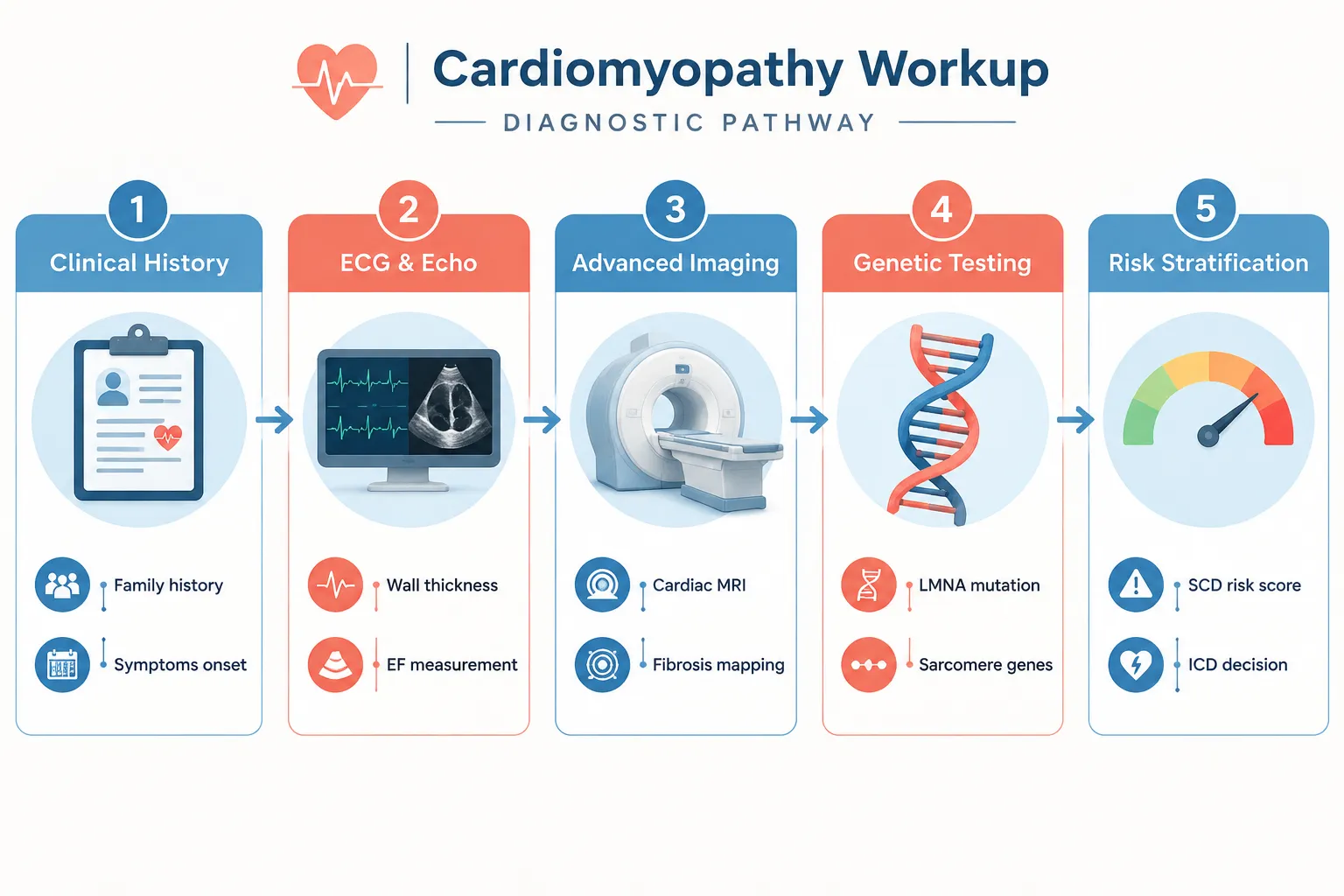
Main Diagnostic Tools
Echocardiography remains the first-line imaging tool. It measures wall thickness, chamber dimensions, and ejection fraction quickly and non-invasively.
Cardiac MRI provides unmatched tissue characterization. It can detect myocardial fibrosis through late gadolinium enhancement, identify infiltrative patterns (such as amyloid deposits), and quantify scar burden, all of which directly influence prognosis and treatment decisions.
Electrocardiography (ECG) is often the first abnormal test, showing voltage changes, conduction delays, or repolarization abnormalities that prompt further workup.
Genetic Testing has expanded dramatically. For dilated cardiomyopathy, over 50 genes have been implicated. For HCM, sarcomere gene panels are standard. The results guide ICD (implantable cardioverter-defibrillator) decisions and family cascade screening.
Biomarkers such as BNP and troponin help assess disease severity and monitor progression.
For patients managing diabetes or other metabolic conditions, the connection between heart health and endocrine function is particularly important. Poorly controlled blood sugar damages the myocardium directly, a condition called diabetic cardiomyopathy, independent of coronary artery disease. If you are navigating diabetes care, working with an endocrinologist specializing in diabetes in New York can help reduce this cardiac risk. Similarly, hormonal imbalances can contribute to palpitations and structural heart changes; knowing how to stop hormonal heart palpitations naturally is a relevant first step for patients experiencing these symptoms.
Autonomic nervous system testing is another valuable tool, particularly for patients with diabetic neuropathy who may have impaired cardiac autonomic regulation. Atlantic Endocrinology offers ANS testing in Queens, New York as part of its advanced diagnostic services.
Treatment Advances Transforming Cardiomyopathy Care
Treatment strategies for cardiomyopathies depend heavily on the specific type, the underlying cause, and the patient’s individual risk profile. The past several years have brought meaningful advances.
Hypertrophic Cardiomyopathy: Cardiac Myosin Inhibitors
The most transformative development in HCM management is the emergence of cardiac myosin inhibitors. These drugs work by reducing the excessive contractility of the thickened heart muscle.
- Mavacamten became the first approved cardiac myosin inhibitor for obstructive HCM, demonstrating significant reductions in outflow tract gradients and improvements in symptoms and quality of life.
- Aficamten, a next-generation agent, has shown promising results in Phase 3 trial data, including benefit in a non-obstructive HCM population, a group that previously had very limited targeted treatment options.
These drugs represent a true paradigm shift, offering disease-modifying potential rather than just symptom control.
Dilated Cardiomyopathy and Heart Failure Therapies
For DCM, guideline-directed medical therapy remains the cornerstone: ACE inhibitors or ARNIs, beta-blockers, mineralocorticoid receptor antagonists, and SGLT2 inhibitors. The ICD indication has expanded, with genetic findings (particularly LMNA mutations) now factoring heavily into decisions about device implantation even in patients with mildly reduced ejection fraction.
ATTR Cardiomyopathy: An Evolving Landscape
Transthyretin amyloid cardiomyopathy (ATTR-CM) is caused by misfolded TTR protein depositing in the heart. While TTR-silencing agents like eplontersen have shown strong TTR suppression in blood, the CARDIO-TTRansform trial found no significant benefit on clinical cardiac endpoints, a sobering reminder that biomarker improvement does not always translate to clinical benefit. Tafamidis remains the standard of care for ATTR-CM.
Duchenne Cardiomyopathy
Cardiomyopathy is the leading cause of death in Duchenne muscular dystrophy. Cell therapy approaches, including deramiocel, have faced regulatory challenges, reflecting the difficulty of translating early-phase promise into approved treatments. Standard heart failure therapies remain the current approach.
Lifestyle and Metabolic Optimization
Regardless of cardiomyopathy type, lifestyle optimization is universally recommended. Weight management reduces cardiac workload and inflammation. For patients who are overweight, structured programs can make a meaningful difference. Atlantic Endocrinology’s comprehensive weight management program addresses the metabolic drivers that worsen cardiac outcomes. Nutrition also plays a direct role; the center’s nutrition wellness center in Queens, New York supports patients in building heart-healthy dietary habits.
The Endocrine-Cardiac Connection: Why Multidisciplinary Care Matters
Cardiomyopathies rarely exist in isolation. Many patients with heart muscle disease also carry diagnoses of diabetes, thyroid dysfunction, obesity, or adrenal disorders, all of which can worsen cardiac structure and function.
- Diabetes promotes myocardial fibrosis, diastolic dysfunction, and autonomic neuropathy. Managing blood glucose tightly reduces these risks. Comprehending the difference between hypoglycemic vs. hyperglycemic states is critical for patients on cardiac medications that can affect glucose levels.
- Thyroid disease, both hypothyroidism and hyperthyroidism, directly affects heart rate, rhythm, and muscle contractility. Untreated thyroid disorders can mimic or worsen cardiomyopathy.
- Obesity increases left ventricular mass and promotes a dilated phenotype over time.
- Adrenal disorders, including Cushing’s syndrome, cause hypertension and metabolic changes that stress the myocardium. Learning about pituitary adrenal disease in New York can help patients understand how hormonal excess affects the heart.
At Atlantic Endocrinology & Diabetes Center, the cardiology team, led by Dr. Ovidiu A. Krausz, a cardiologist with over 20 years of experience, works alongside endocrinologists, nurse practitioners, and physician assistants including Daryana Aronova, PA, who has specific experience in medical cardiology. This integrated model ensures that patients with cardiomyopathies receive care that addresses both the heart and the hormonal systems that influence it.
Peripheral nerve health is also relevant: autonomic neuropathy in diabetic patients can mask cardiac symptoms. The sudomotor function testing in New York available at the center helps detect early autonomic dysfunction before it progresses.
FAQs
Can cardiomyopathy be cured?
Most cardiomyopathies are not curable in the traditional sense, but many are highly manageable. With the right combination of medications, lifestyle changes, and in some cases devices or procedures, patients can live full, active lives. Hypertrophic cardiomyopathy now has targeted drug therapies that can significantly reduce symptoms. Some forms of dilated cardiomyopathy, particularly those triggered by reversible causes like thyroid disease or alcohol, can partially or fully recover with treatment of the underlying cause.
Is cardiomyopathy hereditary?
Yes, many types have a strong genetic component. Hypertrophic cardiomyopathy is the most common inherited heart disease, typically following an autosomal dominant pattern. Dilated cardiomyopathy is familial in 20 to 50 percent of cases. If you are diagnosed, first-degree relatives (parents, siblings, children) should be screened. Genetic counseling and testing can identify at-risk family members before symptoms develop.
How does diabetes affect cardiomyopathy?
Diabetes can cause a specific form of heart muscle disease called diabetic cardiomyopathy, independent of coronary artery disease or high blood pressure. Chronic high blood sugar promotes myocardial fibrosis, stiffens the heart walls, and impairs the heart’s ability to relax and fill properly. Managing blood glucose with the support of a specialist, such as those at Atlantic Endocrinology, is one of the most effective ways to reduce this cardiac risk.
When should I see a cardiologist if I have a chronic condition like diabetes or thyroid disease?
You should discuss cardiac screening with your doctor if you experience unexplained shortness of breath, exercise intolerance, palpitations, swelling in the legs, or fainting. Even without symptoms, patients with long-standing diabetes, uncontrolled thyroid disease, or a family history of sudden cardiac death or heart failure should have periodic cardiac evaluation. At Atlantic Endocrinology, the multidisciplinary team can coordinate this assessment across specialties.
References
- Arbelo, E., Protonotarios, A., Gimeno, J. R., et al. (2023). 2023 ESC Guidelines for the management and diagnosis of cardiomyopathies. European Heart Journal, 44(37), 3503-3626. https://doi.org/10.1093/eurheartj/ehad194
- National Heart, Lung, and Blood Institute. (2022). Cardiomyopathy. U.S. Department of Health and Human Services. https://www.nhlbi.nih.gov/health/cardiomyopathy
- American Heart Association. (2023). Cardiomyopathy overview and patient resources. https://www.heart.org/en/health-topics/cardiomyopathy
- Maron, B. J., Desai, M. Y., Nishimura, R. A., et al. (2022). Diagnosis and evaluation of hypertrophic cardiomyopathy. Journal of the American College of Cardiology, 79(4), 372-389. https://doi.org/10.1016/j.jacc.2021.12.002
- Centers for Disease Control and Prevention. (2023). Heart disease facts. https://www.cdc.gov/heartdisease/facts.htm
- MedlinePlus / National Library of Medicine. (2024). Cardiomyopathy. https://medlineplus.gov/cardiomyopathy.html
Medical and Editorial Commitment
The content of this article is strictly for educational and informational purposes. It does not replace in-person professional medical diagnosis, advice, or treatment..
Read Privacy PolicyRelated Posts
What Not to Do Before a Heart Calcium Test? A Complete Pre-Scan Guide
Nearly half of all adults in the United States have some degree of cardiovascular disease, yet a significant number are unaware of [...]

Hypertension in Women: Causes, Risks, and Prevention — Cardiology In Queens, NY
Last updated: June 9, 2026 Quick Answer: Nearly 44% of women in the United States have high blood pressure, yet only about [...]