 By Atlantic Endo Medical Review Board
Over 70% of American adults are classified as overweight or obese, yet billions of dollars are spent each year on remedies that have never been tested in a single clinical trial. Homeopathic weight loss products sit near the top of that list, widely marketed, emotionally appealing, and largely unsupported by science. If you or someone you care about is managing a chronic condition like diabetes, thyroid disease, or PCOS, knowing the difference between evidence-based care and wellness marketing is not just useful, it can be genuinely life-changing.
Table of Contents
Summary
This article takes an honest, clinically grounded look at homeopathic weight loss claims, what limited evidence exists, the real hormonal and metabolic factors driving weight gain, and the proven medical strategies available to you right now in New York City.

Key Takeaways
- Homeopathic weight loss products are not regulated as drugs by the FDA and lack robust clinical evidence supporting their effectiveness.
- Weight gain is often driven by underlying hormonal imbalances, including thyroid dysfunction, insulin resistance, and PCOS, that require medical evaluation.
- Evidence-based treatments such as GLP-1 receptor agonists, structured nutrition programs, and metabolic testing offer measurable, clinically validated results.
- Patients managing chronic endocrine conditions should work with a specialist before starting any weight loss program, including alternative or holistic approaches.
- Atlantic Endocrinology & Diabetes Center offers comprehensive, multidisciplinary weight management care across Queens and Brooklyn.
What Is Homeopathic Weight Loss and Why Is It So Popular?
Homeopathy is a system developed in the late 1700s based on the principle that “like cures like”, the idea that a substance causing symptoms in a healthy person can, in extreme dilution, treat those same symptoms in a sick person. Homeopathic weight loss products typically come in the form of drops, tablets, or sprays and claim to suppress appetite, boost metabolism, or target fat deposits.
Their popularity is not hard to explain. They are widely available without a prescription, marketed with compelling before-and-after stories, and positioned as “natural” alternatives to pharmaceutical interventions. For patients frustrated by slow progress or concerned about medication side effects, the appeal is real.
Nevertheless, the science tells a different story.
What the Research Actually Shows
The National Institutes of Health’s National Center for Complementary and Integrative Health states that there is little to no reliable evidence that homeopathic remedies are effective for any health condition, including weight loss. A 2015 review by Australia’s National Health and Medical Research Council, one of the most comprehensive analyses ever conducted, found no good-quality evidence that homeopathy was more effective than placebo for any of the 68 health conditions reviewed.
The core problem is dilution. Most homeopathic preparations are diluted to the point where not a single molecule of the original substance remains. The proposed mechanism, “water memory”, has no support in chemistry or physics.
“A remedy that contains no active molecules cannot produce a pharmacological effect. This is not a matter of opinion, it is basic chemistry.”
This does not mean that every person who tries a homeopathic product is making a foolish choice. Placebo effects are real and can temporarily influence appetite perception and motivation. But for patients managing metabolic conditions, relying on placebo-level interventions while a treatable hormonal disorder goes unaddressed carries genuine health risks.
The Regulatory Gap
The U.S. Food and Drug Administration does not evaluate homeopathic products for safety or effectiveness before they reach store shelves. In 2019, the FDA updated its enforcement policy to prioritize action against homeopathic products that pose the greatest risk, particularly those marketed for serious conditions. This means many homeopathic weight loss products remain on the market without ever having demonstrated that they work.
If you are considering any supplement or alternative remedy for weight management, it is essential to discuss it with a qualified medical provider first.
Why Homeopathic Weight Loss Approaches Miss the Root Cause?
Weight is not simply a matter of willpower or caloric arithmetic. For many patients, particularly those with endocrine disorders, persistent weight gain is a symptom of an underlying medical condition that no homeopathic product can address.
Comprehending when to see an endocrinologist for weight loss is one of the most important steps a patient can take. Here are the most common hormonal drivers of weight gain that require clinical evaluation:
Thyroid Dysfunction
An underactive thyroid (hypothyroidism) slows your resting metabolic rate, making weight gain nearly inevitable even with careful eating. Thyroid disorders affect an estimated 20 million Americans, and many cases go undiagnosed for years. A simple blood test and thyroid ultrasound can identify the problem, and treatment can produce significant metabolic improvements.
Insulin Resistance and Type 2 Diabetes
When cells stop responding efficiently to insulin, the body produces more of it. Elevated insulin levels directly promote fat storage, especially around the abdomen. Learning what the first signs of reversing insulin resistance look like can help patients track meaningful progress under medical supervision.
Polycystic Ovarian Syndrome (PCOS)
PCOS is one of the most common hormonal disorders in women of reproductive age and is closely linked to insulin resistance, elevated androgens, and weight gain. A specialist evaluation, including review of general PCOS symptoms, is essential before any weight management plan is started.
Cortisol Imbalance and Adrenal Disorders
Chronically elevated cortisol, whether from stress or conditions like Cushing’s syndrome, drives visceral fat accumulation and metabolic disruption. This is not something any herbal tincture can correct.
The Role of Resting Metabolic Rate
Many patients are surprised to learn that their body’s calorie-burning baseline differs significantly from standard estimates. A Resting Metabolic Rate Test provides precise, individualized data that allows a clinician to design a nutrition and activity plan that actually matches your physiology, something no over-the-counter remedy can offer.
Evidence-Based Alternatives to Homeopathic Weight Loss Products
Once underlying hormonal and metabolic factors are identified and addressed, several evidence-based interventions have strong clinical support for sustainable weight loss.
GLP-1 Receptor Agonists (Semaglutide)
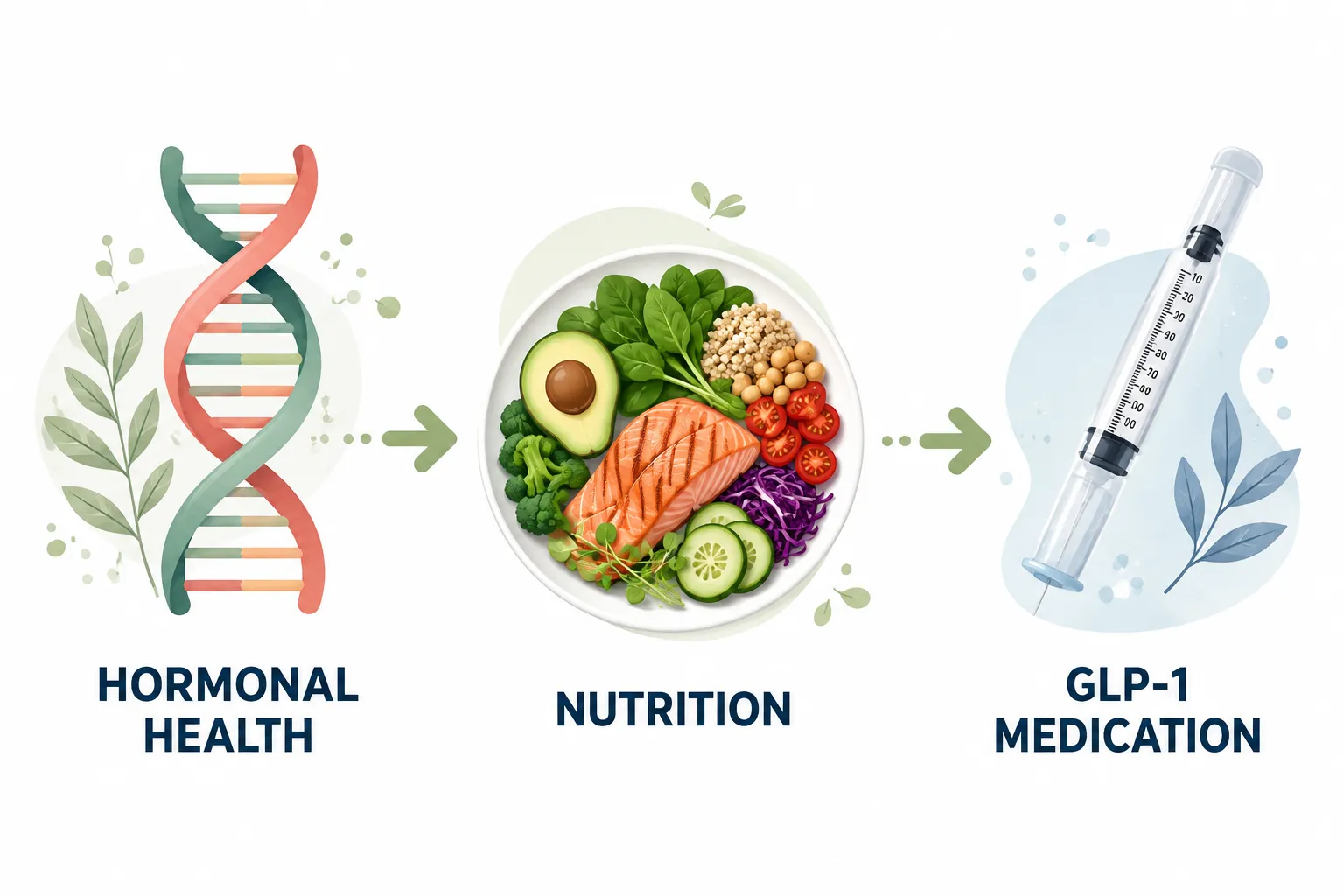
GLP-1 medications represent one of the most significant advances in obesity medicine in decades. Semaglutide, the active compound in medications like Ozempic and Wegovy, works by mimicking a gut hormone that regulates appetite and blood sugar. Clinical trials have demonstrated average weight reductions of 15-20% of body weight over 68 weeks. To understand which GLP-1 medication is most effective for weight loss, a personalized consultation with a specialist is the right starting point.
Atlantic Endocrinology offers semaglutide injections and IV vitamin therapy as part of a comprehensive, medically supervised weight management program.
Hormone Replacement and Hormonal Optimization
For patients whose weight gain is linked to hormonal changes, including perimenopause, andropause, or thyroid dysfunction, hormone replacement therapy and weight loss strategies can be highly effective when properly supervised.
Structured Nutrition Counseling
Nutrition is not one-size-fits-all. The Atlantic Endocrinology Nutrition Wellness Center provides individualized dietary guidance grounded in metabolic testing and laboratory results, not generic meal plans.
Body Composition Analysis
Standard weight scales tell you very little about health. Body composition analysis distinguishes between fat mass, lean muscle mass, and water weight, giving clinicians a far more accurate picture of metabolic health and treatment response.
Comprehensive Weight Management Programs
A comprehensive weight management program integrates metabolic testing, hormonal evaluation, nutrition counseling, and medical treatment into a single coordinated plan, the opposite of the fragmented, trial-and-error approach that most patients experience before finding specialized care.
FAQs
Are homeopathic weight loss drops or tablets safe to use?
Most homeopathic products are so diluted that they are unlikely to cause direct pharmacological harm. Nevertheless, “safe” does not mean effective. The greater risk lies in using these products instead of seeking medical evaluation for an underlying hormonal or metabolic condition that is actually driving weight gain. Always consult a qualified healthcare provider before starting any supplement or alternative remedy.
Can homeopathic remedies support weight loss alongside a medical program?
There is no credible clinical evidence that homeopathic products add measurable benefit to a medically supervised weight loss program. If you are interested in integrative or holistic approaches, Atlantic Endocrinology offers holistic endocrinology services that combine evidence-based medicine with lifestyle and wellness strategies in a supervised clinical setting.
How do I know if my weight gain is hormonal rather than lifestyle-related?
The clearest answer comes from a proper medical evaluation. An endocrinologist can order targeted blood tests, a resting metabolic rate assessment, and body composition analysis to identify whether thyroid disease, insulin resistance, PCOS, or another hormonal condition is contributing to your weight.
Does Medicaid cover weight management services at Atlantic Endocrinology?
A: Yes. Atlantic Endocrinology accepts Medicaid and many other insurance plans. You can learn more about whether Medicaid covers weight management services and what is typically included. Our team is happy to verify your coverage when you call or register online.
References
- National Center for Complementary and Integrative Health. (2021). Homeopathy: What You Need To Know. U.S. Department of Health and Human Services. https://www.nccih.nih.gov/health/homeopathy
- Wilkinson, J., & Jelinek, G. (2022). Homeopathy and the challenge of evidence. Integrative Medicine Research, 11(2), 100849. https://doi.org/10.1016/j.imr.2022.100849
- U.S. Food and Drug Administration. (2022). Homeopathic Products. FDA. https://www.fda.gov/drugs/information-drug-class/homeopathic-products
- Wilding, J. P. H., et al. (2021). Once-weekly semaglutide in adults with overweight or obesity. New England Journal of Medicine, 384(11), 989-1002. https://doi.org/10.1056/NEJMoa2032183
- Centers for Disease Control and Prevention. (2023). Adult Obesity Facts. CDC. https://www.cdc.gov/obesity/data/adult.html
- Endocrine Society. (2022). Obesity and the Endocrine System: Clinical Practice Guideline. https://www.endocrine.org/clinical-practice-guidelines/obesity
Medical and Editorial Commitment
The content of this article is strictly for educational and informational purposes. It does not replace in-person professional medical diagnosis, advice, or treatment..
Read Privacy PolicyRelated Posts

Can Gastric Bypass Patients Take GLP-1? What the Latest Research Reveals
Weight Management, Information
More than 30% of patients who undergo Roux-en-Y gastric bypass experience significant weight regain within five years, and for many, the question [...]
Ultimate Guide to Body Mass Index (BMI): Comprehensive Analysis
More than 40% of American adults are currently classified as obese by traditional BMI standards, yet emerging research suggests that number could [...]