
 By Atlantic Endo Medical Review Board
More than 30% of patients who undergo Roux-en-Y gastric bypass experience significant weight regain within five years, and for many, the question of whether GLP-1 receptor agonists can help is both urgent and deeply personal. Can gastric bypass patients take GLP-1 medications safely and effectively? The short answer, supported by a growing body of 2026 clinical evidence, is yes, but the details matter enormously.
This article breaks down what GLP-1 therapy means for post-bariatric patients, what the science says, and how a specialized endocrinology team can help you navigate this intersection of surgical and medical weight management.
Weight Loss Clinic in Queens, NY.
Table of Contents
Key Takeaways
- GLP-1 receptor agonists such as semaglutide are increasingly used after gastric bypass for weight regain, metabolic improvement, and management of post-surgical complications.
- Recent clinical trials show meaningful additional weight loss and high rates of type 2 diabetes remission when GLP-1 drugs are added after bariatric surgery.
- Post-bypass physiology changes how GLP-1 medications are absorbed and tolerated, requiring careful medical supervision.
- GLP-1 therapy does not diminish the effectiveness of prior bariatric surgery and may actually complement it.
- Individualized care from an endocrinologist is essential before starting, adjusting, or stopping GLP-1 therapy after gastric bypass.
Comprehending GLP-1 Medications and Post-Bypass Physiology
GLP-1 stands for glucagon-like peptide-1, a hormone your gut naturally releases after eating. It signals the pancreas to produce insulin, tells the brain you are full, and slows stomach emptying. GLP-1 receptor agonists, medications like semaglutide (Ozempic, Wegovy) and liraglutide, mimic this hormone at higher, sustained levels.
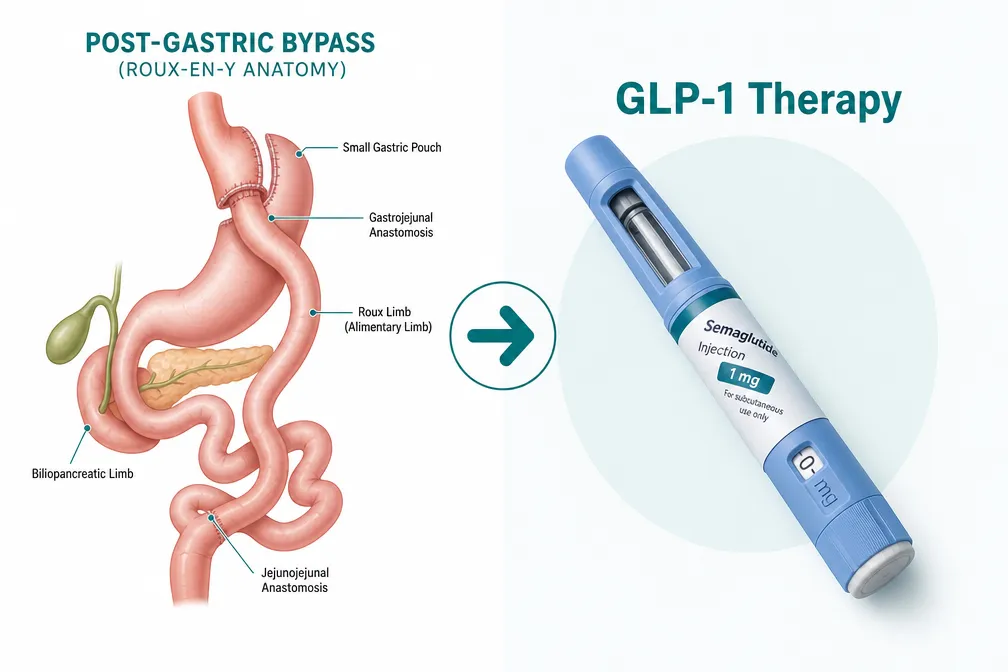
After Roux-en-Y gastric bypass (RYGB), your digestive anatomy is permanently rerouted. Food bypasses most of the stomach and the upper small intestine, entering directly into the mid-gut. This change already boosts your body’s natural GLP-1 secretion, which is one reason bypass surgery is so effective at resolving type 2 diabetes, often within days of the procedure.
So can gastric bypass patients take GLP-1 medications on top of this altered physiology? Yes, and here is why it still works:
- Natural GLP-1 elevation post-bypass is not the same as pharmacologic dosing. The body’s own GLP-1 spike after bypass is meal-dependent and transient. A GLP-1 receptor agonist provides continuous receptor stimulation that goes well beyond what the gut produces naturally.
- Absorption pathways differ. Injectable GLP-1 drugs (subcutaneous injections) bypass the gastrointestinal tract entirely, entering the bloodstream directly. This makes them particularly suitable for post-bypass patients whose oral drug absorption can be unpredictable.
- Receptor sensitivity may actually be enhanced in post-bypass patients due to gut microbiome changes and altered bile acid signaling, potentially making GLP-1 drugs even more effective in this population.
Comprehending which GLP-1 medication is most effective for weight loss is a critical first step before any post-surgical treatment plan is designed.
How Gastric Bypass Changes Metabolic Hormones
The surgery does not just reduce stomach size. It fundamentally rewires hormonal signaling. Ghrelin (the hunger hormone) drops. Peptide YY and GLP-1 rise. Bile acid circulation changes. Insulin sensitivity often improves dramatically.
Nevertheless, these benefits are not permanent for everyone. Weight regain, return of insulin resistance, and metabolic deterioration can occur years after surgery. This is precisely where GLP-1 receptor agonists re-enter the picture as a medical tool, not a replacement for surgery, but a complement to it.
Can Gastric Bypass Patients Take GLP-1? What the Evidence Shows in 2026
The clinical data available in 2026 is more robust than ever, and it consistently supports the use of GLP-1 therapy in post-bariatric patients under appropriate medical supervision.
Weight Regain After Bypass: GLP-1 as a Second Line of Defense
A major analysis of more than 2,700 patients found that individuals who used GLP-1 drugs after bariatric surgery achieved over 25% total body weight loss with gastric bypass, and approximately 20% with sleeve gastrectomy. Critically, prior GLP-1 use did not diminish the effectiveness of the surgery itself. By the three-year mark, roughly two-thirds of patients in the study had returned to GLP-1 therapy, reflecting how naturally these two approaches are being combined in clinical practice.
A separate study focused specifically on weight regain after Roux-en-Y gastric bypass found that GLP-1 receptor agonists produced a median 12.8% total body weight loss at 18 months. The metabolic outcomes were striking:
| Condition | Remission Rate |
|---|---|
| Type 2 Diabetes | 96.6% |
| Hypertension | 80% |
| Dyslipidemia | 86% |
Only 7.1% of patients discontinued therapy, suggesting excellent tolerability in this population.
The BARI-STEP Trial: When Surgery Alone Is Not Enough
The BARI-STEP randomized controlled trial, published in 2026, addressed a common clinical scenario: patients who had a poor response to bariatric surgery. Semaglutide 2.4 mg produced substantial, clinically significant additional weight loss, better metabolic parameters, and improved quality of life compared to placebo in this group. This trial provides strong evidence that GLP-1 therapy is a legitimate, evidence-based option when gastric bypass alone does not achieve target outcomes.
Managing Dumping Syndrome and Reactive Hypoglycemia
One of the most clinically important findings from 2026 research is that semaglutide significantly improves dumping syndrome symptoms and reduces hypoglycemic episodes in post-bariatric patients. Dumping syndrome, where food moves too quickly from the stomach into the small intestine, affects a meaningful percentage of gastric bypass patients and can severely impact quality of life.
The mechanism makes physiological sense: GLP-1 receptor agonists slow gastric emptying, which directly counteracts the rapid transit that causes dumping. For patients struggling with post-bypass reactive hypoglycemia (low blood sugar after meals), this effect can be genuinely life-changing.
Working with a specialist in diabetes and endocrinology in New York is essential for monitoring these metabolic shifts safely.
Early Adjuvant Use After Sleeve Gastrectomy
Research also explored starting semaglutide as early as one month after sleeve gastrectomy. Early adjuvant use showed promise in enhancing weight loss outcomes during the critical post-operative window, suggesting that GLP-1 therapy does not need to wait for weight regain to begin, it may be part of the initial post-surgical protocol in carefully selected patients.

Important Considerations Before Starting GLP-1 After Gastric Bypass
The answer to “can gastric bypass patients take GLP-1?” is yes, but not without careful planning. Several factors must be evaluated by a qualified medical team.
Timing and Dosing
Post-bypass patients often require slower dose titration. The altered gut anatomy, combined with the body’s already-elevated natural GLP-1 response, means that nausea and gastrointestinal side effects can be more pronounced. Starting at the lowest available dose and increasing gradually is standard practice.
Nutritional Status
Gastric bypass patients are already at risk for deficiencies in vitamin B12, iron, calcium, vitamin D, and folate. GLP-1 medications reduce appetite and food intake further. This makes regular nutritional monitoring non-negotiable. A resting metabolic rate test can provide a precise picture of your caloric needs to guide dietary planning alongside GLP-1 therapy.
Blood Sugar Monitoring
If you are also taking insulin or sulfonylureas, adding a GLP-1 agonist significantly increases hypoglycemia risk. Medication adjustments are almost always necessary. Knowing what is RMR and how metabolism works at rest can help contextualize why your caloric needs may shift with GLP-1 therapy.
Cardiovascular and Renal Health
GLP-1 receptor agonists have demonstrated cardiovascular benefits in large trials, but individual risk profiles vary. Patients with kidney disease require dose adjustments or alternative agents. At Atlantic Endocrinology, our cardiology services in Queens allow for integrated cardiovascular monitoring as part of a comprehensive metabolic care plan.
The Difference Between Ozempic and Wegovy
Many patients are confused about the distinction between branded GLP-1 products. Comprehending the difference between Ozempic and semaglutide, and which formulation is appropriate for post-bariatric use, is a conversation that belongs with your endocrinologist, not a pharmacy counter.
How Atlantic Endocrinology Supports Post-Bariatric Patients
At Atlantic Endocrinology & Diabetes Center, our team led by Dr. Stella Ilyayeva, M.D., brings over 20 years of experience in endocrinology, diabetes, and metabolic disease. We understand that post-bariatric care is not a single appointment, it is an ongoing, evolving relationship between patient and provider.
Our approach to GLP-1 therapy after gastric bypass includes
- Comprehensive metabolic baseline evaluation including body composition analysis, HbA1c, lipid panels, and kidney function
- Nutritional assessment and counseling through our Nutrition Wellness Center in Queens
- Ongoing monitoring of weight, blood pressure, glucose, and gastrointestinal tolerance
- Multidisciplinary coordination with cardiology, podiatry, and other specialties when needed
- Patient education so you understand exactly what your medication is doing and why
We accept a wide range of insurance plans including Medicare, Medicaid, Aetna, United Healthcare, EmblemHealth, Healthfirst, Cigna, and many others, making specialized care accessible to patients across Queens and Brooklyn.
Our locations include:
- Forest Hills: 99-45 67th Rd Suite 103, Forest Hills, NY 11375
- Bushwick: 359 Stockholm Street, Brooklyn, NY 11237
- Rego Park: 97-25 63rd Dr 1 FL, Rego Park, NY 11374
- Better Health Clinic: 97-32 63rd Rd, Rego Park, NY 11374
Call us at (718) 275-2900 or visit atlanticendomd.com/contact to schedule your evaluation.
FAQs
Can gastric bypass patients take GLP-1 medications immediately after surgery?
In most cases, physicians wait until the patient has stabilized post-operatively before introducing GLP-1 therapy, typically at least four to six weeks after surgery, though some protocols have explored starting as early as one month post-op. The decision depends on wound healing, nutritional status, and individual metabolic response.
Will taking a GLP-1 drug undo the effects of my gastric bypass?
No. Clinical evidence consistently shows that GLP-1 receptor agonists complement rather than undermine the effects of gastric bypass. In fact, large patient analyses confirm that prior GLP-1 use does not reduce surgical effectiveness, and post-surgical GLP-1 use adds meaningful additional weight loss and metabolic benefit on top of what surgery alone achieves.
Are there any GLP-1 medications that are better suited for post-bypass patients?
Injectable GLP-1 receptor agonists, particularly subcutaneous semaglutide, are generally preferred over oral formulations in post-bypass patients because injectable drugs bypass the altered gastrointestinal tract entirely, ensuring consistent absorption. Oral semaglutide absorption can be highly variable after gastric bypass due to changes in gastric acid and transit time.
Can GLP-1 therapy help with dumping syndrome after gastric bypass?
A: Yes. One of the more clinically significant findings from recent research is that semaglutide meaningfully reduces dumping syndrome symptoms and post-meal hypoglycemic episodes in post-bariatric patients. By slowing gastric emptying, GLP-1 receptor agonists directly address the rapid food transit that causes dumping.
References
- Arterburn, D. E., & Courcoulas, A. P. (2022). Bariatric surgery for obesity and metabolic conditions in adults. BMJ, 379, e071993. https://doi.org/10.1136/bmj-2022-071993
- Rubino, F., et al. (2022). Bariatric and metabolic surgery: A shift in eligibility and guidelines. The Lancet, 399(10330), 1122-1124. https://doi.org/10.1016/S0140-6736(22)00614-7
- American Society for Metabolic and Bariatric Surgery (ASMBS). (2023). Position statement on GLP-1 receptor agonists and bariatric surgery. https://asmbs.org/resources/position-statements
- National Institute of Diabetes and Digestive and Kidney Diseases (NIDDK). (2023). Bariatric surgery for severe obesity. U.S. Department of Health and Human Services. https://www.niddk.nih.gov/health-information/weight-management/bariatric-surgery
- Eisenberg, D., et al. (2023). 2022 American Society for Metabolic and Bariatric Surgery (ASMBS) and International Federation for the Surgery of Obesity and Metabolic Disorders (IFSO): Indications for metabolic and bariatric surgery. Surgery for Obesity and Related Diseases, 19(4), 359-376. https://doi.org/10.1016/j.soard.2022.12.022
- Wilding, J. P. H., et al. (2021). Once-weekly semaglutide in adults with overweight or obesity. New England Journal of Medicine, 384(11), 989-1002. https://doi.org/10.1056/NEJMoa2032183
Medical and Editorial Commitment
The content of this article is strictly for educational and informational purposes. It does not replace in-person professional medical diagnosis, advice, or treatment..
Read Privacy PolicyRelated Posts

Homeopathic Weight Loss: What the Evidence Really Says (And What Actually Works)
Over 70% of American adults are classified as overweight or obese, yet billions of dollars are spent each year on remedies that [...]

What Are the Signs of Glaucoma? A Complete Guide to Symptoms, Risks, and When to Act
Over 3 million Americans are living with glaucoma right now, and roughly half of them do not know it. That is the [...]