
 By Atlantic Endo Medical Review Board
More than one billion people worldwide live with migraines, making it the second leading cause of disability globally, ahead of diabetes, vision loss, and hearing impairment. Yet migraines remain widely misunderstood, underdiagnosed, and undertreated. For many patients managing chronic conditions, the overlap between hormonal health, metabolic function, and recurrent migraine attacks is not a coincidence.
This guide breaks down what migraines are, how they work, what the latest science says about treatment, and when to seek specialized care.
Table of Contents
Key Takeaways
- Migraines are a neurological disease, not simply “bad headaches,” and they affect over one billion people globally.
- The four phases of a migraine, prodrome, aura, attack, and postdrome, each carry distinct, recognizable symptoms.
- As of 2026, eight FDA-approved CGRP-targeting medications are available, representing the most significant shift in migraine treatment in decades.
- Daily preventive therapy is recommended for patients experiencing four or more migraine days per month.
- Hormonal factors, metabolic conditions, and lifestyle triggers all play a meaningful role in migraine frequency and severity.
What Are Migraines and Why Do They Happen
Migraines are a complex neurological disorder characterized by recurrent attacks of moderate to severe head pain, typically on one side, lasting between four and seventy-two hours. The pain is often described as pulsing or throbbing and is frequently accompanied by nausea, vomiting, and extreme sensitivity to light and sound.
The underlying cause involves a cascade of events in the brain and nervous system. One of the most important players is a molecule called calcitonin gene-related peptide, or CGRP. During a migraine attack, CGRP is released in large amounts from trigeminal nerve fibers, triggering inflammation and dilation of blood vessels around the brain. This process drives the intense pain and sensory symptoms that define a migraine episode.
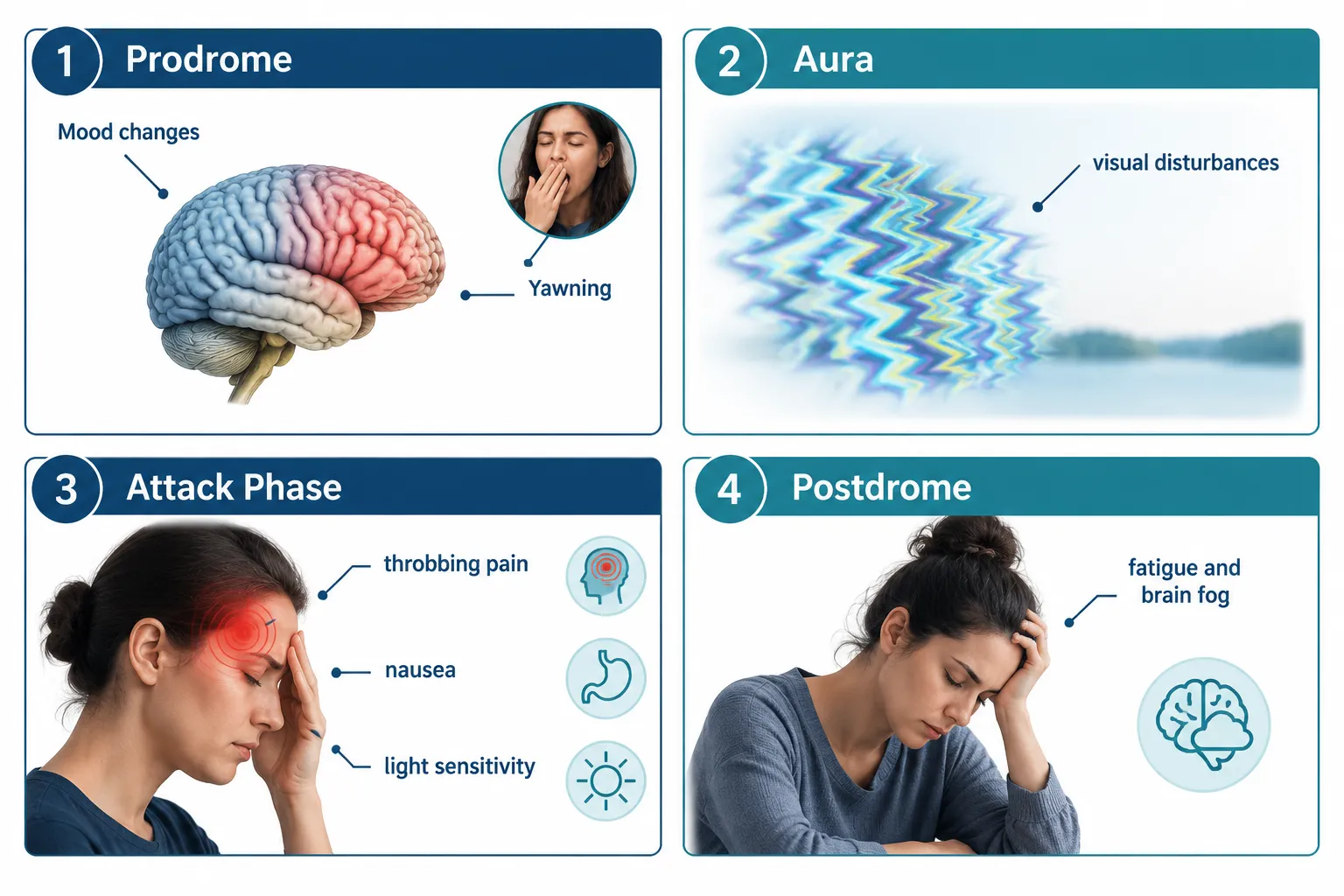
Migraines progress through up to four distinct phases:
- Prodrome, Hours or even days before pain begins, patients may notice mood changes, food cravings, neck stiffness, or frequent yawning.
- Aura, Roughly one in three people with migraines experience aura: temporary neurological symptoms such as visual zigzag lines, blind spots, tingling, or speech difficulty lasting twenty to sixty minutes.
- Attack, The headache phase, with throbbing unilateral pain, nausea, and heightened sensitivity to sensory input.
- Postdrome, A recovery phase lasting up to twenty-four hours, often described as a “migraine hangover,” with fatigue, difficulty concentrating, and mood changes.
Who Is Most at Risk
Migraines affect people of all ages and backgrounds, but certain patterns stand out:
- Women are three times more likely to experience migraines than men, largely due to hormonal fluctuations tied to the menstrual cycle, pregnancy, and menopause.
- Family history is a strong predictor, if one parent has migraines, a child has a roughly 50% chance of developing them.
- Chronic conditions including PCOS, thyroid disease, and metabolic disorders are associated with higher migraine prevalence.
- Age of onset most commonly falls between the teen years and the mid-forties.
Comprehending how hormonal balance affects overall health is particularly relevant for patients who notice that their migraines cluster around hormonal shifts.
Common Migraine Triggers and the Hormone Connection
Triggers do not cause migraines on their own, they lower the threshold for an attack in a brain already predisposed to them. Identifying personal triggers is one of the most practical steps a patient can take.
Common documented triggers include:
| Category | Examples |
|---|---|
| Hormonal | Menstruation, ovulation, oral contraceptives, perimenopause |
| Dietary | Alcohol (especially red wine), caffeine, aged cheeses, processed meats |
| Environmental | Bright lights, strong smells, weather changes, altitude |
| Behavioral | Irregular sleep, skipped meals, dehydration, stress |
| Medical | Medication overuse, certain blood pressure drugs |
The hormonal connection deserves special attention. Estrogen fluctuations are among the most well-established migraine triggers. The sharp drop in estrogen just before menstruation is a primary driver of what clinicians call menstrual migraine, attacks that occur predictably in the two days before and three days after the start of a period. These attacks tend to be longer, more severe, and harder to treat than non-menstrual migraines.
For women with conditions like polycystic ovarian syndrome, hormonal irregularity is constant rather than cyclical, which can translate into more frequent and unpredictable migraine episodes. Patients managing these overlapping conditions benefit from coordinated care that addresses both the hormonal root cause and the neurological symptoms. Learning how to balance women’s hormones naturally can be a meaningful complement to medical migraine management.
Clinical note: Patients who notice that migraine attacks consistently follow a hormonal pattern should document the timing relative to their cycle and share this data with their physician. This information directly shapes treatment selection.
The Treatment Landscape: CGRP Therapies and Beyond
The past several years have produced the most transformative shift in migraine medicine since triptans were introduced in the 1990s. The central development is the arrival of CGRP-targeting therapies, a class of drugs designed specifically for migraine, based on the biology of the disease itself.

Eight FDA-Approved CGRP Medications
As of 2026, eight CGRP-targeting drugs are FDA-approved for migraine:
Monoclonal antibodies for prevention (monthly or quarterly injection or infusion):
- Erenumab (Aimovig)
- Fremanezumab (Ajovy)
- Galcanezumab (Emgality)
- Eptinezumab (Vyepti)
Gepants for acute treatment and/or prevention (oral or nasal):
- Ubrogepant (Ubrelvy)
- Rimegepant (Nurtec ODT)
- Atogepant (Qulipta)
- Zavegepant (Zavzpret)
Monoclonal antibodies work by blocking either the CGRP molecule itself or its receptor, preventing the inflammatory cascade before it starts. Gepants are small-molecule receptor antagonists with shorter action windows, offering flexibility for patients who need on-demand relief as well as daily prevention.
Clinical trial data show that approximately 50% of patients on preventive anti-CGRP therapy achieve at least a 50% reduction in monthly migraine days, a benchmark that was rarely reached with older preventive medications. On average, these agents reduce monthly migraine days by roughly two days compared to placebo, with a favorable tolerability profile.
A Major Policy Shift: CGRP as First-Line Prevention
The American Headache Society’s updated position statement, reflected in new 2026 guidelines, now designates CGRP-targeting therapies as a first-line option for migraine prevention. This is a significant departure from previous practice, which required patients to try and fail older, non-specific drugs, such as beta-blockers, antidepressants, or anticonvulsants, before accessing targeted biologic therapies.
The new standard emphasizes choosing medications based on patient preferences, comorbidities, and functional goals. Daily preventive therapy is now recommended for any patient experiencing four or more migraine days per month.
Advances in Pediatric and Menstrual Migraine
Two notable 2026 developments expand the reach of targeted therapy:
- Fremanezumab (Ajovy) received FDA approval for migraine prevention in children and adolescents aged 6 to 17, becoming the first CGRP antagonist approved for both pediatric and adult patients.
- Atogepant (Qulipta) demonstrated significant reductions in menstrual migraine days in the phase 3 LUNA trial, reported in September 2026. Because no treatment is currently specifically approved for menstrual migraine, this data signals a likely future label expansion in an area of high unmet need.
Safety Considerations
Safety monitoring has identified a signal worth noting: analyses of the FDA Adverse Event Reporting System found disproportionate reporting of Raynaud phenomenon, a condition involving reduced blood flow to the extremities, with several CGRP agents, including fremanezumab, galcanezumab, erenumab, rimegepant, ubrogepant, and atogepant. Patients with pre-existing vascular disease should discuss this risk with their physician before starting CGRP therapy.
Patients with cardiovascular concerns may also benefit from a broader evaluation. Knowing at what age you should see a cardiologist can help ensure that vascular health is monitored alongside migraine management.
Non-Pharmacological Strategies That Support Migraine Management
Medication is not the only tool. Evidence-based lifestyle and behavioral strategies can meaningfully reduce attack frequency when applied consistently.
Proven non-drug approaches:
- Sleep hygiene, Irregular sleep is both a trigger and a consequence of migraines. Consistent sleep and wake times reduce attack frequency.
- Hydration and nutrition, Skipping meals and dehydration are among the most common and preventable triggers. A structured eating pattern supports stable blood sugar and hormone levels.
- Stress management, Biofeedback, cognitive behavioral therapy, and mindfulness-based stress reduction all have clinical evidence supporting their use in migraine prevention.
- Regular moderate exercise, Aerobic activity three to five times per week has been shown to reduce migraine frequency, though intense exertion can trigger attacks in some patients.
- Trigger journaling, Tracking meals, sleep, hormonal cycle, stress levels, and weather alongside headache occurrence helps identify personal patterns.
For patients managing metabolic conditions alongside migraines, knowing how metabolism and basal metabolic rate affect overall health can provide useful context for why dietary consistency matters so much in headache management.
When to See a Neurologist for Migraines
Many patients manage migraines through their primary care physician or endocrinologist, but certain situations call for neurological evaluation. Knowing when to escalate care is critical.
Seek neurological consultation when:
- Headaches occur more than four days per month and are not adequately controlled
- The pattern of headaches has changed significantly
- Headaches are accompanied by neurological symptoms such as weakness, vision loss, or speech difficulty
- Over-the-counter medications are being used more than ten days per month
- A first headache occurs after age fifty
- Headaches are described as “the worst headache of my life”
Comprehending when to see a neurologist for migraines and what to expect helps patients advocate for themselves and avoid delays in appropriate care. At Atlantic Endocrinology & Diabetes Center, our neurology services in Queens provide access to specialized evaluation without requiring patients to navigate multiple disconnected healthcare systems.
For patients who also experience nerve-related symptoms in the limbs, a treatment guide for neuropathy in legs and feet outlines the options available through our multidisciplinary team.
The Future of Migraine Diagnosis and Treatment
Research in 2026 is pushing toward two frontiers. First, investigators are focused on patients who do not respond adequately to CGRP-targeting drugs, those with high-frequency migraine, cluster headache, or hemiplegic migraine, and are exploring alternative pathways and combination strategies for these more refractory cases.
Second, a large study from the Norwegian University of Science and Technology analyzing data from 43,000 individuals suggests that migraines may leave a distinct, body-wide biological pattern detectable by artificial intelligence. While AI-based diagnostic tools remain developmental and are not yet part of clinical practice, this research raises the possibility of biomarker-driven personalization of migraine therapy in the coming years.
For patients navigating complex, overlapping chronic conditions, the multidisciplinary model of care offered at Atlantic Endocrinology & Diabetes Center, integrating endocrinology, neurology, cardiology, and nutrition, represents the direction that migraine care is heading.
FAQs
Can hormonal conditions like PCOS or thyroid disease make migraines worse?
Yes. Hormonal imbalances, including those associated with polycystic ovarian syndrome, hypothyroidism, and hyperthyroidism, can increase migraine frequency and severity. Estrogen fluctuations are among the most well-established migraine triggers, and conditions that disrupt hormonal cycles create a more unstable neurological environment. Patients managing these conditions alongside migraines benefit from coordinated care that addresses both the endocrine and neurological components simultaneously.
What is the difference between episodic and chronic migraine?
Episodic migraine is defined as fewer than fifteen headache days per month, with at least eight meeting migraine criteria. Chronic migraine involves fifteen or more headache days per month for more than three months, with at least eight of those being migraines. Chronic migraine significantly impairs quality of life and typically requires both acute and preventive treatment strategies. Medication overuse, taking pain relievers more than ten days per month, is a major risk factor for progression from episodic to chronic migraine.
Are CGRP medications safe for long-term use?
Current evidence from clinical trials and real-world studies supports the long-term safety of CGRP-targeting therapies for most patients. Nevertheless, as with any medication, individual risk factors matter. Patients with pre-existing vascular conditions, including Raynaud phenomenon or cardiovascular disease, require careful evaluation before starting these agents. Regular follow-up with a physician is essential to monitor effectiveness and any emerging side effects. Always discuss your complete medical history with your provider before beginning a new preventive treatment.
Does Atlantic Endocrinology accept insurance for migraine-related neurological care?
Atlantic Endocrinology & Diabetes Center accepts a broad range of insurance plans, including Medicare, Medicaid, Aetna, Cigna, United Healthcare, EmblemHealth, Healthfirst, and many others. For a complete list of accepted plans and to begin the registration process, visit our patient information page or call us at (718) 275-2900. Our team will help verify your coverage and connect you with the right specialist for your needs.
References
- Ashina, M., et al. (2021). Migraine: epidemiology and systems of care. The Lancet, 397(10283), 1485-1495. https://doi.org/10.1016/S0140-6736(20)32160-7
- American Headache Society. (2021). The American Headache Society Position Statement on Integrating New Migraine Treatments into Clinical Practice. Headache, 61(7), 1021-1039. https://doi.org/10.1111/head.14153
- National Institute of Neurological Disorders and Stroke. (2023). Migraine. U.S. Department of Health and Human Services. https://www.ninds.nih.gov/health-information/disorders/migraine
- Dodick, D. W. (2022). CGRP ligand and receptor monoclonal antibodies for the prevention of migraine. Cephalalgia, 42(4), 300-311. https://doi.org/10.1177/03331024211048250
- MedlinePlus. (2023). Migraine. U.S. National Library of Medicine. https://medlineplus.gov/migraine.html
- Eigenbrodt, A. K., et al. (2021). Diagnosis and management of migraine in ten steps. Nature Reviews Neurology, 17(8), 501-514. https://doi.org/10.1038/s41582-021-00509-5
Medical and Editorial Commitment
The content of this article is strictly for educational and informational purposes. It does not replace in-person professional medical diagnosis, advice, or treatment..
Read Privacy PolicyRelated Posts
How a Neurologist in Queens, NY Can Help Treat Neurological Sleep Disorders in Older Adults
Nearly 50% of adults over the age of 65 report chronic sleep problems — yet fewer than 15% ever receive a formal [...]

What is the 2-2-2 Rule for Asthma? A Clear Explanation
What if a simple pattern could reveal whether your asthma is truly under control—or quietly getting worse? In “What Is the 2-2-2 [...]