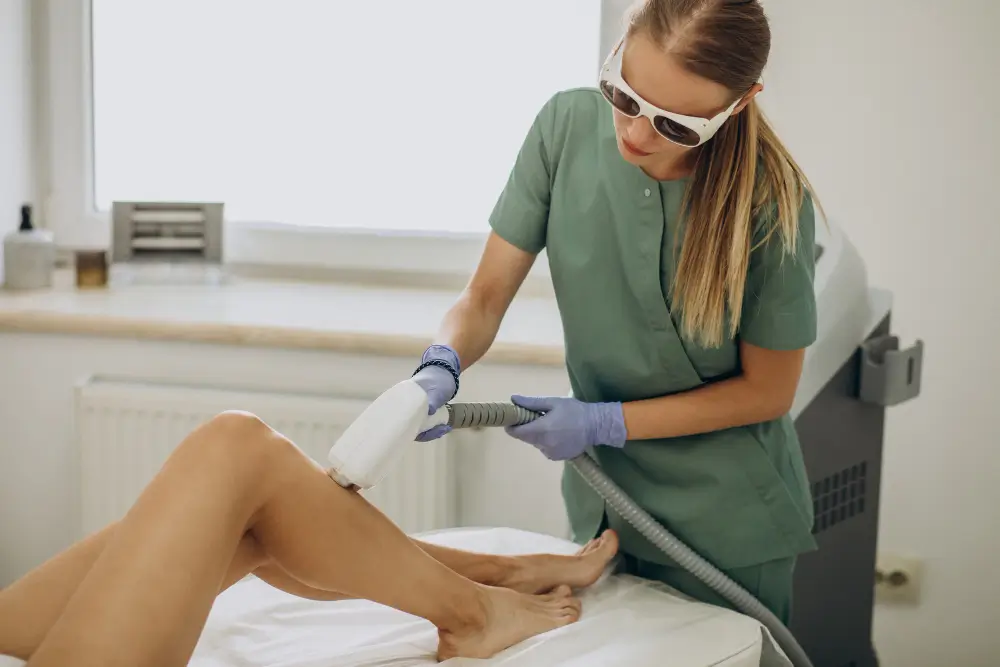
Women with polycystic ovary syndrome often experience hirsutism as a result of androgen excess, which can significantly affect quality of life. Laser hair removal has become a widely used option for managing unwanted hair by targeting the hair follicle and reducing regrowth over time. Clinical evidence shows that response to laser treatment in women with PCOS may vary due to ongoing hormonal activity, which is why medical guidance from an Endocrinologist PCOS Specialist in Queens is important when setting expectations and planning long-term management strategies.
TL;DR
Laser hair removal can reduce unwanted hair in women with PCOS, though results may vary due to ongoing hormonal imbalances. Multiple sessions are often needed, and long-term management usually combines cosmetic treatment with medical care to maintain results and control regrowth.
Patient guidance via Endocrinologist PCOS Specialist in Queens, NY
Why Do Women With PCOS Experience Excess Hair Growth?
Excess body growth in women with polycystic ovary syndrome is primarily linked to elevated androgen levels, which stimulate terminal follicle development in areas typically associated with male-pattern distribution. Hormones such as testosterone become more active at the skin level, increasing follicular sensitivity and transforming fine strands into thicker, darker ones. This biological response explains why facial and body changes often appear early and progress over time.
Another contributing factor involves altered ovarian and adrenal function, which disrupts normal hormonal regulation. Irregular ovulation and insulin resistance frequently coexist, intensifying androgen production and reducing the body’s ability to balance these hormones efficiently. As a result, follicles remain in a prolonged growth phase, leading to persistent and noticeable growth patterns.
Clinical research highlights that follicle responsiveness varies among individuals, which influences both severity and treatment outcomes. Studies comparing laser technologies show that underlying hormonal activity affects long-term reduction success. This variability underscores the importance of individualized management strategies, combining medical assessment with appropriate cosmetic approaches to address both symptoms and root causes.
Hormonal Changes That Trigger Excess Hair
Hormonal imbalance plays a central role in the development of excess follicular growth in women with PCOS. Elevated androgen activity alters the normal growth cycle, increasing follicular stimulation in areas sensitive to these hormones. Over time, this leads to visible changes in thickness, density, and distribution that differ from typical female patterns.
- Increased androgen production from the ovaries and adrenal glands promotes terminal follicular growth.
- Heightened follicle sensitivity causes strands to become darker and coarser.
- Insulin resistance effects intensify hormonal disruption by amplifying androgen synthesis.
- A prolonged follicular growth phase prevents natural shedding and replacement.
These interconnected processes explain why visible growth can persist despite cosmetic treatments alone. Without addressing the hormonal environment, follicles remain primed for regrowth, which is why long-term management often requires a combination of medical evaluation and targeted reduction strategies.
How Hair Follicles Respond to Androgen Levels
Hair follicles are highly sensitive to hormonal signals, which explains why androgen exposure directly influences hair growth patterns in women with PCOS. When these hormones interact with follicular receptors, they disrupt the normal hair cycle and promote structural changes within the shaft. Over time, fine vellus hair gradually transforms into terminal hair, particularly in areas where androgen receptors are more active.
| Androgen Influence | Follicular Response |
| Elevated testosterone activity | Increased follicle stimulation and shaft thickening |
| Enhanced receptor sensitivity | Strong response even at moderate hormone levels |
| Prolonged anagen phase | Hair remains in active growth longer |
| Persistent hormonal signaling | Higher likelihood of regrowth after treatments |
These mechanisms help clarify why treatment outcomes vary between individuals. Clinical studies comparing laser devices indicate that follicles exposed to ongoing androgen activity often require repeated sessions, since hormonal signaling continues to affect follicle behavior even after visible hair reduction.
Evaluating Laser Hair Removal Options for PCOS
Choosing an appropriate follicular reduction approach for women with PCOS requires understanding how hormonal activity influences treatment response. Since androgen excess remains active even after visible reduction, laser-based methods are often evaluated not as a permanent solution but as a tool for long-term management. This makes realistic expectations essential when planning treatment protocols.
Different laser technologies vary in how effectively they target follicles under hormonal stimulation. Clinical comparisons show that Alexandrite and Nd:YAG lasers offer greater follicular penetration and selectivity than IPL systems, particularly for facial growth. These devices are better suited to address thicker, pigment-rich strands commonly associated with PCOS-related hirsutism.
Long-term outcomes depend on both technology and biological factors. Studies indicate that ongoing hormonal signaling affects maintenance needs, which explains why multiple sessions and periodic follow-up treatments are common. Evaluating laser options therefore involves aligning device choice with individual follicular characteristics and underlying endocrine activity.
Preparing Skin for Safe and Effective Treatment
Proper skin preparation is essential to achieve safe and consistent results in laser hair removal for women with PCOS. Because hormonal imbalance can increase skin sensitivity, evaluating the treatment area beforehand helps reduce adverse reactions and improves laser–follicle interaction. A well-prepared skin surface allows energy to reach the follicle more efficiently, supporting better outcomes over time.
- Avoid sun exposure before treatment, as increased melanin can raise the risk of irritation or pigment changes.
- Shave the area instead of waxing or plucking, preserving the follicle needed for laser targeting.
- Discontinue photosensitizing products that may heighten skin reactivity.
- Ensure the skin is clean and free of topical agents on the day of the session.
Following these steps supports treatment safety and effectiveness. Clinical findings show that skin condition directly affects laser response, especially in hormonally driven hair growth. Preparing the skin properly helps minimize discomfort, supports even energy distribution, and contributes to more predictable long-term hair reduction.
Tracking Results and Adjusting Follow-Up Sessions
Monitoring progress after laser hair removal is especially important for women with PCOS, as hormonal activity continues to influence hair growth patterns even after initial treatments. Changes in hair density, texture, and regrowth speed help determine how follicles are responding over time. Consistent evaluation allows providers to distinguish between temporary reduction and sustained improvement.
Because androgen levels can fluctuate, treatment response may vary between sessions. Some areas may show slower regrowth, while others remain more active due to follicular sensitivity. This variability highlights the importance of documenting results across multiple cycles rather than relying on short-term outcomes.
Clinical evidence suggests that laser-treated follicles exposed to ongoing hormonal signaling often require maintenance sessions. Studies comparing laser technologies indicate that while significant reduction is achievable, follow-up timing plays a key role in preserving results, particularly in facial areas affected by PCOS-related hirsutism.
Key Takeaways
- PCOS-related hirsutism is driven by androgen excess, which increases hair follicle sensitivity and promotes thicker, darker hair growth in hormone-responsive areas, often progressing over time without hormonal control.
- Laser hair removal can significantly reduce unwanted hair, but results vary among women with PCOS due to persistent hormonal activity, making it a long-term management option rather than a permanent solution.
- Hair follicles affected by androgens respond differently to treatment, which explains why multiple sessions and individualized protocols are often needed to achieve and maintain visible reduction.
- Advanced laser technologies such as Alexandrite and Nd:YAG show better outcomes than IPL for hormonally driven hair growth, particularly in facial areas with dense, pigment-rich follicles.
- Ongoing monitoring and follow-up sessions are essential, as fluctuating hormone levels influence regrowth patterns, requiring adjustments in treatment timing to sustain long-term results.
FAQs
What Are The Four Business Categories?
In healthcare services related to PCOS, the main business categories include endocrinology, gynecology, dermatology or aesthetic medicine, and primary care. Each category focuses on different aspects of hormonal balance, symptom management, and long-term health monitoring.
Which Doctor Is Best For PCOS Treatment?
PCOS is a hormone-related condition, so medical care is usually led by a specialist trained in hormonal regulation. Treatment often centers on managing androgen excess, metabolic factors, and symptoms that affect overall well-being.
Do Endocrinologists Deal With PCOS?
Endocrinologists diagnose and treat PCOS by evaluating hormone levels and addressing endocrine imbalances. Their role includes long-term planning to manage symptoms influenced by ongoing hormonal activity.
Who Is Better For PCOS An Endocrinologist Or A Gynecologist?
Gynecologists manage reproductive health and menstrual irregularities. Endocrinologists focus on hormonal and metabolic regulation. Many individuals benefit from care that includes both specialties working together.
Does PCOS Qualify You For Ozempic?
PCOS alone does not determine eligibility for Ozempic. Prescription decisions depend on metabolic factors such as insulin resistance or obesity and require medical evaluation.
Sources
- Azziz, R., Carmina, E., Chen, Z., Dunaif, A., Laven, J. S. E., Legro, R. S., & Lizneva, D. (2016).
Polycystic ovary syndrome.
Nature Reviews Disease Primers, 2, 16057.
https://www.nature.com/articles/nrdp201657
- Zappia, E., & Savoia, P. (2023).
Alexandrite and Nd:YAG laser vs. IPL in the management of facial hirsutism: A retrospective study.
Photonics, 10(5), 572.
https://www.mdpi.com/2304-6732/10/5/572