 By Atlantic Endo Medical Review Board
Nearly 3 million Americans are diagnosed with a blood disorder each year, yet many patients wait months before connecting with the right specialist. If you or someone you love is dealing with unexplained fatigue, abnormal blood counts, or a known condition like anemia or a clotting disorder, accessing quality hematology in Queens, NY could be one of the most important healthcare decisions you make.
Queens is one of the most ethnically diverse counties in the United States, and its residents deserve access to specialized blood disorder care close to home. Whether you are managing a chronic condition or seeking a first consultation, comprehending what hematology involves, and where to find it, puts you in control of your health.
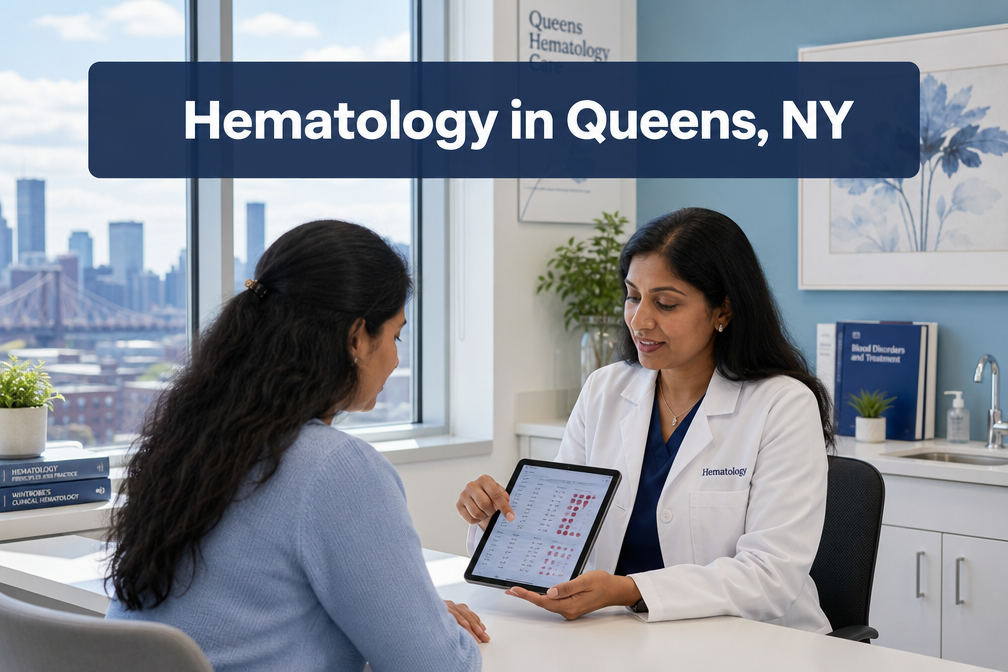
Table of Contents
Key Takeaways
- Hematology is the branch of medicine focused on diagnosing and treating disorders of the blood, bone marrow, and lymphatic system.
- Common blood disorders seen in Queens include anemia, clotting disorders, leukemia, lymphoma, and myeloma.
- Early diagnosis through comprehensive testing is critical for effective treatment outcomes.
- Atlantic Endocrinology & Diabetes Center offers multidisciplinary care in Queens, with hematology services integrated alongside endocrinology, cardiology, and other specialties.
- Patients can access hematology consultations at multiple Queens and Brooklyn locations, with most major insurance plans accepted.
What Is Hematology and Why Does It Matter?
Hematology is the medical specialty dedicated to studying, diagnosing, and treating conditions that affect the blood, bone marrow, and lymphatic system. Blood is not simply a transport fluid, it carries oxygen, fights infection, controls clotting, and delivers nutrients to every organ in the body. When something goes wrong with the blood, the effects can be felt throughout every system.
A hematologist is a physician trained to evaluate abnormalities in:
- Red blood cells, which carry oxygen throughout the body
- White blood cells, which protect against infection
- Platelets, which help blood clot properly
- Plasma, the liquid component that carries proteins and clotting factors
- Bone marrow, the tissue where blood cells are produced
Disorders range from relatively common conditions like iron-deficiency anemia to more serious diagnoses such as leukemia, lymphoma, and myeloma. Many of these conditions share overlapping symptoms, fatigue, bruising, frequent infections, or shortness of breath, which is why a specialist evaluation is essential rather than assuming a cause.
The Overlap Between Blood Disorders and Endocrine Conditions
One often-overlooked fact is how closely blood health intersects with hormonal and metabolic conditions. Patients managing diabetes, thyroid disease, or PCOS frequently experience related blood abnormalities. For example:
- Diabetes can contribute to anemia through kidney complications that reduce erythropoietin production.
- Thyroid disorders are associated with both anemia and abnormal platelet function.
- PCOS can cause iron-deficiency anemia due to heavy menstrual bleeding.
This is precisely why a multidisciplinary approach, where a hematologist works alongside an endocrinologist and other specialists, leads to better patient outcomes. At Atlantic Endocrinology & Diabetes Center, this kind of coordinated care is built into the practice model. Patients working with a specialist in diabetes care or a PCOS specialist in Queens can benefit from hematology consultations without needing to navigate a fragmented healthcare system.
Common Blood Disorders Treated Through Hematology in Queens, NY
Knowing the most common conditions managed by hematologists helps patients recognize when to seek care. Below is an overview of frequently diagnosed blood disorders.
Anemias
Anemia occurs when the body does not have enough healthy red blood cells to carry adequate oxygen. It is one of the most prevalent blood conditions worldwide.
| Type of Anemia | Primary Cause |
|---|---|
| Iron-Deficiency Anemia | Low iron intake or chronic blood loss |
| Vitamin B12 / Folate Anemia | Nutritional deficiency or malabsorption |
| Aplastic Anemia | Bone marrow failure |
| Hemolytic Anemia | Premature destruction of red blood cells |
| Sickle Cell Anemia | Genetic mutation affecting red blood cell shape |
Symptoms include persistent fatigue, pale skin, dizziness, and shortness of breath. Nutritional deficiencies are a common underlying cause, comprehending what vitamin deficiency causes shaky hands can be an important first step in identifying whether a deficiency is affecting your blood health.
Clotting and Bleeding Disorders
- Deep Vein Thrombosis (DVT), clots forming in deep veins, often in the legs
- Pulmonary Embolism, a clot that travels to the lungs
- Hemophilia, a genetic disorder that impairs the body’s ability to clot
- Von Willebrand Disease, the most common inherited bleeding disorder
- Thrombocytopenia, abnormally low platelet count
Blood Cancers
Hematologists are also trained in the diagnosis and management of blood cancers:
- Leukemia, cancer of the blood and bone marrow
- Lymphoma, cancer of the lymphatic system (Hodgkin’s and Non-Hodgkin’s)
- Multiple Myeloma, cancer of plasma cells in the bone marrow
Blood cancers require prompt diagnosis and often involve collaboration between hematologists, oncologists, and other specialists. An interesting diagnostic connection worth noting: certain eye examinations can reveal signs of systemic blood disease. Our article on whether fundoscopy can tell us about lymphoma explores this diagnostic relationship in depth.
Other Hematologic Conditions
- Polycythemia vera (overproduction of red blood cells)
- Myelodysplastic syndromes (bone marrow disorders)
- Coagulation disorders
- Hemochromatosis (iron overload)
How Hematology in Queens, NY Is Delivered at Atlantic Endocrinology

Atlantic Endocrinology & Diabetes Center offers hematology services in Queens as part of a broader multidisciplinary care model. This means that when a patient presents with a blood disorder, or when blood abnormalities are discovered during routine endocrine workup, the path to specialist evaluation is streamlined and coordinated.
What to Expect at a Hematology Consultation
A first hematology visit typically involves:
- Detailed medical history review, including family history of blood disorders, current medications, and symptom timeline
- Physical examination, checking for enlarged lymph nodes, spleen, or liver; signs of bruising or pallor
- Comprehensive panel, complete blood count (CBC), peripheral blood smear, iron studies, coagulation tests, and other targeted labs
- Bone marrow biopsy (if indicated), to assess bone marrow function in more complex cases
- Treatment planning, which may include medications, infusion therapy, dietary changes, or referral for additional specialist care
The practice’s on-site Queens medical laboratory services allow for efficient blood draw and testing, reducing the need for multiple facility visits.
The Multidisciplinary Advantage
One of the strongest reasons to choose Atlantic Endocrinology for hematology care is the integrated team of specialists available under one roof. Conditions that affect the blood rarely exist in isolation. Consider these clinical connections:
- A patient with peripheral vascular disease may also have clotting abnormalities that require hematologic evaluation.
- Patients with neuropathy in their legs and feet may have underlying B12 deficiency anemia contributing to nerve damage.
- Cardiovascular complications, managed by the practice’s cardiology team in Queens, can be directly influenced by its viscosity and clotting disorders.
This level of coordination is not available at every practice. Having specialists in endocrinology, cardiology, podiatry, neurology, and hematology working together means that patients receive a complete picture of their health, not just one piece of it.
Insurance and Access
Atlantic Endocrinology accepts a wide range of insurance plans, making specialist care accessible to a broad patient population. Accepted plans include:
Aetna, Cigna, United Healthcare, Medicare, Medicaid, Healthfirst, Empire Blue Cross Blue Shield, Fidelis Care, EmblemHealth, Humana, Wellcare, 1199 SEIU, and many others.
This broad coverage is especially important in Queens, where many residents rely on Medicaid or Medicare and may face barriers to specialist access elsewhere.
When Should You See a Hematologist
Not every abnormal test requires an urgent specialist visit, but certain signs should prompt a timely evaluation:
- Unexplained fatigue that does not improve with rest
- Frequent or unusual bruising or bleeding
- Swollen lymph nodes that persist for more than two weeks
- Recurrent infections without a clear cause
- Abnormal CBC results flagged by your primary care physician
- Known family history of blood cancers or inherited clotting disorders
- Symptoms of deep vein thrombosis (leg swelling, warmth, pain)
- Anemia that does not respond to iron or vitamin supplementation
If you are already managing a chronic condition like diabetes or thyroid disease and notice any of these signs, it is worth discussing a hematology referral with your endocrinologist. The connection between metabolic health and blood health is well-established, and catching a blood disorder early dramatically improves treatment outcomes.
FAQs:
What is the difference between a hematologist and an oncologist?
A hematologist specializes in diagnosing and treating disorders of the blood, bone marrow, and lymphatic system, including both benign and malignant conditions. A medical oncologist focuses specifically on cancer treatment. In practice, many physicians hold dual training in both hematology and oncology (hematologist-oncologist), particularly for blood cancers like leukemia and lymphoma.
Can anemia be a sign of a more serious blood disorder?
Yes. While many cases of anemia are caused by nutritional deficiencies or chronic disease and are manageable with supplementation or dietary changes, anemia can also be an early sign of more serious conditions including bone marrow failure, myelodysplastic syndrome, or leukemia.
How does diabetes affect blood health?
Diabetes has several documented effects on the blood. Chronic kidney disease, a common complication of long-term diabetes, reduces the production of erythropoietin, a hormone that stimulates red blood cell production, leading to anemia. Diabetes also increases the risk of blood clotting disorders and cardiovascular complications.
Does Atlantic Endocrinology accept insurance for hematology visits?
Yes. Atlantic Endocrinology & Diabetes Center accepts most major insurance plans for hematology consultations, including Medicare, Medicaid, United Healthcare, Aetna, Cigna, Healthfirst, Empire Blue Cross Blue Shield, Fidelis Care, EmblemHealth, and many others.
References
- Centers for Disease Control and Prevention. (2023). Blood disorders. U.S. Department of Health & Human Services. https://www.cdc.gov/ncbddd/blooddisorders/index.html
- National Heart, Lung, and Blood Institute. (2022). Anemia. National Institutes of Health. https://www.nhlbi.nih.gov/health/anemia
- American Society of Hematology. (2023). Blood disorders A to Z. https://www.hematology.org/education/patients/blood-disorders
- National Cancer Institute. (2023). Hematologic cancers. U.S. Department of Health & Human Services. https://www.cancer.gov/types/leukemia
- MedlinePlus. (2022). Blood disorders. National Library of Medicine, National Institutes of Health. https://medlineplus.gov/blooddisorders.html
Medical and Editorial Commitment
The content of this article is strictly for educational and informational purposes. It does not replace in-person professional medical diagnosis, advice, or treatment..
Read Privacy PolicyRelated Posts
The Most Common Inherited Bleeding Disorder: A Complete Guide
More than 3 million people in the United States are living with von Willebrand disease (VWD) — yet most have never heard [...]

How to Balance Women’s Hormones Naturally with Simple Steps
Hormones quietly influence everything from mood and energy to weight and sleep—but when they fall out of balance, the effects can be [...]