
 By Atlantic Endo Medical Review Board
Last updated: June 11, 2026
Quick Answer: Diabetic neuropathy in the legs and feet is nerve damage caused by chronically high blood sugar. While established nerve damage cannot be fully reversed, the right combination of blood sugar control, medications, physical therapy, and specialist care can significantly reduce pain, slow progression, and protect your feet from serious complications. Patients in Queens, New York have access to multidisciplinary diabetes care that addresses neuropathy from multiple angles simultaneously.
Contact Endocrinologist Specializing in Diabetes Queens, New york
Table of Contents
Key Takeaways
- Up to 50% of people with diabetes develop peripheral neuropathy, making it one of the most common diabetes complications.
- Early warning signs include burning, tingling, numbness, and sharp pain in the feet and lower legs, often worse at night.
- Blood sugar control is the single most effective strategy for slowing nerve damage progression.
- FDA-approved medications like duloxetine, pregabalin, and gabapentin help manage pain, though they work in only 30-50% of patients.
- Spinal cord stimulators now achieve a 90% response rate in clinical trials and received expanded Medicare coverage in 2023.
- Nerve conduction tests, sudomotor scans, and ANS monitoring are key diagnostic tools available at specialized centers.
- Prediabetes can also cause neuropathy, so early screening matters even before a formal diabetes diagnosis.
- A team approach combining endocrinology, podiatry, neurology, and physical therapy produces the best outcomes.
- Most standard neuropathy treatments are covered by Medicare and major insurance plans accepted in Queens.
- Do not wait for symptoms to worsen — see a specialist when tingling or numbness first appears.
What Exactly Is Diabetic Neuropathy and How Does It Affect My Legs
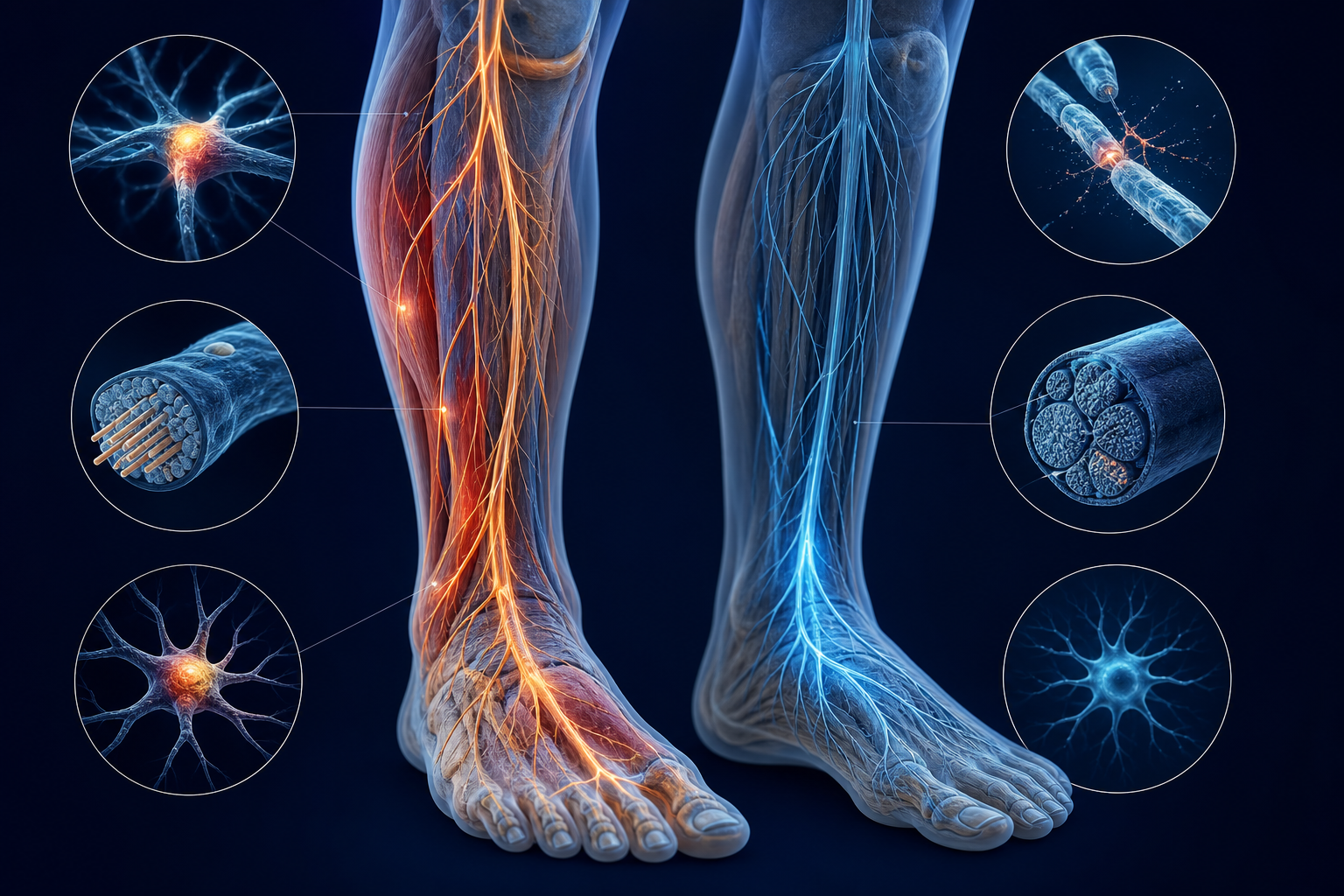
Diabetic neuropathy is nerve damage caused by prolonged exposure to high blood glucose levels. In the legs and feet, it most commonly takes the form of peripheral neuropathy, which damages the longest nerve fibers in the body first, starting at the toes and moving upward.
How it works: Excess blood sugar damages the walls of the tiny blood vessels that supply nerves with oxygen and nutrients. Over time, those nerves lose their ability to transmit signals correctly. The result is a range of sensations — or a dangerous absence of sensation — in the lower extremities.
The most common type is distal symmetric polyneuropathy, which affects both feet and legs symmetrically. Other forms include:
- Autonomic neuropathy — affects nerves controlling automatic body functions like heart rate and digestion
- Focal neuropathy — sudden weakness or pain in a specific nerve, such as the foot or shin
- Proximal neuropathy — pain and weakness in the thighs, hips, or buttocks
Because the feet are farthest from the spinal cord, they are almost always the first area affected. Reduced sensation means injuries, blisters, and infections can go unnoticed, which is why diabetic neuropathy is a leading cause of non-traumatic lower limb amputations in the United States.
For a deeper look at how high blood sugar affects the body’s organs, see what organ is most affected by glucose.
What Are the Early Warning Signs of Diabetes Nerve Damage
The earliest signs of diabetic nerve damage often appear subtly and are easy to dismiss. Catching them early is critical because intervention at this stage can meaningfully slow progression.
Watch for these early symptoms:
- Tingling or a “pins and needles” sensation in the toes or ball of the foot
- Burning pain, especially at night
- Heightened sensitivity to touch — even a bedsheet can feel painful
- Numbness or reduced ability to feel temperature changes
- Muscle weakness in the foot or ankle
- Loss of balance or coordination when walking
A common early pattern: patients describe their feet feeling like they are wearing invisible socks, even when barefoot. If you notice any of these signs, do not wait to see if they resolve on their own.
It is also worth knowing that prediabetes can cause neuropathy before a formal diabetes diagnosis is made, which underscores the importance of early metabolic screening.
How Do I Know If My Leg Pain Is from Diabetes or Something Else
Diabetic nerve pain has a recognizable pattern, but it can overlap with other conditions. A specialist can distinguish between them through clinical evaluation and diagnostic testing.
Diabetic neuropathy typically presents as:
- Bilateral (both feet/legs), symmetrical symptoms
- Burning, electric, or shooting pain
- Worse at night or at rest
- Associated with poor blood sugar control or long diabetes duration
Conditions that can mimic neuropathy:
| Condition | Key Distinguishing Features |
|---|---|
| Peripheral artery disease | Pain with walking (claudication), cold feet, weak pulses |
| Lumbar radiculopathy | Pain radiates from lower back, usually one-sided |
| Vitamin B12 deficiency | Neuropathy without diabetes history, fatigue, anemia |
| Tarsal tunnel syndrome | Localized to ankle/heel, worsens with standing |
| Hypothyroidism | Fatigue, weight gain, cold intolerance alongside neuropathy |
Diagnostic tools that help clarify the cause include nerve conduction studies, the TM Flow test, and sudomotor function testing, all of which are available at Atlantic Endocrinology.
Can Diabetic Neuropathy in Feet Be Reversed or Just Managed
This is one of the most common questions patients ask, and the honest answer is nuanced. Established nerve damage from diabetes cannot be fully reversed with current treatments. However, progression can be stopped, symptoms can be dramatically reduced, and in early-stage neuropathy, some nerve function may improve with aggressive blood sugar management.
What the evidence shows:
- Tight glucose control (achieving near-normal A1C levels) is the most proven strategy for slowing progression.
- Patients who lower their A1C significantly often report reduced pain intensity over 6-12 months.
- Early-stage neuropathy, caught before significant nerve fiber loss, has the best chance of partial recovery.
Think of it this way: you cannot regrow severely damaged nerve fibers, but you can protect the ones that remain and improve the function of mildly damaged nerves. That is why early detection and consistent management matter so much. For strategies on improving blood sugar levels, see how to lower A1C naturally and effectively.
Medications That Help Reduce Diabetic Nerve Pain Symptoms
Several FDA-approved medications are used to manage the pain of diabetic neuropathy. No single drug works for everyone, and most are effective in 30-50% of patients, so finding the right regimen often requires working closely with a specialist.
First-line options:
- Duloxetine (Cymbalta) — an SNRI antidepressant, FDA-approved for diabetic neuropathy pain. Effective for burning and shooting pain.
- Pregabalin (Lyrica) — an anticonvulsant that calms overactive nerve signals. Also FDA-approved for this indication.
- Gabapentin (Neurontin) — similar mechanism to pregabalin, widely used off-label for neuropathic pain.
Second-line and adjunct options:
- Tricyclic antidepressants (amitriptyline, nortriptyline) — effective but require caution in older adults due to side effects
- Topical capsaicin cream or lidocaine patches — useful for localized pain without systemic side effects
- Tramadol or tapentadol — reserved for severe pain unresponsive to other treatments
Emerging treatments: Research from Yale School of Medicine has highlighted peripheral sodium channel blockers as a promising new class targeting specific sodium channels in peripheral nerve cells. These are still in experimental stages and have not yet received FDA approval, but they represent a meaningful direction for patients who do not respond to existing therapies.
Exercises and Lifestyle Changes to Slow Diabetic Nerve Damage
Lifestyle changes are not optional add-ons — they are core treatment. Blood sugar control, physical activity, and daily foot care work together to protect nerve function and reduce pain.
Exercise recommendations:
- Aim for 150 minutes of moderate aerobic activity per week (walking, swimming, cycling)
- Balance and strength exercises reduce fall risk caused by proprioception loss
- Avoid high-impact activities if foot sensation is significantly reduced
Blood sugar and metabolic management:
- Monitor A1C regularly and work toward targets set by your endocrinologist
- Follow a low-glycemic diet rich in vegetables, lean protein, and whole grains
- Limit alcohol, which directly worsens nerve damage
Daily foot care checklist:
- Inspect feet every day for cuts, blisters, redness, or swelling
- Wash feet in lukewarm (not hot) water and dry thoroughly between toes
- Moisturize to prevent cracking, but avoid between toes
- Wear well-fitting, cushioned shoes at all times — never go barefoot
- Trim toenails straight across to prevent ingrown nails
Smoking cessation is also critical. Smoking reduces blood flow to peripheral nerves, accelerating damage. For patients managing weight as part of their diabetes care, nutrition wellness resources can support a comprehensive approach.
Alternative Treatments for Leg Numbness from Diabetes
Several non-pharmaceutical approaches have evidence supporting their use alongside conventional treatment. These are best used as complements, not replacements, for medical care.
Evidence-supported options:
- Physical therapy — improves circulation, strength, and balance; Atlantic Endocrinology offers physical therapy in Queens
- Transcutaneous electrical nerve stimulation (TENS) — delivers low-level electrical current to disrupt pain signals
- Acupuncture — some patients report meaningful pain reduction; evidence is moderate
- Alpha-lipoic acid — an antioxidant supplement with clinical trials supporting modest pain reduction in diabetic neuropathy
- B-vitamin supplementation — particularly B12, which is essential for nerve health; deficiency worsens neuropathy
Spinal cord stimulation is a more advanced option now covered by Medicare. Clinical trials have shown a 90% response rate, making it one of the most effective interventions for patients with refractory neuropathic pain. Between 2020 and 2024, eight new FDA-approved treatments for diabetic neuropathy were introduced, including seven medical devices and one pharmaceutical.
For patients interested in integrating complementary approaches with conventional care, see how to integrate holistic medicine with conventional treatments.
Risks of Untreated Diabetic Neuropathy in Lower Extremities
Untreated neuropathy is not just painful — it is dangerous. The consequences of ignoring symptoms escalate significantly over time.
Short-term risks:
- Undetected foot injuries that become infected
- Pressure ulcers from abnormal gait or ill-fitting shoes
- Falls due to loss of balance and proprioception
Long-term risks:
- Charcot foot — a severe deformity caused by repeated undetected trauma
- Chronic non-healing wounds and diabetic leg sores
- Osteomyelitis (bone infection)
- Lower limb amputation
For a detailed look at managing open wounds that can result from neuropathy, see how to treat diabetic leg sores.
Autonomic neuropathy also affects the cardiovascular system, causing abnormal heart rate responses and blood pressure changes. This is why cardiac monitoring is part of comprehensive neuropathy care at centers like Atlantic Endocrinology, where cardiologist Dr. Ovidiu A. Krausz works alongside the diabetes team.
When Should I See a Specialist About Tingling in My Feet
See a specialist as soon as symptoms appear — do not wait for them to worsen. Tingling, burning, or numbness in the feet that lasts more than a few days warrants a professional evaluation.
See a specialist immediately if you notice:
- A foot wound that is not healing normally
- Sudden severe pain or weakness in one leg
- Loss of sensation in both feet
- Signs of infection (redness, warmth, swelling, discharge)
See a specialist promptly (within weeks) if you have:
- Persistent tingling or burning in toes or feet
- Nighttime foot pain disrupting sleep
- Difficulty feeling temperature or light touch
- A new diabetes diagnosis (baseline neuropathy screening should happen at diagnosis)
Best Endocrinologists Who Treat Diabetic Nerve Pain Near Me: Finding an Endocrinologist Specializing in Diabetes Queens, New York

For patients in Queens, finding an endocrinologist specializing in diabetes in Queens, New York means looking for a practice that offers both expert diabetes management and integrated specialist support for neuropathy complications.
Atlantic Endocrinology & Diabetes Center is built exactly for this. Led by Dr. Stella Ilyayeva, M.D., an endocrinology specialist with over 20 years of experience in diabetes and endocrine disorders, the practice offers a true multidisciplinary approach:
- Dr. David Tetrokalashvili, DPM — Board-Certified Podiatrist specializing in diabetic foot care, fluent in Russian, Spanish, and English
- Neurologist services — for nerve conduction testing and neuropathy evaluation
- Elena Cojocaru, FNP-BC — Nurse Practitioner specializing in vascular surgery and comprehensive patient-centered care
- Dr. Ovidiu A. Krausz — Cardiologist for autonomic neuropathy cardiovascular monitoring
Diagnostic tests available on-site:
- Nerve Conduction Test
- Sudomotor Scan (early autonomic nerve fiber assessment)
- ANS Monitoring
- TM Flow Test
- Digital Fundoscopy for diabetic retinopathy screening
Locations serving Queens:
- Rego Park: 97-25 63rd Dr, 1st Floor, Rego Park, NY 11374
- Forest Hills: 99-45 67th Rd Suite 103, Forest Hills, NY 11375
Call (718) 275-2900 or visit atlanticendomd.com/contact to schedule an evaluation.
Is Neuropathy Treatment Covered by Medicare or Insurance
Most standard neuropathy treatments are covered by Medicare and major insurance plans. Coverage depends on the specific treatment and the documentation of medical necessity.
Typically covered:
- Office visits with an endocrinologist or neurologist
- Nerve conduction studies and diagnostic testing
- FDA-approved medications (duloxetine, pregabalin, gabapentin) under Part D
- Physical therapy
- Diabetic foot care visits (Medicare covers one visit every 6 months for patients with documented neuropathy)
- Spinal cord stimulators received expanded Medicare coverage in 2023
Coverage that varies by plan:
- Acupuncture (Medicare covers up to 20 sessions per year for chronic low back pain; coverage for neuropathy varies)
- Nutritional counseling
- Certain medical devices
Atlantic Endocrinology accepts a broad range of insurance plans including Medicare, Medicaid, Aetna, United Healthcare, EmblemHealth, Healthfirst, Fidelis Care, Empire Blue Cross Blue Shield, Cigna, Humana, and many others. For questions about Medicare and specialty care coverage, see Medicare and concierge medicine.
How Much Does Neuropathy Treatment Cost in Queens, NY
Treatment costs in Queens vary based on the type of care, your insurance coverage, and the specific services required.
General cost ranges (with insurance):
- Specialist office visit copay: typically $20-$60 depending on plan
- Nerve conduction study: often covered under diagnostic testing benefits
- Prescription medications: $10-$50/month with most insurance plans
- Physical therapy: copay per session, usually $20-$50
Without insurance:
- Specialist visit: $150-$400
- Nerve conduction study: $500-$2,000
- Monthly medications: $50-$300 depending on drug and dosage
The most cost-effective approach is consistent preventive care. Treating a diabetic foot ulcer or amputation costs exponentially more than regular specialist visits and medication management. Patients who are uninsured or underinsured should ask about Medicaid eligibility, as Atlantic Endocrinology accepts New York Medicaid.
FAQ
Can neuropathy go away on its own?
In most cases, diabetic neuropathy does not resolve without treatment. Early-stage neuropathy may partially improve with aggressive blood sugar control, but established nerve damage is generally permanent without intervention.
How long does it take for neuropathy treatment to work?
Pain medications like duloxetine or pregabalin may take 4-8 weeks to show full effect. Blood sugar improvements can reduce symptoms over 6-12 months. There is no overnight fix, but most patients notice meaningful improvement within 2-3 months of a comprehensive treatment plan.
Is walking good or bad for diabetic neuropathy?
Walking is generally beneficial. It improves circulation and blood sugar control. However, patients with significant loss of sensation should wear proper footwear and inspect feet after every walk to catch injuries they may not feel.
What is a sudomotor scan and why does it matter for neuropathy?
A sudomotor scan measures sweat gland function in the feet and hands, which reflects small nerve fiber health. It can detect autonomic neuropathy before symptoms become severe, making it a valuable early screening tool. Learn more about why sudomotor scans detect autonomic neuropathy.
Diabetic neuropathy in the legs and feet is serious, but it is manageable with the right care team and a consistent treatment plan. The most important steps you can take right now are: get your blood sugar under control, schedule a baseline nerve evaluation if you have not had one, and do not ignore early symptoms like tingling or burning in your feet.
Actionable next steps:
- Schedule an appointment with an endocrinologist specializing in diabetes in Queens, New York for a comprehensive neuropathy evaluation.
- Ask about on-site nerve conduction testing, sudomotor scanning, and the TM Flow test to get a clear picture of your nerve health.
- Request a referral to the podiatry team for a foot examination and personalized footwear guidance.
- Review your current medications and A1C targets with your diabetes specialist.
- Start daily foot inspections today — this single habit prevents the majority of serious diabetic foot complications.
Atlantic Endocrinology & Diabetes Center has the specialists, the diagnostic tools, and the integrated care model to address every aspect of diabetic neuropathy. Call (718) 275-2900 or visit atlanticendomd.com/contact to schedule your evaluation at our Rego Park or Forest Hills locations.
Sources
- Espinoza, N., & Papadopoulos, V. (2025). Role of mitochondrial dysfunction in neuropathy. International Journal of Molecular Sciences, 26(7), 3195.
https://www.mdpi.com/1422-0067/26/7/3195
- Drăghici, N. C., Văcăraș, V., Bolchis, R., Bashimov, A., Domnița, D. M., Iluț, S., … & Mureșanu, D. F. (2023). Diagnostic approach to lower limb entrapment neuropathies: a narrative literature review. Diagnostics, 13(21), 3385.
https://www.mdpi.com/2075-4418/13/21/3385
Medical and Editorial Commitment
The content of this article is strictly for educational and informational purposes. It does not replace in-person professional medical diagnosis, advice, or treatment..
Read Privacy PolicyRelated Posts

Vitamin D3 vs D2 for Bone Health: Which Is Better? A Guide to Bone Specialist Services
Last updated: June 4, 2026 Quick Answer: Vitamin D3 (cholecalciferol) is the superior choice for bone health. It raises and maintains blood [...]

What Vitamin Deficiency Causes Shaky Hands? A Guide from a Specialist Thyroid Doctor in Queens, New York
Last updated: May 28, 2026 Quick Answer: Shaky hands are most commonly linked to deficiencies in vitamin B12, vitamin D, and magnesium [...]