 By Atlantic Endo Medical Review Board
Last updated: June 9, 2026
Quick Answer: Nearly 44% of women in the United States have high blood pressure, yet only about 25% of them have it under control. Women face unique biological and hormonal triggers for hypertension that differ significantly from men, including pregnancy-related blood pressure changes, hormonal contraceptive use, and the menopausal transition. Cardiology in Queens, NY, through practices like Atlantic Endocrinology & Diabetes Center, offers specialized screening and multidisciplinary care to help women identify, manage, and prevent hypertension before it causes serious heart damage.
Talk to the Team at Cardiology In Queens, NY
Table of Contents
Key Takeaways
- Hypertension affects nearly half of all women in the U.S., and most cases are not well controlled.
- Women have sex-specific risk factors: pregnancy complications, hormonal contraceptives, early menopause, and PCOS all raise blood pressure risk.
- Black women are nearly 60% more likely to develop high blood pressure than White women, making targeted screening essential.
- Symptoms of hypertension in women are often silent or misattributed to stress, anxiety, or menopause.
- A blood pressure reading consistently above 130/80 mmHg is considered high and warrants medical evaluation.
- Lifestyle changes — diet, exercise, stress management, and weight control — can meaningfully reduce blood pressure without medication in early-stage cases.
- Birth control pills can raise blood pressure, especially in women over 35 or those who smoke.
- Women should begin cardiovascular risk assessments in their 20s, not just after age 50.
- Atlantic Endocrinology & Diabetes Center in Queens provides cardiology, endocrinology, and women’s health services under one roof.
- Regular cardiac screening is covered by most major insurance plans accepted at Atlantic Endocrinology.
What Causes High Blood Pressure in Women Specifically?
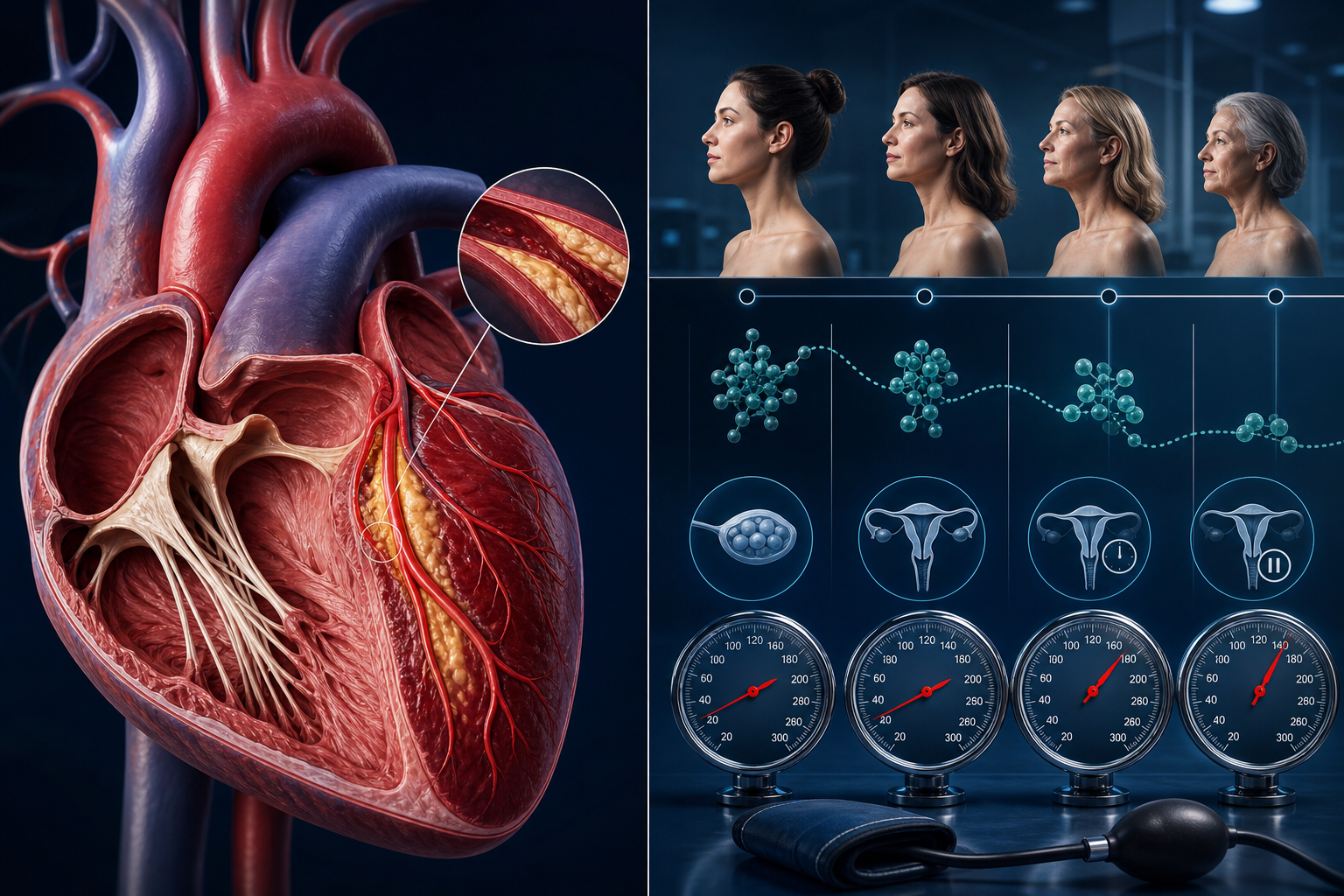
High blood pressure in women shares some causes with men — poor diet, physical inactivity, obesity — but women also carry a set of sex-specific triggers that are frequently overlooked. These include hormonal shifts during pregnancy, menopause, and conditions like polycystic ovarian syndrome (PCOS).
Key causes unique to or more pronounced in women include:
- Pregnancy-related hypertension: High blood pressure develops in roughly 13% of U.S. pregnancies. Women who experience preeclampsia or gestational hypertension face double the long-term risk of heart disease.
- Hormonal contraceptive use: Estrogen-containing birth control pills can raise blood pressure, particularly in women over 35, smokers, or those with pre-existing hypertension.
- PCOS: Polycystic ovarian syndrome is linked to insulin resistance, weight gain, and elevated blood pressure. Our guide on how to balance women’s hormones naturally explains how hormonal imbalances interact with cardiovascular risk.
- Autoimmune conditions: Lupus and rheumatoid arthritis, which disproportionately affect women, are associated with higher hypertension rates.
- Stress and depression: Chronic psychological stress and depression are independently linked to elevated blood pressure in women.
- Racial disparities: Black women are nearly 60% more likely to develop high blood pressure than White women, a gap driven by a combination of genetic, social, and healthcare access factors.
Common mistake: Assuming hypertension only becomes relevant after menopause. In reality, pregnancy complications and hormonal contraceptive use can trigger elevated blood pressure in women in their 20s and 30s.
Are Heart Risks Different for Women vs. Men?
Yes, the cardiovascular risks associated with hypertension differ meaningfully between women and men. Women tend to develop heart disease about 10 years later than men on average, but once they do, outcomes are often worse.
Key differences include:
- Women are more likely to have “atypical” heart attack symptoms — fatigue, nausea, jaw pain, or shortness of breath — rather than classic chest pressure.
- Hypertension causes more rapid deterioration of heart muscle function in women than in men at comparable blood pressure levels.
- Women with diabetes who also have hypertension face a compounded cardiovascular risk that exceeds the sum of either condition alone.
- After age 65, women are actually more likely than men to develop high blood pressure, reversing the pattern seen in younger age groups.
For a deeper look at how vascular conditions specifically affect women, see our overview of peripheral vascular disease in Queens, NY.
How Do Hormones Affect Blood Pressure During Menopause?
Estrogen has a natural protective effect on blood vessels, helping them remain flexible and responsive. When estrogen levels drop during menopause, blood vessels become stiffer, and blood pressure tends to rise. This is why the menopausal transition is one of the most significant periods of cardiovascular risk for women.
Specific hormonal mechanisms at work:
- Estrogen decline: Reduces nitric oxide production, which normally helps blood vessels dilate. Less dilation means higher pressure.
- Weight redistribution: Menopause shifts fat storage toward the abdomen, which is more metabolically active and raises cardiovascular risk.
- Sleep disruption: Hot flashes and insomnia during menopause activate the sympathetic nervous system, which raises blood pressure overnight.
- Early menopause (before age 40): Carries a significantly higher risk of developing hypertension compared to women who reach menopause at the average age of 51.
Women experiencing perimenopause or early menopause should discuss blood pressure monitoring with both a gynecologist and a cardiologist. At Atlantic Endocrinology, Dr. Moisey Fridman, M.D., Ph.D. (OB/GYN) and Dr. Ovidiu A. Krausz (Cardiologist with over 20 years of experience) can collaborate on this type of multidisciplinary evaluation.
What Blood Pressure Range Is Dangerous for Women?
A blood pressure reading consistently at or above 130/80 mmHg is classified as Stage 1 hypertension and warrants medical attention. Readings at or above 140/90 mmHg represent Stage 2 hypertension, which carries a substantially higher risk of stroke, heart attack, and kidney damage.
| Category | Systolic (top number) | Diastolic (bottom number) |
|---|---|---|
| Normal | Less than 120 | Less than 80 |
| Elevated | 120-129 | Less than 80 |
| Stage 1 Hypertension | 130-139 | 80-89 |
| Stage 2 Hypertension | 140 or higher | 90 or higher |
| Hypertensive Crisis | Higher than 180 | Higher than 120 |
A hypertensive crisis (above 180/120 mmHg) is a medical emergency. If you experience a sudden severe headache, vision changes, chest pain, or difficulty breathing alongside very high readings, seek emergency care immediately.
One lesser-known condition worth checking: hyperaldosteronism — a hormonal disorder of the adrenal glands — is a treatable but frequently missed cause of persistent high blood pressure in women.
Can Birth Control Pills Increase My Blood Pressure Risk?
Yes. Estrogen-containing oral contraceptives can raise blood pressure in some women, and the risk is higher in certain groups. Progestin-only pills carry a lower risk, but any hormonal contraceptive should be discussed with a physician if you have a history of elevated blood pressure.
Who is at higher risk from birth control-related hypertension:
- Women over age 35
- Smokers
- Women with a family history of hypertension
- Women who are overweight or obese
- Those with pre-existing kidney disease
If you’re currently on hormonal birth control, ask your provider to check your blood pressure at every visit. If readings are consistently elevated, alternative contraceptive methods may be worth discussing.
Symptoms of Hypertension That Women Often Ignore
Hypertension is frequently called the “silent killer” because it often produces no obvious symptoms until significant damage has already occurred. However, women sometimes experience warning signs they attribute to other causes.
Symptoms women commonly dismiss:
- Persistent fatigue or low energy (often blamed on stress or hormones)
- Morning headaches, especially at the back of the head
- Blurred or double vision
- Shortness of breath during mild activity
- Heart palpitations or irregular heartbeat
- Facial flushing or feeling unusually warm
- Difficulty sleeping or waking up with a pounding heart
It’s also worth noting that chest discomfort in women is not always cardiac in origin. Our article on whether anxiety can cause chest pain and whether indigestion can cause chest pain can help distinguish between causes — but any recurring chest symptom should be evaluated by a cardiologist.
Genetic Factors in Women’s Heart Disease Risk
Genetics play a real role in hypertension risk, but they don’t determine your fate. A family history of high blood pressure, heart attack, or stroke before age 55 in a first-degree male relative (or before 65 in a female relative) is considered a significant risk factor.
What genetics can influence:
- How your kidneys handle sodium
- How efficiently your blood vessels regulate pressure
- Your baseline inflammatory response
- Your predisposition to conditions like hyperaldosteronism or Cushing’s syndrome, both of which cause secondary hypertension
If you have a strong family history of cardiovascular disease, earlier and more frequent screening is warranted. Conditions like Cushing’s syndrome — caused by excess cortisol — can drive hypertension and are often missed without targeted testing.
When Should Younger Women Start Getting Heart Checkups?
Women should begin baseline cardiovascular risk assessments in their 20s, not their 50s. This is especially true for women with risk factors like obesity, PCOS, a history of gestational hypertension, or a strong family history of heart disease.
Recommended screening timeline for women:
- Ages 18-39: Blood pressure check at least every 2 years if normal; annually if elevated or risk factors are present.
- Ages 40-64: Annual blood pressure check, lipid panel every 4-6 years (more often with risk factors), fasting glucose screening.
- Age 65+: Annual blood pressure monitoring, comprehensive cardiac risk assessment, discussion of medication if lifestyle changes are insufficient.
For women seeking cardiology in Queens, NY, Atlantic Endocrinology & Diabetes Center offers accessible cardiac evaluations with Dr. Ovidiu A. Krausz and Daryana Aronova, PA, who specializes in medical cardiology. Appointments can be scheduled by calling (718) 275-2900 or visiting the contact page.
Best Cardiologists in Queens for Women’s Heart Health

Atlantic Endocrinology & Diabetes Center stands out for women’s heart health in Queens because it combines cardiology with endocrinology, gynecology, and nutrition services — all under one roof. This matters because hypertension in women rarely exists in isolation; it typically intersects with hormonal health, weight management, and metabolic conditions.
The cardiology team includes:
- Dr. Ovidiu A. Krausz — Cardiologist with over 20 years of experience, graduate of Carol Davila University of Medicine and Pharmacy, affiliated with leading New York hospitals.
- Daryana Aronova, PA — Physician Assistant with experience in medical cardiology, graduate of Long Island University (Brooklyn).
- Elena Cojocaru, FNP-BC — Nurse Practitioner specializing in vascular surgery and comprehensive patient-centered care.
The practice also offers advanced diagnostics including ANS monitoring, TM Flow testing, and body composition analysis — tools that go beyond a basic blood pressure cuff to give a complete picture of cardiovascular health. Learn more about what a TM Flow test can show in terms of vascular and autonomic function.
Locations in Queens include:
- Rego Park: 97-25 63rd Dr, 1st Floor, Rego Park, NY 11374
- Forest Hills: 99-45 67th Rd, Suite 103, Forest Hills, NY 11375
How Much Does a Cardiac Screening Cost in New York City?
The cost of cardiac screening in New York City varies depending on the tests involved, but most foundational screenings — blood pressure evaluation, EKG, lipid panel, and basic metabolic panel — are covered by major insurance plans.
Atlantic Endocrinology accepts a broad range of insurance, including Medicare, Medicaid, Aetna, Cigna, United Healthcare, Empire Blue Cross Blue Shield, Healthfirst, Fidelis Care, EmblemHealth, and many others. This significantly reduces or eliminates out-of-pocket costs for most patients.
For patients without insurance or with high deductibles, the practice offers concierge medicine options. See concierge medicine in Queens, NY for details on personalized care plans.
Natural Ways to Lower Blood Pressure Without Medication
Lifestyle changes can reduce blood pressure by 5 to 15 mmHg in women with Stage 1 hypertension, which is clinically meaningful. These changes work best when started early and maintained consistently.
Evidence-based strategies:
- Reduce sodium intake: Aim for less than 2,300 mg per day; ideally under 1,500 mg if already hypertensive.
- Follow a DASH-style diet: Emphasize fruits, vegetables, whole grains, lean protein, and low-fat dairy. Our nutrition wellness center in Queens can provide personalized dietary guidance.
- Exercise regularly: 150 minutes per week of moderate aerobic activity (brisk walking, cycling, swimming) lowers systolic pressure meaningfully.
- Limit alcohol: No more than one drink per day for women.
- Manage weight: Even a 5-10 lb weight loss can produce measurable blood pressure reductions. Our team can assist with weight management and metabolic rate testing.
- Reduce chronic stress: Mindfulness, yoga, and cognitive behavioral strategies have documented blood pressure-lowering effects.
- Quit smoking: Nicotine raises blood pressure acutely and damages vessel walls over time.
Choose lifestyle intervention first if your readings are in the elevated or Stage 1 range and you have no other high-risk features. Add medication if readings remain above 130/80 after 3-6 months of consistent lifestyle changes, or immediately if Stage 2.
Diet and Exercise Recommendations for Preventing High Blood Pressure
A heart-healthy diet and consistent physical activity are the two most powerful non-medication tools for preventing hypertension in women. The DASH (Dietary Approaches to Stop Hypertension) diet has the strongest clinical evidence base.
Practical dietary guidelines:
- Fill half your plate with vegetables and fruits at every meal.
- Choose whole grains over refined carbohydrates.
- Limit processed and packaged foods, which are the primary source of excess sodium in most diets.
- Include potassium-rich foods (bananas, sweet potatoes, spinach) — potassium counteracts sodium’s blood pressure-raising effect.
- Reduce saturated fat and eliminate trans fats.
Exercise guidelines for women:
- Aerobic activity: At least 150 minutes per week of moderate intensity, or 75 minutes of vigorous activity.
- Strength training: At least 2 sessions per week — resistance exercise independently lowers resting blood pressure.
- Avoid prolonged sitting: Even short movement breaks every 30-60 minutes during sedentary work reduce cardiovascular risk.
Being overweight compounds blood pressure risk significantly. Our article on whether being overweight causes joint and muscle pain also illustrates how excess weight creates cascading health problems beyond blood pressure alone.
Common Mistakes Women Make Managing Their Heart Health
The most common mistake is waiting for symptoms before seeking evaluation. Because hypertension is largely asymptomatic, many women discover they have it only after a stroke, heart attack, or kidney complication.
Other frequent errors:
- Skipping blood pressure checks during routine OB/GYN visits and assuming someone else will catch it.
- Stopping medication when numbers improve, not realizing that the medication is why numbers improved.
- Underestimating stress as a cardiovascular risk factor — chronic stress is not just a mental health issue.
- Assuming heart disease is a “man’s problem” — it is the leading cause of death in women in the U.S.
- Ignoring post-pregnancy follow-up — women who had gestational hypertension need ongoing cardiovascular monitoring for years after delivery.
- Not disclosing all supplements or herbal remedies to their cardiologist — some (like licorice root, ephedra, and high-dose caffeine) raise blood pressure.
Frequently Asked Questions
At what age should women start worrying about blood pressure?
Blood pressure screening should begin in early adulthood, around age 18-20. Women with risk factors like PCOS, obesity, or a family history of hypertension should be checked annually starting in their 20s.
Can PCOS cause high blood pressure?
Yes. PCOS is associated with insulin resistance, weight gain, and elevated androgens, all of which contribute to higher blood pressure. Women with PCOS should have regular cardiovascular screenings.
Is high blood pressure during pregnancy always dangerous?
Not always immediately, but it is a serious warning sign. Preeclampsia and gestational hypertension require close monitoring and may need treatment. They also double the long-term risk of heart disease.
Can I lower my blood pressure without medication?
In early-stage hypertension (Stage 1), lifestyle changes alone can bring readings back to normal in many women. However, Stage 2 hypertension typically requires medication alongside lifestyle changes.
Hypertension in women is not a condition that announces itself loudly. It builds quietly, shaped by hormonal cycles, pregnancy history, genetic predisposition, and daily lifestyle choices. The good news is that it is both detectable and manageable — but only if women take the first step toward screening and consistent care.
Cardiology in Queens, NY, at Atlantic Endocrinology & Diabetes Center, offers women a genuinely integrated approach: cardiologists, endocrinologists, gynecologists, and nurse practitioners working together to address the full picture of cardiovascular health. Whether you are navigating menopause, managing PCOS, recovering from a complicated pregnancy, or simply want to know your numbers, the team here can provide a thorough, personalized evaluation.
Your next steps:
- Schedule a blood pressure check and cardiac risk assessment — do not wait for symptoms.
- Call (718) 275-2900 or visit atlanticendomd.com/contact to book an appointment.
- Ask about advanced diagnostics like ANS monitoring and TM Flow testing if you have multiple risk factors.
- Review your current medications and contraceptives with a cardiologist if you have not already.
- Start one lifestyle change this week — even a 20-minute daily walk is a meaningful beginning.
Your heart health is not a future concern. It is a present priority.
Sources
- Chapman, N., Ching, S. M., Konradi, A. O., Nuyt, A. M., Khan, T., Twumasi-Ankrah, B., … & Brewster, L. M. (2023). Arterial hypertension in women: state of the art and knowledge gaps. Hypertension, 80(6), 1140-1149.
https://www.ahajournals.org/doi/full/10.1161/HYPERTENSIONAHA.122.20448
- Wang, L., Zhang, H., Yao, H., Gong, C., Zhong, J., Liu, D., & Liang, Z. (2023). Social determinants of health and hypertension in women compared with men in the United States: an analysis of the NHANES study. Clinical Cardiology, 46(8), 958-966.
https://onlinelibrary.wiley.com/doi/full/10.1002/clc.24079
Medical and Editorial Commitment
The content of this article is strictly for educational and informational purposes. It does not replace in-person professional medical diagnosis, advice, or treatment..
Read Privacy PolicyRelated Posts
Cardiomyopathies: What They Are, How They Are Diagnosed, and What Patients Need to Know
More than 1 in 500 people carry a genetic variant linked to cardiomyopathies, yet most are diagnosed only after symptoms appear, sometimes [...]
What Not to Do Before a Heart Calcium Test? A Complete Pre-Scan Guide
Nearly half of all adults in the United States have some degree of cardiovascular disease, yet a significant number are unaware of [...]